We independently research every product mentioned on this page, drawing on real owner reviews, product specs, and vet-reviewed sources. If you buy through a link here, Catverdict may earn a small commission — this never affects our picks or costs you anything extra. Details in our affiliate disclosure.
Bottom line: The best cat food is one that meets AAFCO nutritional standards for your cat’s life stage, lists a named animal protein as the first ingredient, and keeps carbohydrate content low — because cats are obligate carnivores with no dietary need for grain fillers. For most healthy adult cats, Purina Pro Plan Adult Chicken & Rice Formula remains the gold standard dry food backed by long-term feeding studies. For optimal hydration and urinary health, add a high-quality wet food to the rotation.
This guide reviews the nutritional profiles, ingredient quality, and clinical track records of the top-selling cat food brands in the US. Here’s what the science supports — and what to avoid.
Curious how we evaluate and rank every pick on this page? See our How We Choose Our Picks.
Shop by Cat Food Category
-
Cat Food Recall: How to Check & What to Do 2026
We independently research every topic and product mentioned on this…
View guide →
-

Best Cat Food Brands: Smalls, Purina, Royal Canin & More Compared
Smalls, Purina, Royal Canin & more compared
View guide →
-
Cat Food Delivery: 4 Best Services for Convenient, Recurring Orders
Best services for recurring orders
View guide →
-
Cat Treats in a Tube: 5 Best Lickable Treats & Food Toppers
Lickable treats & food toppers
View guide →
-
Best Food for Kittens: 5 Top Picks for Growth & Development
Top picks for growth & development
View guide →
-
High Calorie Cat Food: 5 Best Picks for Weight Gain & Recovery
Best picks for weight gain & recovery
View guide →



Jump to a section
At-a-Glance Comparison: Best Cat Foods of 2026
| Product | Type | Best For | Our Rating |
|---|---|---|---|
| Purina Pro Plan Adult Chicken & Rice | Dry | Overall best, vet-trusted | ⭐ 4.9/5 |
| Royal Canin Indoor Adult | Dry | Indoor cats, weight management | ⭐ 4.8/5 |
| Hill’s Science Diet Adult Optimal Care | Dry | Long-term health, sensitive stomachs | ⭐ 4.7/5 |
| Wellness CORE Grain-Free Indoor | Dry | High-protein, grain-free diets | ⭐ 4.6/5 |
| Purina Pro Plan Pâté Chicken (Wet) | Wet | Hydration, urinary health | ⭐ 4.9/5 |
| Tiki Cat After Dark Chicken (Wet) | Wet | Picky eaters, high protein | ⭐ 4.7/5 |
| Blue Buffalo Wilderness Kitten | Dry | Kittens under 12 months | ⭐ 4.6/5 |
Cat Food Buyer’s Guide: What Veterinarians Evaluate
Understanding Obligate Carnivore Nutrition
Cats are strict obligate carnivores — biologically, they require nutrients found only in animal tissue: taurine (cardiac and retinal health), arachidonic acid (inflammation regulation), and preformed vitamin A (cannot convert beta-carotene like dogs or humans can). A diet deficient in any of these leads to serious, preventable medical conditions.
This is why ingredient quality and protein sourcing matter far more in cat food than in human food. A food that lists “chicken meal” as the first ingredient is nutritionally concentrated and appropriate. A food that lists “corn” or “wheat gluten” as a primary ingredient is not formulated around feline biological needs.
How to Read a Cat Food Label
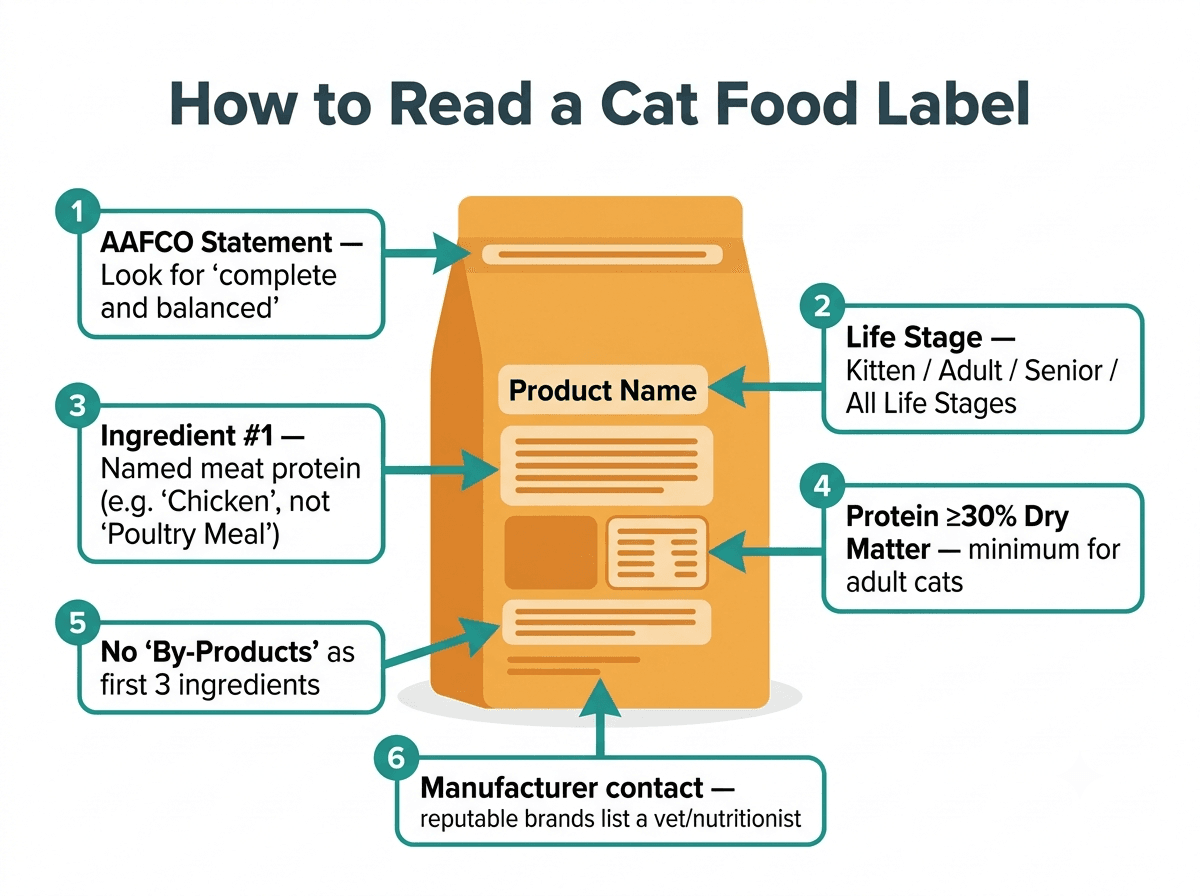
First ingredient: Should be a named protein — “chicken,” “salmon,” “turkey,” or “lamb.” Avoid generics like “meat” or “poultry by-product meal” if source animals aren’t specified. By-products themselves aren’t inherently bad (organ meat is nutritionally dense), but unspecified sourcing reduces traceability.
Guaranteed Analysis: Look for crude protein above 30% on a dry matter basis for adult cats. Fat should be between 15–20%. Carbohydrates aren’t listed directly — calculate: 100% minus (protein% + fat% + moisture% + ash% + fiber%).
AAFCO statement: Must read “complete and balanced” for your cat’s specific life stage. “All life stages” is technically acceptable but often means the food meets kitten requirements — which are more calorie-dense than ideal for a sedentary adult cat.
Dry vs. Wet Food: The Clinical Argument
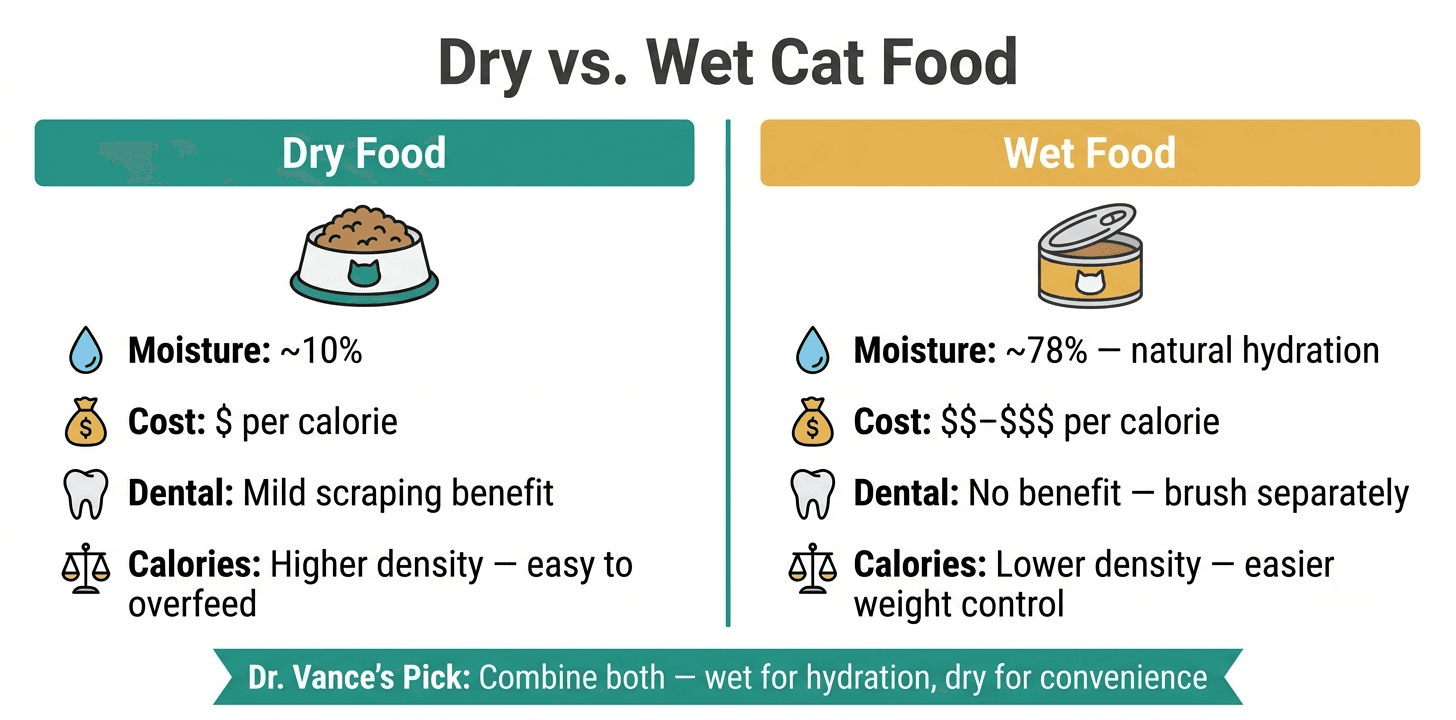
Cats evolved in arid environments and have a naturally low thirst drive — they’re designed to obtain most of their water from prey. Wet food contains 70–80% moisture; dry kibble contains only 10–12%. Cats fed exclusively dry food consistently show lower urine dilution, which is a significant risk factor for feline lower urinary tract disease (FLUTD), calcium oxalate crystals, and chronic kidney disease.
The practical recommendation: if budget and logistics allow, feed a mixed diet — wet food as the primary source supplemented with a portion-controlled amount of dry. If only one type is feasible, wet is the better long-term choice for urinary and kidney health.
The Grain-Free Controversy: What You Need to Know
In 2018, the FDA opened an investigation into a potential link between grain-free diets and dilated cardiomyopathy (DCM) in dogs. This investigation did not extend to cats in the same way, but it sparked broader concern. As of 2026, no definitive causal link has been established in cats, but veterinary cardiologists recommend that grain-free diets high in legumes (peas, lentils, chickpeas) be used cautiously and with regular cardiac monitoring.
For most healthy cats without grain sensitivities, a grain-inclusive diet from a research-backed brand (Purina, Royal Canin, Hill’s) is the lower-risk choice. True grain allergies in cats are uncommon — food sensitivities are more often caused by specific proteins, not grains.
Top 7 Cat Food Reviews

#1 Best Dry Cat Food Overall: Purina Pro Plan Adult Chicken & Rice Formula
Why we picked it: Purina Pro Plan is manufactured by Nestlé Purina, one of the few pet food companies with on-site veterinary nutritionists, dedicated research farms, and decades of controlled feeding trial data. The Chicken & Rice formula has one of the longest and most reliable track records in feline nutrition.
- Protein (dry matter): ~45%
- Fat (dry matter): ~20%
- First ingredient: Chicken
- AAFCO: Complete and balanced for all life stages
Pros
- Backed by extensive feeding trials and veterinary research
- High-quality chicken as primary protein
- Contains live probiotics (Lactobacillus) for digestive support
- Widely recommended by veterinarians
- Available in numerous formulas for specific life stages and health conditions
Cons
- Contains some fillers (corn gluten meal) that aren’t ideal for every cat
- Higher price than store brands
Who should NOT buy this: cats with a confirmed corn or grain sensitivity, or owners who specifically want a formula with zero plant-based fillers.
Our Analysis
Real chicken is the first ingredient, delivering the amino acid profile cats require. Taurine is supplemented, not just relying on incidental amounts from protein. The brand undergoes AAFCO feeding trials (not just nutrient profile calculations), which means the food has actually been fed to cats and shown to support health over time — a meaningful distinction that many boutique brands cannot claim.
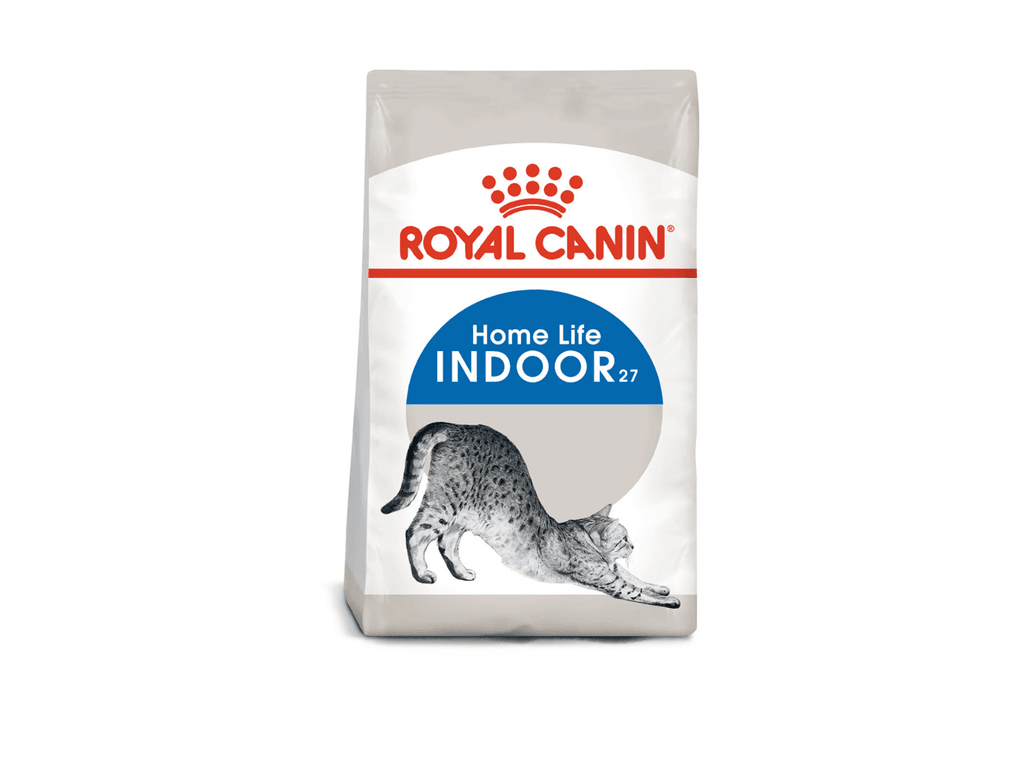
#2 Best for Indoor Cats: Royal Canin Indoor Adult Dry Cat Food
Why we picked it: Royal Canin formulates to a level of specificity that is unusual in the industry — breed-specific diets, age-specific diets, and condition-specific therapeutic diets. The Indoor Adult formula addresses the specific challenges of the sedentary indoor lifestyle: weight management, hairball control, and reduced caloric density.
- Protein (dry matter): ~38%
- Calories: ~328 kcal/cup (lower density for weight management)
- First ingredient: Chicken by-product meal
- Hairball control: Yes, psyllium husk fiber included
Pros
- Formulated specifically for the indoor cat’s lower calorie needs
- Hairball reduction fiber blend
- Kidney-supportive phosphorus content
- Highly palatable — picky cats tend to accept it readily
Cons
- Chicken by-product meal as first ingredient (not whole meat)
- Premium pricing
- Lower protein ratio compared to high-protein alternatives
Who should NOT buy this: owners who want whole meat (not by-product meal) as the first ingredient, or a higher-protein formula for a very active cat.
Our Analysis
Indoor cats are significantly more prone to obesity than outdoor cats due to lower activity levels. Royal Canin Indoor Adult is calorically balanced for a less active lifestyle while maintaining complete nutrition. The formula also contains specific fiber types that reduce hairball formation — a clinically meaningful benefit for owners of heavy-grooming breeds.
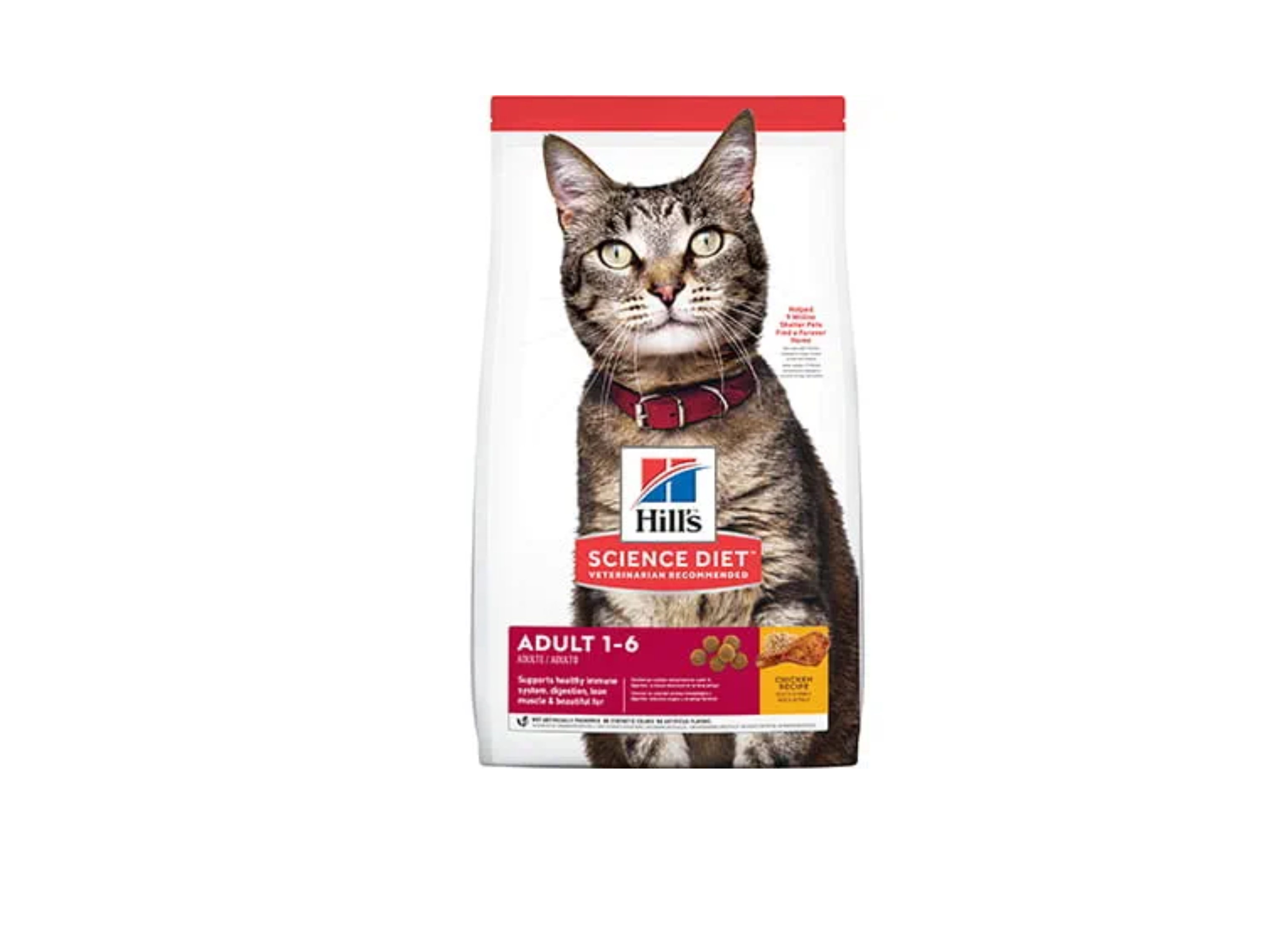
#3 Best for Sensitive Stomachs: Hill’s Science Diet Adult Optimal Care
Why we picked it: Hill’s Science Diet is the most commonly recommended brand by US veterinarians for healthy adult cats, thanks to decades of nutritional research, quality control, and a therapeutic line (Prescription Diet) that builds clinical confidence in the entire brand’s standards.
- Protein (dry matter): ~37%
- First ingredient: Chicken
- Vitamin E & C: Added for antioxidant support
Pros
- Highly digestible formulation ideal for sensitive GI tracts
- Natural fiber for consistent stool quality
- Antioxidant vitamin blend supports immune health
- Extensive quality control and batch testing
Cons
- Lower protein percentage than performance or grain-free alternatives
- Contains some plant proteins
Who should NOT buy this: owners seeking a high-protein or fully grain-free formula.
Our Analysis
The Optimal Care formula uses highly digestible ingredients that minimize gastrointestinal upset in cats with sensitive digestion. Natural fiber supports regular intestinal motility. Hill’s also maintains rigorous manufacturing quality — each batch undergoes nutritional testing before release, which is not industry standard.
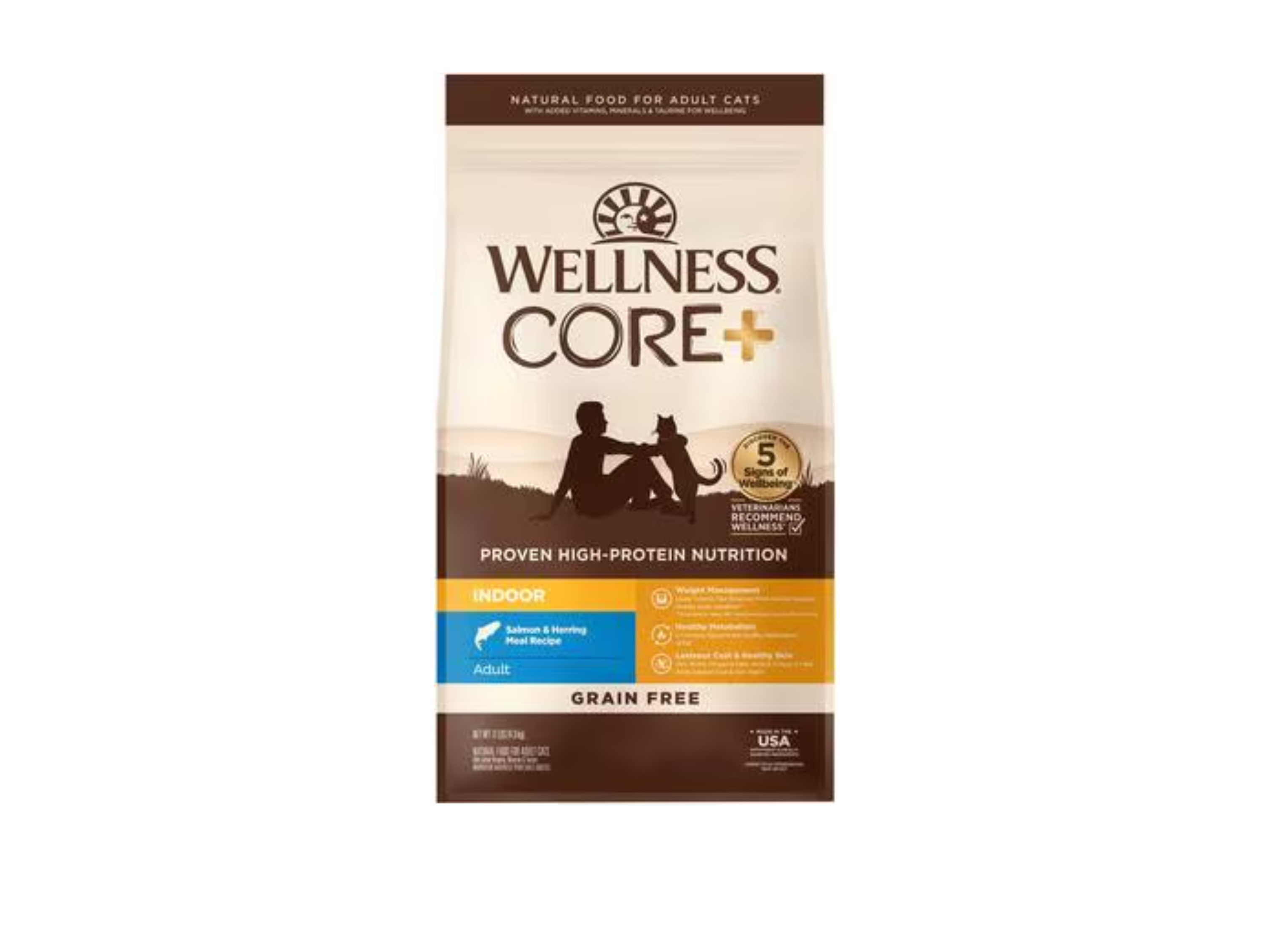
#4 Best Grain-Free Dry Food: Wellness CORE Grain-Free Indoor Formula
Why we picked it: Among grain-free dry foods, Wellness CORE maintains a higher protein-to-carbohydrate ratio than most competitors while avoiding the legume-heavy formulations linked to cardiac concerns. The Indoor formula is calorically appropriate for less active cats.
- Protein (dry matter): ~50%
- First ingredient: Deboned chicken
- Grain-free: Yes
Pros
- High-protein, meat-first formula
- Lower carbohydrates than most dry foods
- Omega fatty acids for coat and skin health
- No corn, wheat, soy, or artificial preservatives
Cons
- Long-term grain-free use warrants cardiac monitoring (per current guidance)
- Higher price point
- Fewer long-term feeding studies than Purina or Hill’s
Who should NOT buy this: cats with any history of heart issues, or owners who can’t budget for the ongoing cardiac screening a long-term grain-free diet calls for.
Our Analysis
If a cat owner specifically wants grain-free — due to a diagnosed grain sensitivity or personal preference — Wellness CORE is among the top picks because it sources protein from deboned chicken and turkey rather than relying heavily on pea protein as a substitute. That said, periodic cardiac screening is advisable for any cat on a long-term grain-free diet.
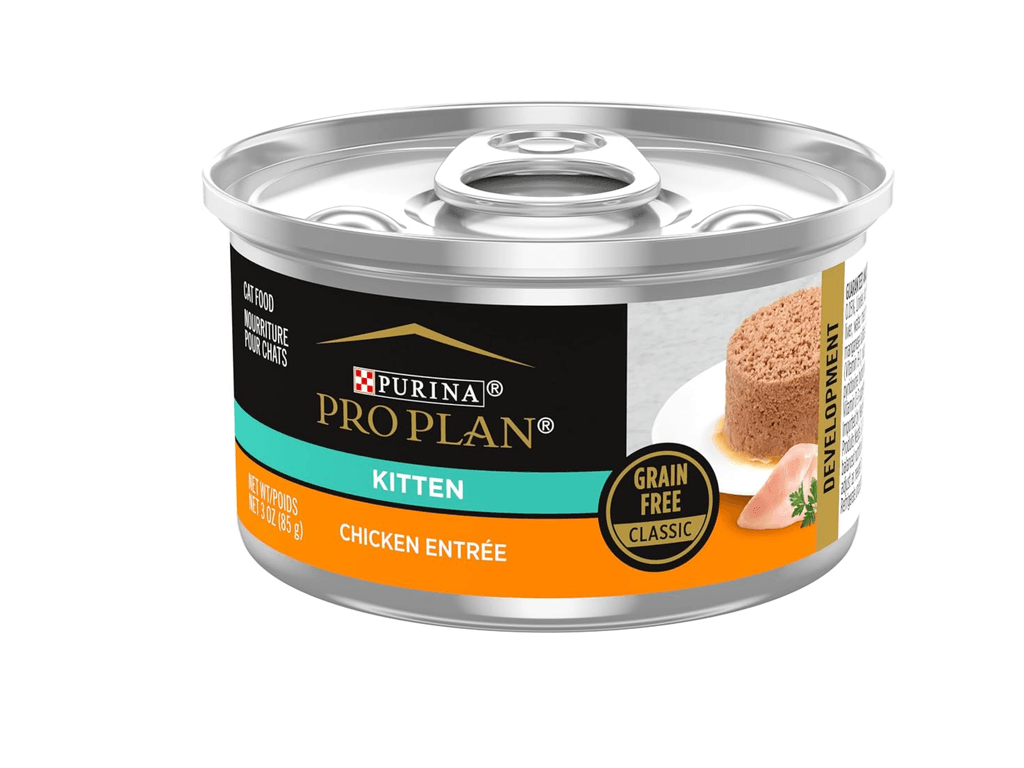
#5 Best Wet Food: Purina Pro Plan Pâté Chicken Entrée
Why we picked it: Among wet foods, Purina Pro Plan Pâté consistently scores highest in palatability testing and provides a clean macronutrient profile with high moisture content. At 78% moisture, it’s one of the best single-step improvements an owner can make for a cat at risk of urinary or kidney disease.
Pros
- High moisture content (78%) supports urinary tract and kidney health
- Chicken as first ingredient
- No artificial colors, flavors, or preservatives
- Smooth pâté texture accepted by most cats, including picky eaters
Cons
- Higher cost per calorie than dry food
- Opened cans must be refrigerated and used within 3 days
- Can contribute to dental tartar buildup without supplemental dental care
Who should NOT buy this: owners on a tight food budget relying solely on dry food, or cats that need dry kibble’s dental-friction benefit without added brushing.
Our Analysis
Wet food is not a luxury — for cats with a history of FLUTD, urinary crystals, or early kidney disease, it can be medically significant. The Pâté texture is also well-tolerated by cats with dental issues, post-dental-procedure recovery, and senior cats with reduced chewing ability.
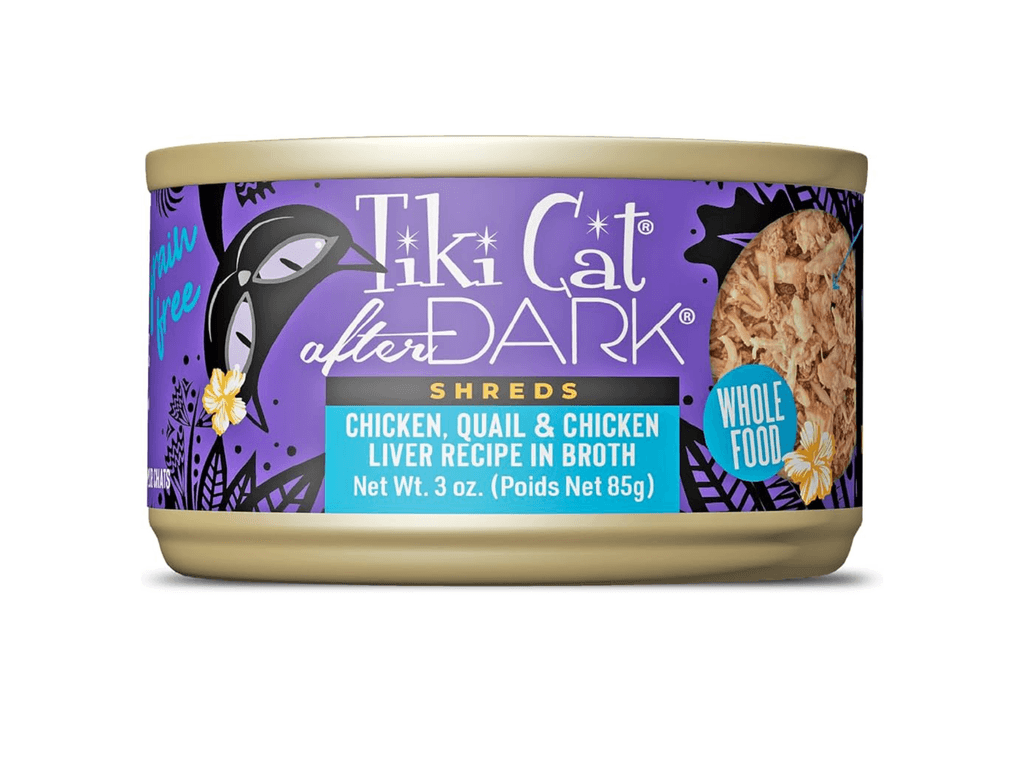
#6 Best for Picky Eaters: Tiki Cat After Dark Chicken & Chicken Liver
Why we picked it: Tiki Cat After Dark is formulated with whole meat and organ meat in a broth-based format that closely mimics the texture and aroma of prey. Even notoriously selective cats tend to accept it, making it a practical tool for transitioning cats to wet food or maintaining caloric intake in finicky seniors.
Pros
- Whole meat and organ-based — highly palatable for picky cats
- Broth format adds hydration beyond standard wet food
- No thickeners, gums, or carrageenan
- High protein, very low carbohydrate
Cons
- Higher cost per serving
- May cause loose stools in cats unaccustomed to organ-rich diets — transition gradually
- Not formulated for the full diet by itself for growing kittens
Who should NOT buy this: growing kittens needing a complete standalone diet, or cats with sensitive GI tracts not yet used to organ-rich food.
Our Analysis
Chicken liver is a nutritionally dense organ meat rich in taurine, B vitamins, and vitamin A — appropriate in moderate quantities. The broth format provides an additional hydration benefit. Tiki Cat After Dark is often recommended for cats that have been refusing meals due to nausea, stress, or palatability issues with standard formulas.
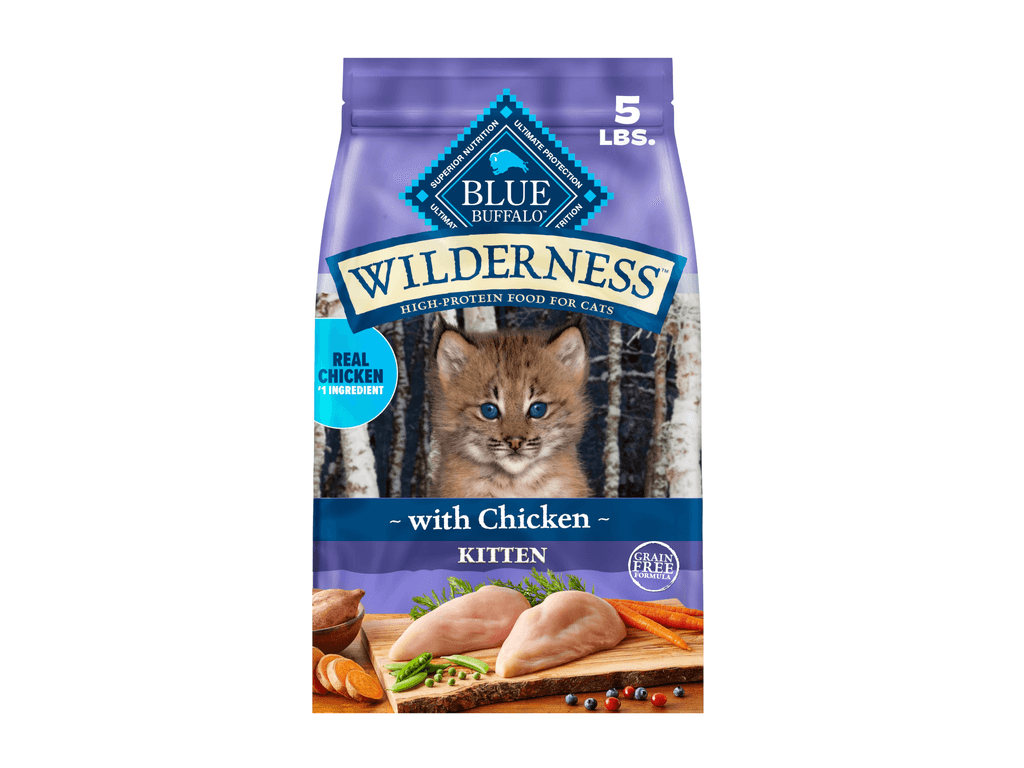
#7 Best Kitten Food: Blue Buffalo Wilderness Kitten Chicken Recipe
Why we picked it: Kittens require higher protein, fat, DHA, and caloric density than adults — Blue Buffalo Wilderness Kitten delivers these without the carbohydrate-heavy fillers common in economy kitten foods. DHA from fish oil supports neurological and visual development in the critical early months.
Pros
- High protein specifically formulated for kitten growth
- DHA from fish oil for brain and eye development
- No corn, wheat, soy, artificial colors, or preservatives
- Small kibble size appropriate for developing teeth and jaws
Cons
- Grain-free formulation — transition to grain-inclusive food after 12 months if desired
- Blue Buffalo has faced quality control issues in the past; check production date on bags
Who should NOT buy this: kittens with a diagnosed grain sensitivity needing a vet-directed formula, or owners who want a brand with a cleaner recall history.
Our Analysis
Kittens from weaning to 12 months have nutritional demands closer to high-performance athletes than adult house cats. Underfeeding protein and fat during this phase can impair immune development, muscle formation, and long-term organ function. Wilderness Kitten meets these demands with a credible formulation — though supplementing with wet food is still generally recommended for optimal hydration from early kittenhood.
Frequently Asked Questions
What is the healthiest cat food brand?
Purina Pro Plan, Royal Canin, and Hill’s Science Diet consistently rank highest among veterinary nutritionists due to their feeding trial data, on-staff nutritionists, and rigorous quality control. These three brands are the most commonly recommended by US veterinarians for healthy adult cats.
Is dry or wet cat food better?
Wet food is generally better for urinary and kidney health due to its high moisture content. Dry food is more convenient and supports dental hygiene in some cats. A mixed diet — wet food as the primary source with controlled amounts of dry kibble — is the approach most veterinarians support for long-term health.
What ingredients should I avoid in cat food?
Avoid foods that list corn syrup, propylene glycol, artificial colors (Red 40, Yellow 5/6, Blue 2), carrageenan, or BHA/BHT as ingredients. Limit foods where plant proteins (soy, pea protein, corn gluten meal) make up the majority of the protein content, as cats have limited ability to metabolize plant-based proteins efficiently.
How much should I feed my cat per day?
This depends on weight, age, activity level, and whether the cat is spayed/neutered. As a rough guide: a sedentary adult indoor cat at 10 lbs needs approximately 200–250 kcal/day. Always check the feeding guidelines on your specific food’s packaging and adjust based on your cat’s body condition score — you should be able to feel (but not see) your cat’s ribs.
Can cats eat dog food?
No — not as a primary diet. Dog food is not formulated to meet feline-specific requirements for taurine, arachidonic acid, and niacin. A cat fed dog food long-term will develop nutritional deficiencies, including taurine deficiency, which causes dilated cardiomyopathy and blindness. An occasional bite is not harmful, but dog food should never replace cat food.
Is grain-free cat food dangerous?
For cats, the evidence is less conclusive than for dogs, but veterinary cardiologists advise caution with long-term grain-free, legume-heavy diets. True grain allergies in cats are rare. Unless your cat has a confirmed grain sensitivity, a grain-inclusive diet from a research-backed brand poses lower risk and often equivalent or superior nutritional quality.
Medical Disclaimer: This article is for informational purposes and was researched using veterinary and nutrition sources — it was not written by a veterinarian. It does not replace individualized veterinary nutritional advice. Cats with existing medical conditions — kidney disease, diabetes, hyperthyroidism, food allergies, or weight disorders — require tailored dietary management from a licensed veterinarian. Do not change a medically prescribed diet without consulting your vet.