
We independently research every product mentioned on this page, drawing on real owner reviews, product specs, and vet-reviewed sources. If you buy through a link here, Catverdict may earn a small commission — this never affects our picks or costs you anything extra. Details in our affiliate disclosure.
Bottom line: A good cat harness is the difference between a calm walk or patio session and a cat that slips loose at the first startle. For most cats, the H-style mesh harness is the best all-around pick — breathable and secure with two adjustment points. If your cat is a known escape artist, the step-in vest harness offers the highest escape resistance of any style here.
This guide is for owners who want to take their cat outside safely — whether that’s leash training in the backyard, trips to the vet, or full outdoor walks — and need a harness that actually stays on a cat’s flexible, low-shoulder body.
Curious how we evaluate and rank every pick on this page? See our How We Choose Our Picks.
Jump to a section
At-a-Glance Comparison: Best Cat Harness
| Pick | Best For | Style |
|---|---|---|
| Best Overall | Most cats, everyday walks | H-style mesh harness |
| Best Escape-Proof | Houdini cats, nervous first-timers | Step-in vest harness |
| Best for Kittens | Small or young cats | Adjustable soft mesh |
| Best for Training/Walking | Leash-reactive or active cats | Padded vest with back clip |
| Best Budget | Trying a harness for the first time | Basic adjustable mesh |
Buyer’s Guide: Choosing the Right Cat Harness
How We Chose These Harnesses
Cats have a narrow, flexible chest and no real “shoulder stop” the way dogs do, which is why a harness built for dogs — or a cheap, loose-fitting one — is the single most common reason cats back out and escape. We compiled these picks around four practical criteria rather than a lab test: escape resistance (multiple adjustment points, snug chest fit), ease of putting it on a squirming cat, breathability for cats that resist wearing anything, and genuine owner-reported durability. None of these were purchased and tested in-house — this is a selection built from product specs, materials, and buyer feedback patterns, not hands-on testing.
Harness Types Explained
There are three common styles. H-style harnesses use two straps (neck loop + chest loop) joined by a connecting strap — light and breathable, moderate escape resistance. Step-in vest harnesses cover more of the torso and close along the back — the most escape-resistant style, at the cost of being bulkier. Figure-8 harnesses (a single strap forming two loops) are the lightest and cheapest, but also the easiest for a cat to back out of — we don’t recommend them for a cat’s first time outdoors.
Getting the Size Right
Measure your cat’s girth — the widest part of the chest, just behind the front legs — with a soft tape measure, and check it against the brand’s size chart rather than guessing from weight alone (a short, stocky cat and a long, lean cat at the same weight can need different sizes). A correctly fitted harness should allow two fingers to slide flat under the straps; any looser and a flexible cat can likely back out of it.
Let your cat wear the harness indoors for a few short, treat-rewarded sessions before the first real walk. A cat that’s never worn one may freeze, flop over, or try to shake it off — normal reactions that usually fade within a few sessions.
Top 5 Cat Harness Reviews
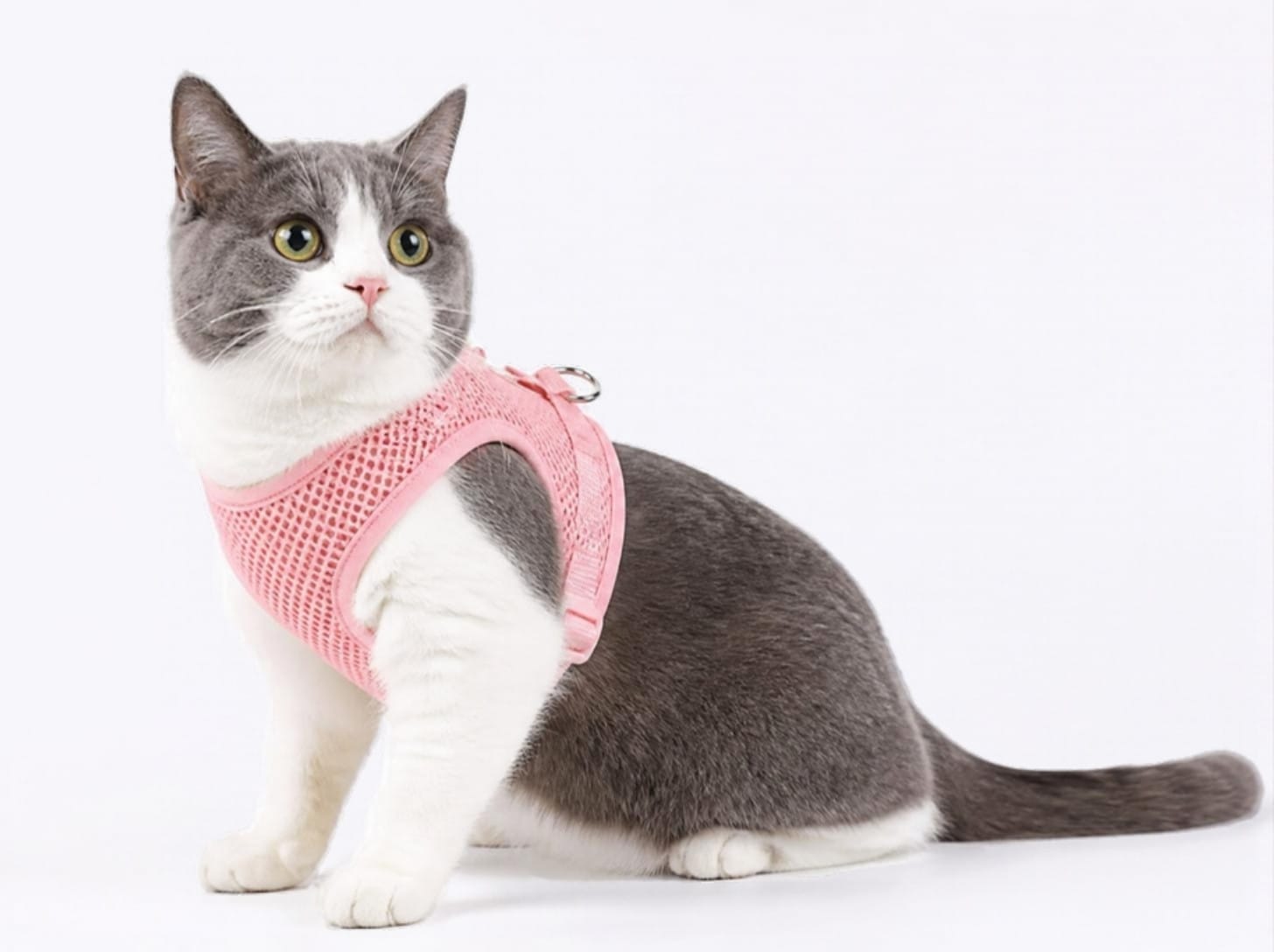
#1 Best Overall: H-Style Mesh Harness
Why it’s a good fit: An H-style harness loops around the neck and chest with a horizontal strap connecting the two, giving two points of adjustment instead of one. That second strap is what keeps the whole thing from rotating or sliding forward over a cat’s head when it pulls back — the usual escape move.
- Style: H-style mesh
- Adjustment points: 2
- Machine washable
Pros
- Two adjustment points for a genuinely snug, non-rotating fit
- Breathable mesh — most cats tolerate it faster than fabric vests
- Lightweight, doesn’t restrict movement
- Usually machine washable
Cons
- Less escape-resistant than a full vest for determined wrigglers
- Fit is more fiddly to dial in than a step-in style
Who should NOT buy this: Skip if your cat is a determined escape artist — the step-in vest below offers more security.
Our Analysis
An H-style harness is the lightest and most breathable of the common styles, which is usually why it’s the easiest for a cat to accept during the indoor try-on sessions described in our sizing guide above. Its moderate escape resistance makes it the right default for most cats — reserve the step-in vest for cats that have already proven they can wriggle out of a basic harness.
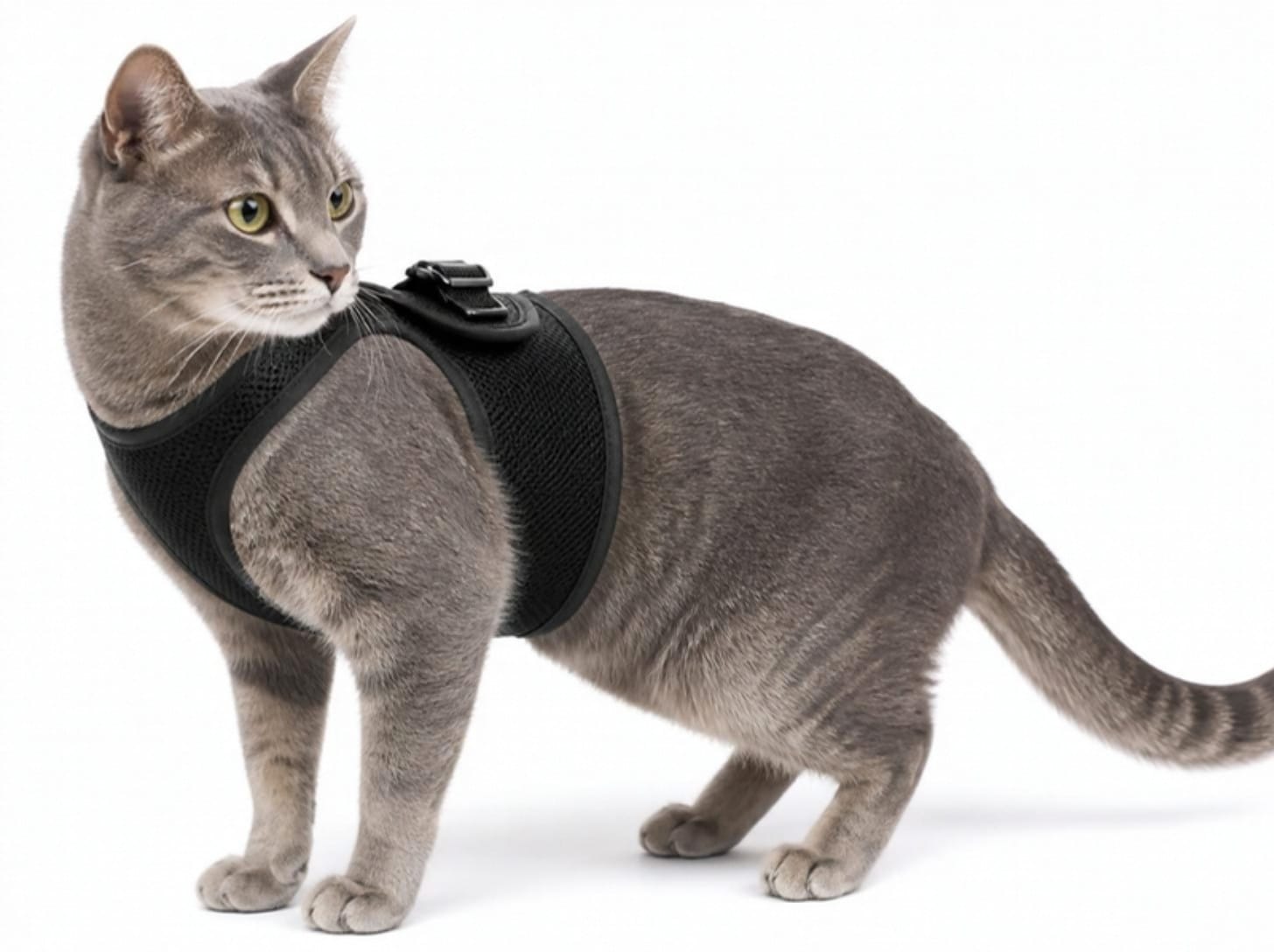
#2 Best Escape-Proof: Step-In Vest Harness
Why it’s a good fit: A full vest distributes pressure across the torso instead of a few thin straps, so there’s no single point a cat can wriggle out of. The step-in design also means less wrestling to get it on — the cat steps through two leg holes and you close it along the back.
- Style: Step-in vest
- Highest escape resistance
Pros
- Highest escape resistance of the common harness styles
- Faster, calmer to put on than over-the-head designs
- Even pressure distribution — comfortable for longer wear
Cons
- Bulkier and warmer — not ideal in hot climates
- Sizing matters more; a loose vest loses the escape-proof advantage
Who should NOT buy this: Skip if you live somewhere hot or your cat already overheats easily — the mesh options breathe better than a full vest.
Our Analysis
Since fit matters more for this style, measure your cat’s girth carefully against the brand’s size chart (see our sizing guide above) before ordering — a step-in vest that’s even slightly too loose gives up the escape-resistance advantage that’s the whole reason to choose it over a cheaper H-style harness.
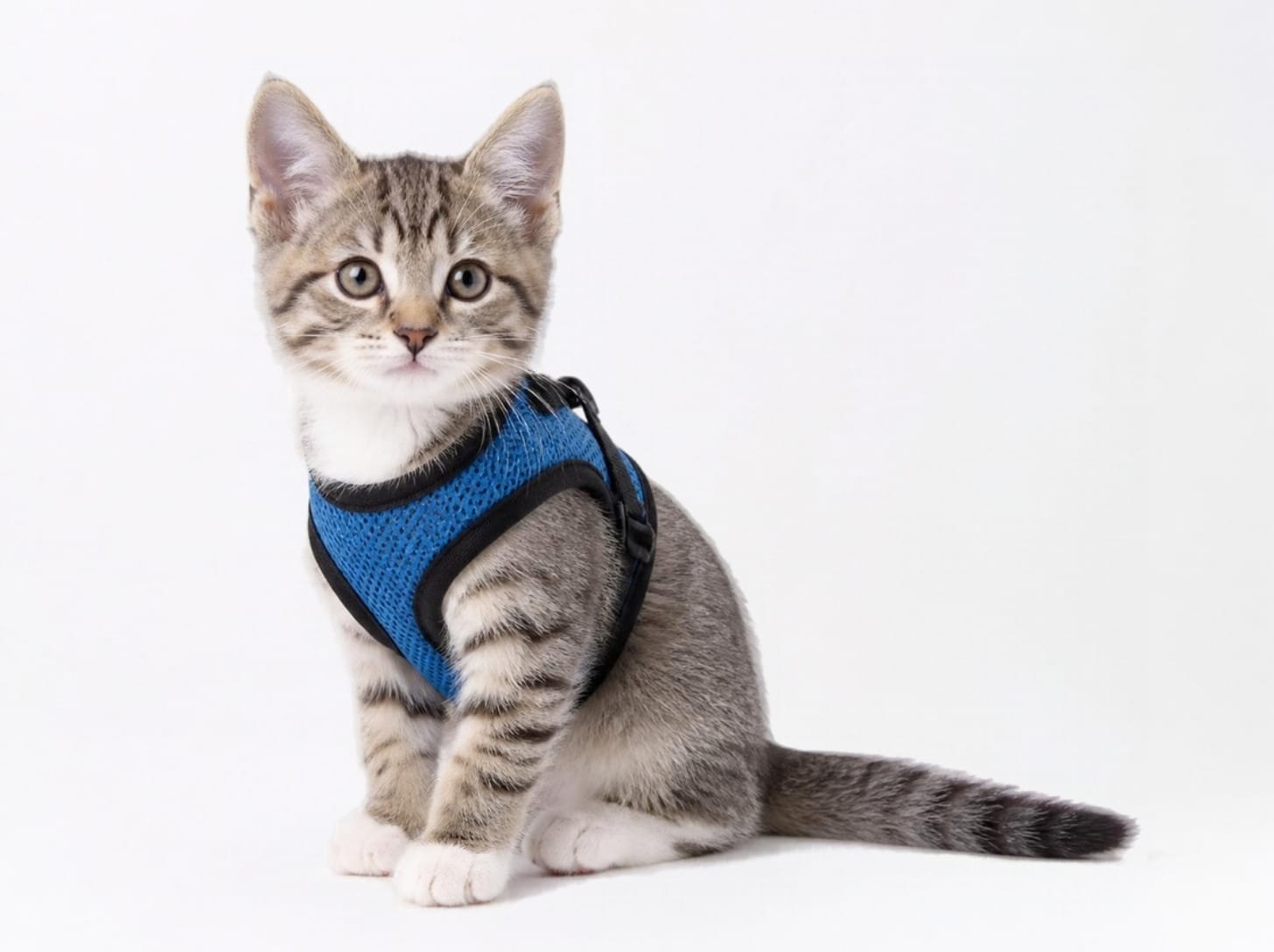
#3 Best for Kittens: Adjustable Soft Mesh
Why it’s a good fit: Kittens grow fast and have delicate chests, so the priority is a soft, light harness with a wide adjustment range rather than a fixed-size design you’ll outgrow in a month.
- Style: Soft adjustable mesh
- Wide size range
Pros
- Very lightweight — won’t discourage a kitten from moving normally
- Wide size range extends useful life as the kitten grows
- Soft edges reduce chafing on thin kitten fur
Cons
- Needs refitting every few weeks during growth spurts
- Not meant for full outdoor walks until the cat is fully grown
Who should NOT buy this: Skip if your cat is already fully grown — size up to one of the adult-sized picks above instead.
Our Analysis
Because kittens outgrow harnesses quickly, re-check the two-finger fit test from our sizing guide above every few weeks rather than assuming the initial fit still holds — a harness that fit snugly a month ago can become loose enough for a growing kitten to back out of.
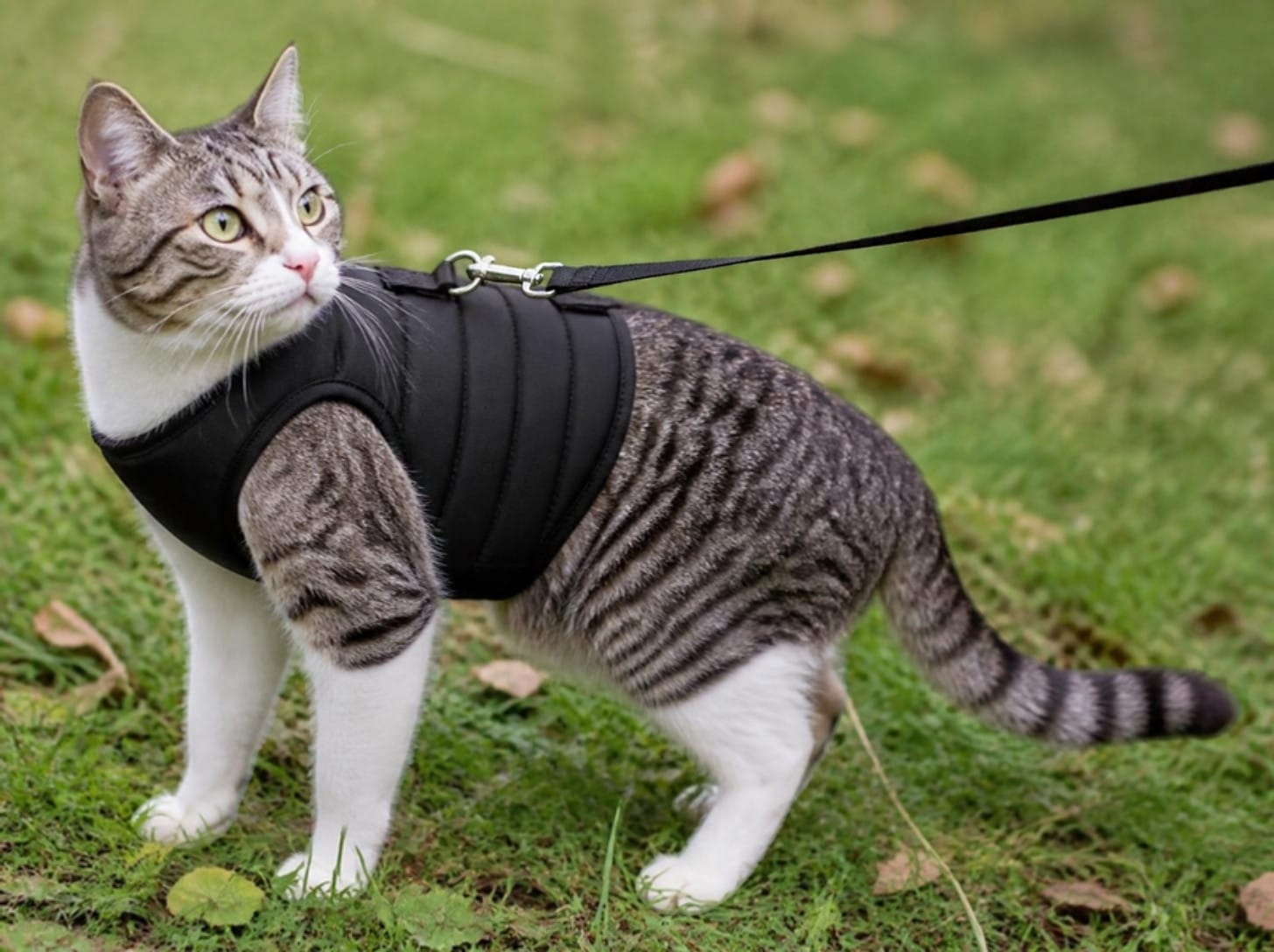
#4 Best for Training & Walking: Padded Vest with Back Clip
Why it’s a good fit: A back-mounted leash clip keeps leash pressure from pulling across the throat, which matters for cats that pull, startle, or are being actively leash-trained. Padding at the chest spreads out any sudden tension.
- Style: Padded vest
- Leash clip: Back-mounted
Pros
- Back clip keeps leash tension off the neck
- Padded chest panel reduces pull discomfort
- Sturdy clips hold up to active, pulling cats
Cons
- Heavier and less breathable than mesh options
- Overkill for cats that just need a harness for vet visits
Who should NOT buy this: Skip if you only need a harness for occasional vet trips — a basic mesh harness is lighter and cheaper for that.
Our Analysis
This style earns its keep specifically during active leash-training sessions (see our sizing/training notes above) — the back clip and padding matter most for a cat that’s still pulling or startling on leash, less so for a cat that already walks calmly.
#5 Best Budget: Basic Adjustable Mesh
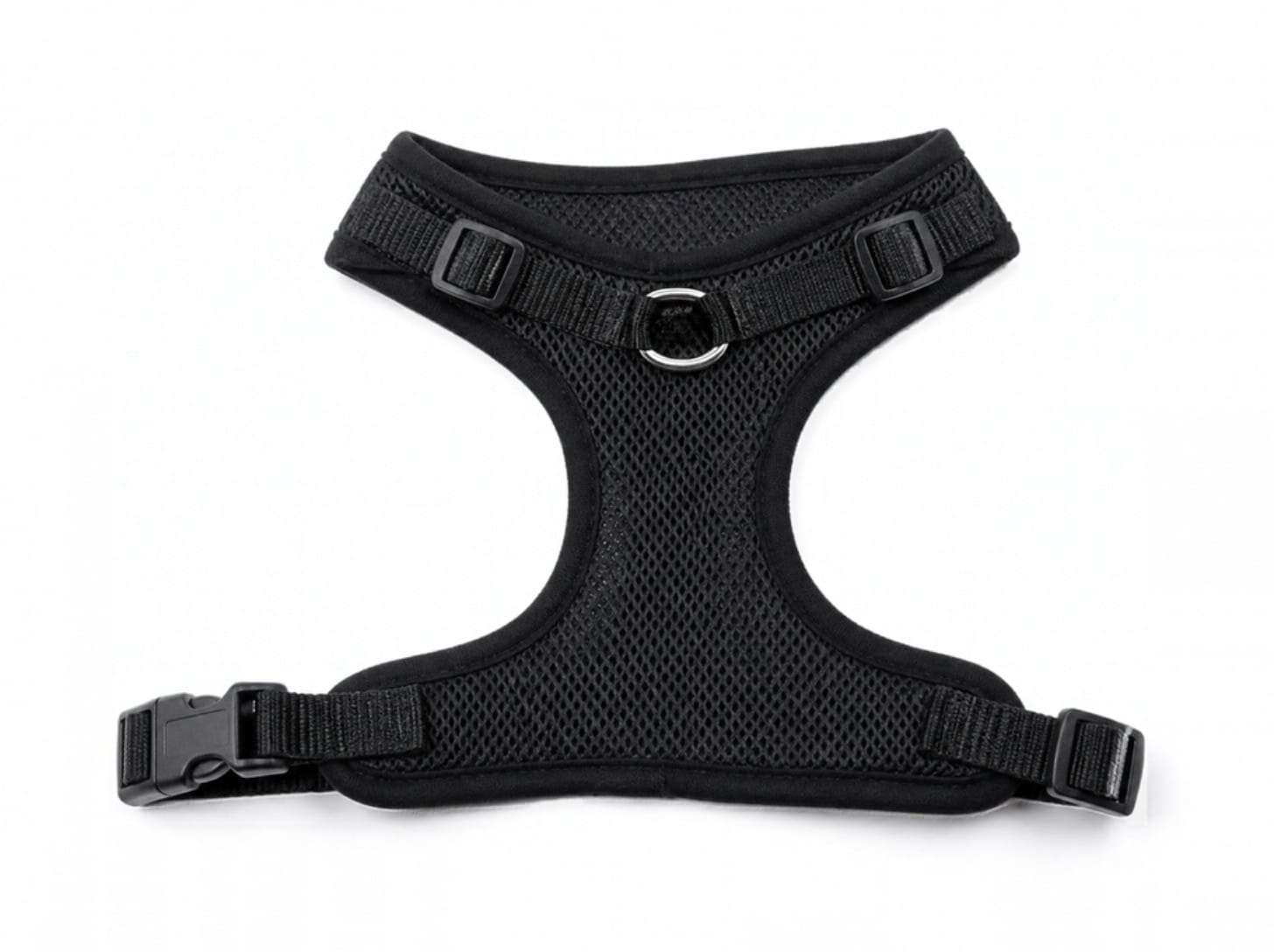
Why it’s a good fit: If you’re not sure your cat will tolerate a harness at all, it doesn’t make sense to spend a lot up front. A simple adjustable mesh harness covers the basics — snug fit, breathable fabric — without the extra cost of premium materials or clips.
- Style: Basic adjustable mesh
- Lowest cost pick
Pros
- Low-cost way to test whether your cat will accept a harness
- Lightweight and simple to adjust
Cons
- Less durable stitching and hardware than premium picks
- Fewer adjustment points — fit isn’t as precise
Who should NOT buy this: Skip if you’re planning regular outdoor walks — the lighter materials and looser fit are best suited to short, occasional use.
Our Analysis
Treat this as a trial harness: use the indoor try-on process from our sizing guide above to see whether your cat tolerates wearing one at all, then upgrade to the H-style or step-in vest pick if you move on to regular walks.
Frequently Asked Questions
Can all cats wear a harness?
Most healthy cats can, but tolerance varies a lot by individual. Kittens and younger cats typically adjust fastest; older cats or those with no prior leash exposure may need longer, gentler introduction sessions.
Harness or collar for walking a cat?
Harness, not a collar. A cat’s neck and trachea are delicate, and cats are far more likely than dogs to back out of a collar entirely — a harness distributes pressure across the chest and is much harder to slip.
How long does it take to leash-train a cat?
Anywhere from a few days to a few weeks of short, positive sessions. Start indoors with the harness on and no leash, then add the leash indoors before ever heading outside.
Why does my cat go limp when I put a harness on?
It’s a common stress response, not pain — many cats freeze or flop the first few times. Let them sit in it without forcing movement, reward with a treat, and remove it before frustration sets in; most cats loosen up over repeated short sessions.
Is it safe to leave a harness on a cat all day?
No — take it off after each walk or training session. Prolonged wear can cause matting, chafing, or skin irritation under the straps, especially on long-haired cats.
Looking for more outdoor gear? Check out our full Best Cat Toys & Gear hub for strollers, trackers, and enclosures to pair with your harness.
Research Disclaimer: This content was compiled from manufacturer specs, retailer listings, and owner-review patterns for informational purposes only — products on this page were not purchased or tested in-house. Individual cat tolerance for wearing a harness varies widely; introduce any harness gradually and stop use if your cat shows signs of distress beyond a normal adjustment period. For a cat with a health condition that affects mobility or breathing, check with your veterinarian before starting harness training.