
We independently research every product mentioned on this page, drawing on real owner reviews, product specs, and vet-reviewed sources. If you buy through a link here, Catverdict may earn a small commission — this never affects our picks or costs you anything extra. Details in our affiliate disclosure.
Bottom line: Most cats drink more water from a moving source than a still bowl, which matters for kidney and urinary health. For most households, a stainless steel fountain with multi-stage filtration is the best all-around pick — easy to keep clean and resistant to bacterial buildup. If you have 3+ cats, size up to a large-capacity model so you’re not refilling daily.
This guide is for owners who want their cat drinking more water, whether that’s a picky drinker, a multi-cat household, or just upgrading from a still bowl.
Curious how we evaluate and rank every pick on this page? See our How We Choose Our Picks.
Jump to a section
At-a-Glance Comparison: Best Cat Water Fountain
| Pick | Best For | Material |
|---|---|---|
| Best Overall | Most households | Stainless steel, multi-stage filter |
| Best for Multiple Cats | 3+ cats | Large-capacity (100oz+) |
| Best for Picky Drinkers | Cats that ignore still water | Ceramic, multiple stream types |
| Best Quiet | Noise-sensitive cats or bedrooms | Ultra-quiet pump (under 30dB) |
| Best Budget | Trying a fountain for the first time | BPA-free plastic |
Buyer’s Guide: Choosing the Right Cat Water Fountain
How We Chose These Fountains
Cats are instinctively drawn to moving water — in the wild, still water is more likely to be stagnant or contaminated, so many cats simply drink less from a static bowl. We compiled these picks around four practical criteria: material safety and ease of cleaning, filtration quality, pump noise level, and capacity relative to household size. None of these were purchased and tested in-house — this is a selection built from product specs, materials, and owner feedback patterns, not hands-on testing.
Stainless Steel vs. Ceramic vs. Plastic
Stainless steel resists scratching and bacterial buildup better than plastic, and most models are dishwasher-safe. Ceramic has a smooth, non-porous glazed surface that resists biofilm even better than steel, though it’s heavier and can chip if dropped. Plastic is the cheapest option but scratches easily over time, and scratches can trap bacteria and odor — it’s a reasonable starting point, but steel or ceramic last longer and stay cleaner with less effort.
Filtration and Maintenance
Multi-stage filters typically combine a mechanical layer (catches fur and debris), an activated carbon layer (removes odor and improves taste), and sometimes an ion-exchange resin (softens hard water). Replace filters every 2–4 weeks for most models, and do a full clean of the pump and reservoir weekly — a fountain that isn’t cleaned regularly can grow biofilm just as easily as a dirty bowl, undermining the whole point of using one.
Top 5 Cat Water Fountain Reviews

#1 Best Overall: Stainless Steel with Filtration
Why it’s a good fit: Stainless steel (304-grade is the standard to look for) resists bacterial colonization far better than plastic, and the smooth surface makes weekly cleaning quick. Paired with a multi-stage filter, it covers both water quality and hygiene in one unit.
- Material: 304 stainless steel
- Filtration: Multi-stage (carbon + mechanical)
- Dishwasher-safe basin
Pros
- Resists bacteria and odor better than plastic
- Dishwasher-safe basin on most models
- Durable — doesn’t scratch or degrade like plastic over time
Cons
- Pricier upfront than plastic models
- Can show water spots in hard-water areas
Who should NOT buy this: Skip if you want the absolute lowest upfront cost — the budget plastic pick below is cheaper to try first.
Our Analysis
Stainless steel is the safest default material for most households because it combines durability with easy cleaning (see our material comparison above) — it’s the pick we’d recommend trying first unless you have a specific reason to choose ceramic or plastic instead.
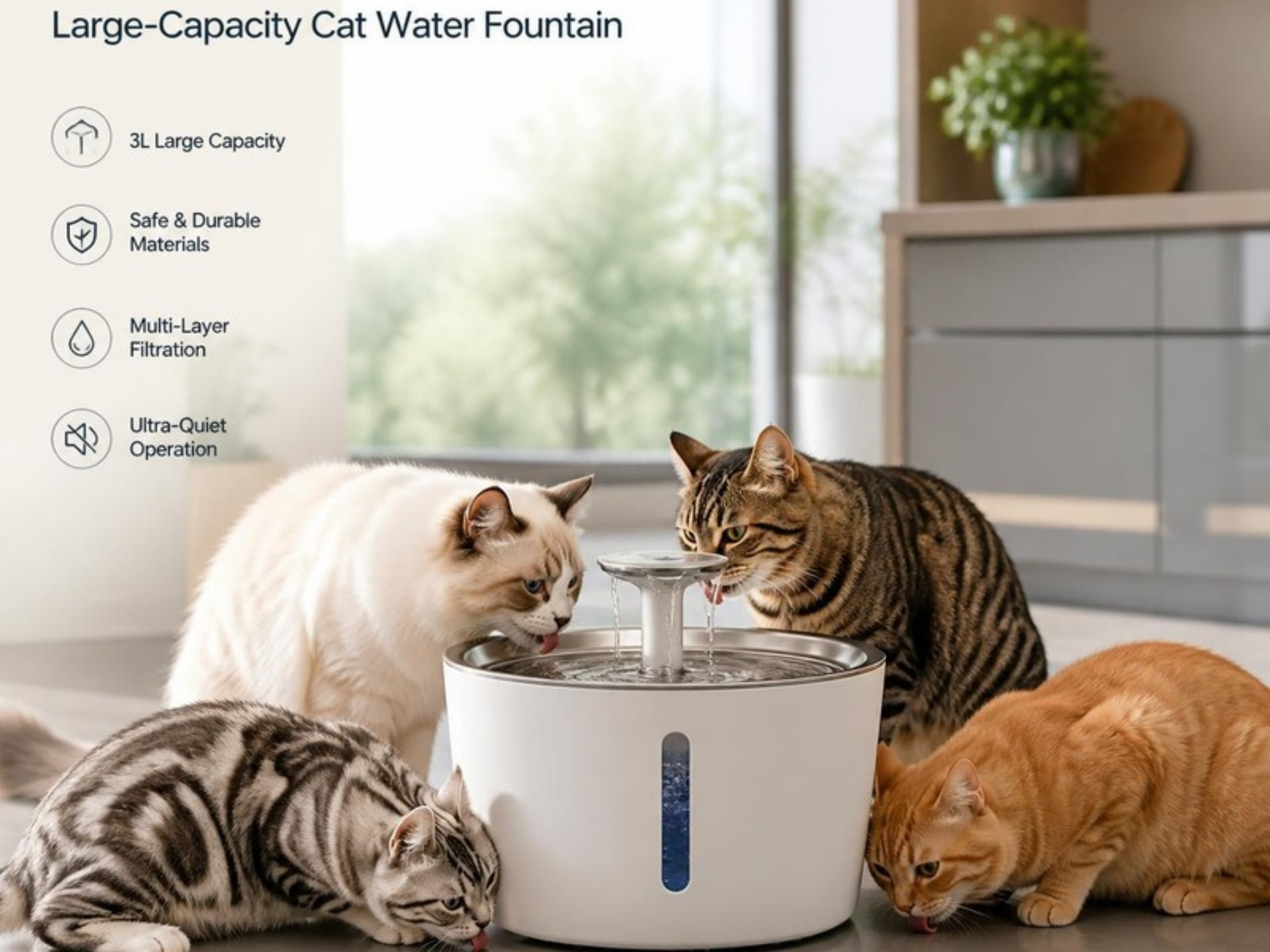
#2 Best for Multiple Cats: Large-Capacity Fountain
Why it’s a good fit: A 100oz+ reservoir means you’re not topping it off every day in a multi-cat household, and a visible water-level window makes it easy to check at a glance without opening the unit.
- Capacity: 100oz+ (3L+)
- Water-level window
- Multiple drinking streams
Pros
- Fewer refills needed, even with 3+ cats
- Multiple streams reduce competition at the bowl
- Water-level window takes the guesswork out of refilling
Cons
- Bulkier footprint — needs more counter or floor space
- Takes longer to fully drain and clean than smaller models
Who should NOT buy this: Skip if you have just one cat in a small space — the smaller stainless steel or ceramic picks above are easier to manage.
Our Analysis
For multi-cat homes, capacity matters as much as material — even the best filtration can’t make up for a reservoir that runs dry between refills, so we’d prioritize this pick’s size over a smaller, more premium unit in a 3+ cat household.
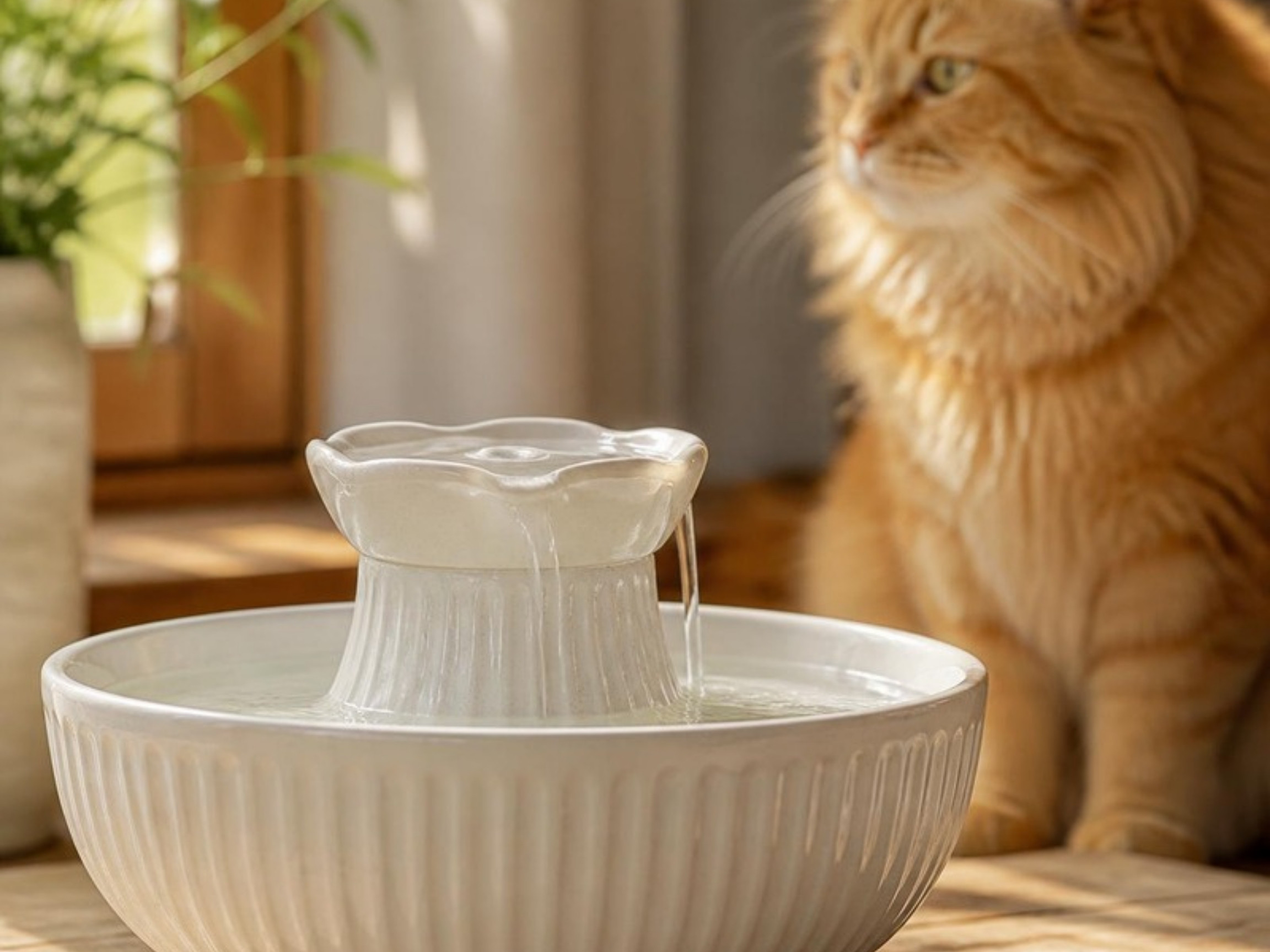
#3 Best for Picky Drinkers: Ceramic with Multiple Streams
Why it’s a good fit: The glazed ceramic surface is even smoother than stainless steel at the microscopic level, which resists biofilm formation and keeps water tasting fresher longer. Multiple stream types (bubbling top flow, side streams, still pool) give a picky cat more than one way to drink.
- Material: Glazed ceramic
- Multiple stream types
- Chip-resistant glaze
Pros
- Smoothest surface of the common materials — resists biofilm well
- Multiple stream styles suit cats with strong drinking preferences
- Doesn’t retain plastic taste or odor
Cons
- Can crack or chip if dropped
- Heavier than stainless steel or plastic equivalents
Who should NOT buy this: Skip if you have small kids or a rambunctious dog that could knock it off a counter — stainless steel handles accidental drops better.
Our Analysis
If a cat has ignored a bowl or a basic fountain before, this is the pick worth trying next — the combination of stream variety and a non-porous surface addresses the two most common reasons picky cats avoid water sources.

#4 Best Quiet: Ultra-Quiet Pump
Why it’s a good fit: A pump rated under 30dB is barely audible over normal household noise, which matters for cats startled by motor hum or for fountains placed near a bedroom. Submersible, brushless pump designs tend to run quieter and last longer than external pumps.
- Pump noise: Under 30dB
- Submersible brushless pump
Pros
- Quiet enough for bedrooms and noise-sensitive cats
- Submersible pump design tends to run longer before needing replacement
- Low profile fits into tight spaces
Cons
- Smaller reservoir than large-capacity models
- Gentler water flow may not get a stubborn cat’s attention as fast
Who should NOT buy this: Skip if you have 3+ cats — the smaller reservoir means more frequent refills (see our large-capacity pick above instead).
Our Analysis
A cat that startles easily or avoided a previous fountain because of pump noise is the main reason to choose this over our Best Overall pick — otherwise, the stainless steel model above offers similar filtration with a larger capacity.
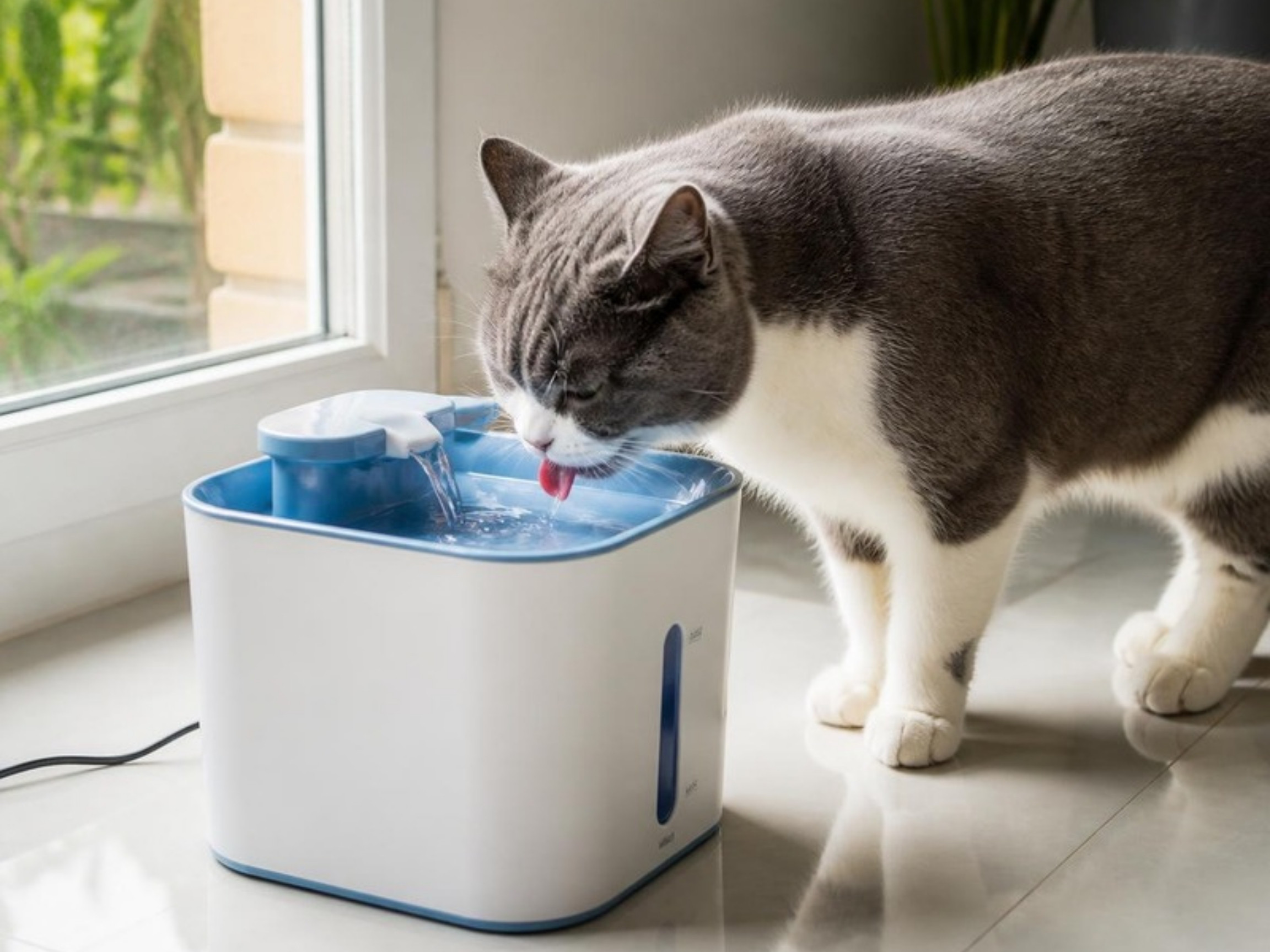
#5 Best Budget: BPA-Free Plastic
Why it’s a good fit: If you’re not sure your cat will even use a fountain, it doesn’t make sense to spend a lot to find out. A basic BPA-free plastic model covers the fundamentals — moving water and simple filtration — at the lowest entry price.
- Material: BPA-free plastic
- Lowest-cost pick
Pros
- Lowest-cost way to test whether your cat likes a fountain
- Lightweight and easy to move or relocate
Cons
- Scratches over time, which can trap bacteria and odor
- Less durable long-term than steel or ceramic
Who should NOT buy this: Skip if you already know your cat drinks from moving water — go straight to the stainless steel or ceramic pick for something that lasts longer.
Our Analysis
Treat this as a trial fountain: if your cat takes to it within a couple of weeks, it’s worth upgrading to the stainless steel or ceramic pick above for easier long-term cleaning and durability.
Frequently Asked Questions
Do cats really drink more from a fountain than a bowl?
Many do. Cats are instinctively drawn to moving water, likely because in the wild, still water is more often stagnant or unsafe. Increasing water intake matters most for cats prone to urinary or kidney issues, where even modest increases in hydration can help.
How often should I clean a cat water fountain?
A full clean of the pump, reservoir, and filter housing weekly, with filter replacement every 2–4 weeks depending on the model and your water hardness. A fountain that isn’t cleaned regularly can build up biofilm just like a neglected bowl.
Why won’t my cat drink from the fountain?
Common reasons include pump noise, an unfamiliar placement, or a stream type the cat doesn’t prefer. Try moving it away from food bowls and litter boxes, running it for a few days before expecting adoption, and testing a model with a different stream style if the first one doesn’t click.
Is tap water safe to use in a cat fountain?
Yes for most households, though filtered or softened water can help in hard-water areas where mineral buildup clogs pumps faster. Check with your vet if your local water quality is a known concern.
Looking for more essentials? Check out our full Best Cat Toys & Gear hub for feeders, trackers, and other everyday gear.
Research Disclaimer: This content was compiled from manufacturer specs, retailer listings, and owner-review patterns for informational purposes only — products on this page were not purchased or tested in-house. If your cat shows a sudden change in drinking habits (much more or much less), that can be a sign of an underlying health issue — check with your veterinarian rather than relying on a new fountain to fix it.