
We independently research every product mentioned on this page, drawing on real owner reviews, product specs, and vet-reviewed sources. If you buy through a link here, Catverdict may earn a small commission — this never affects our picks or costs you anything extra. Details in our affiliate disclosure.
Bottom line: A good soft cat carrier turns a stressful vet trip into a manageable one — for most cats and households, a dual-entry soft-sided tote (opening from both the top and the front) is the best all-around pick, since it lets you load an anxious cat from above instead of forcing it through a single front door. If you fly, an airline-approved under-seat carrier is worth the extra cost; for two cats, a multi-compartment carrier saves a second trip.
This guide is for owners choosing a carrier for vet visits, travel, or moving — including a lightweight option sized for a kitten carrier — and covers sizing, carrier types, and how to get a reluctant cat inside one without a fight.
Curious how we evaluate and rank every pick on this page? See our How We Choose Our Picks.
Jump to a section
At-a-Glance Comparison: Best Soft Cat Carrier
| Pick | Best For | Style |
|---|---|---|
| Best Overall | Everyday vet trips, most cats | Dual top+front entry soft tote |
| Best for Air Travel | Flying, under-seat storage | Airline-approved soft carrier |
| Best for Two Cats | Multi-cat households, joint vet visits | Multi-compartment soft carrier |
| Best for Anxious Cats | Nervous or fearful cats | Expandable carrier, removable top |
| Best Kitten Carrier | Small or young cats | Compact lightweight soft carrier |
Buyer’s Guide: Choosing the Right Soft Cat Carrier
How We Chose These Carriers
A carrier only works if a cat can actually be gotten into it with minimal stress, and if it stays secure once zipped. We compiled these picks around four practical criteria rather than a lab test: ease of loading a reluctant cat (top-entry vs. front-only), ventilation and visibility, structural support so the carrier doesn’t sag or collapse mid-carry, and genuine owner-reported durability of zippers and seams. None of these were purchased and tested in-house — this is a selection built from product specs, materials, and buyer feedback patterns, not hands-on testing.
Soft-Sided vs. Hard-Sided Carriers
Soft-sided carriers are lighter, collapsible for storage, and generally more comfortable for the cat to lean against — the main trade-off is less rigid protection if dropped or knocked. Hard-sided carriers offer more structural protection and are easier to disinfect, but are bulkier to store and harder to fit under an airline seat. For routine vet visits and most travel, soft-sided wins on convenience; hard-sided is worth considering only for cats with mobility issues who need a flat, stable surface.
Getting the Size Right
A carrier should let your cat stand up, turn around, and lie down comfortably — not much more. An oversized carrier lets a stressed cat slide and tumble during transport; an undersized one is cramped and raises anxiety further. Measure your cat’s length (nose to base of tail) and height, and check it against the brand’s size chart rather than guessing from weight, since a long, lean cat and a short, stocky cat at the same weight often need different carrier dimensions.
If you fly, check your airline’s specific under-seat dimensions before buying — they vary by carrier and aircraft, and a carrier labeled “airline-approved” by the manufacturer isn’t a guarantee every airline will accept it without separate confirmation.
Top 5 Soft Cat Carrier Reviews
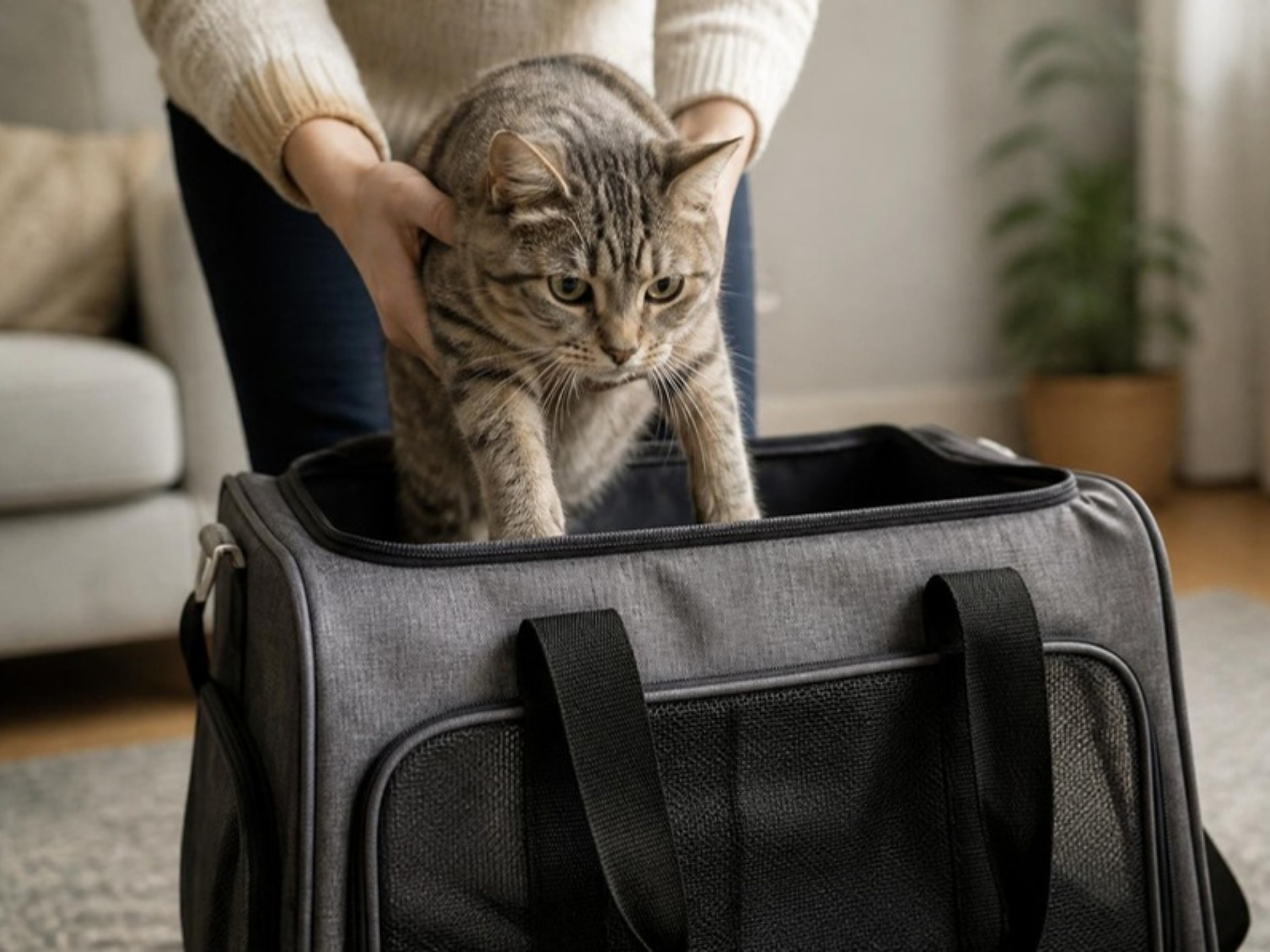
#1 Best Overall: Dual-Entry Soft-Sided Tote
Why it’s a good fit: A carrier that only opens from the front forces a scared cat through one narrow, braced-against opening. A dual-entry design lets you lower a cat in from the top instead — far less of a fight — while the front door stays useful for a calmer cat that walks in on its own.
- Style: Soft-sided tote
- Entry points: Top + front
- Shoulder strap
Pros
- Top entry makes loading a resistant cat much easier
- Mesh side panels for airflow and visibility
- Padded shoulder strap for comfortable carrying
- Folds flat for storage between trips
Cons
- Less rigid than a hard-sided carrier — can sag with a heavier cat
- Not purpose-built for airline under-seat dimensions
Who should NOT buy this: Skip if you’re flying — check the dedicated airline-approved pick below instead, since general totes aren’t guaranteed to fit under-seat rules.
Our Analysis
The top-entry design addresses the single biggest friction point in carrier use — getting a cat inside in the first place. For a cat that braces against front-only doors, lowering it in from above (ideally with a towel over its eyes to reduce visual stress) resolves most of the standoff.

#2 Best for Air Travel: Airline-Approved Under-Seat Carrier
Why it’s a good fit: Built to standard under-seat dimensions with a low, flat profile, this style is designed to slide under the seat in front of you rather than needing cabin storage. A lockable zipper and sturdy base matter more here than on a carrier that only ever goes to the vet.
- Style: Low-profile soft carrier
- Under-seat dimensions
- Lockable zippers
Pros
- Designed to fit standard under-seat dimensions
- Lockable zippers reduce escape risk in transit
- Sturdy, flat base keeps the carrier stable on the floor
Cons
- Lower ceiling height — snugger fit than a tote carrier
- “Airline-approved” by the maker still needs checking against your specific airline’s policy
Who should NOT buy this: Skip if you only ever drive to the vet — the low-profile design trades interior space for a fit you don’t need outside air travel.
Our Analysis
“Airline-approved” on the product listing reflects the manufacturer’s own claim, not a guarantee from every carrier — confirm pet carrier dimensions directly with your airline before the trip, since under-seat space varies by aircraft.
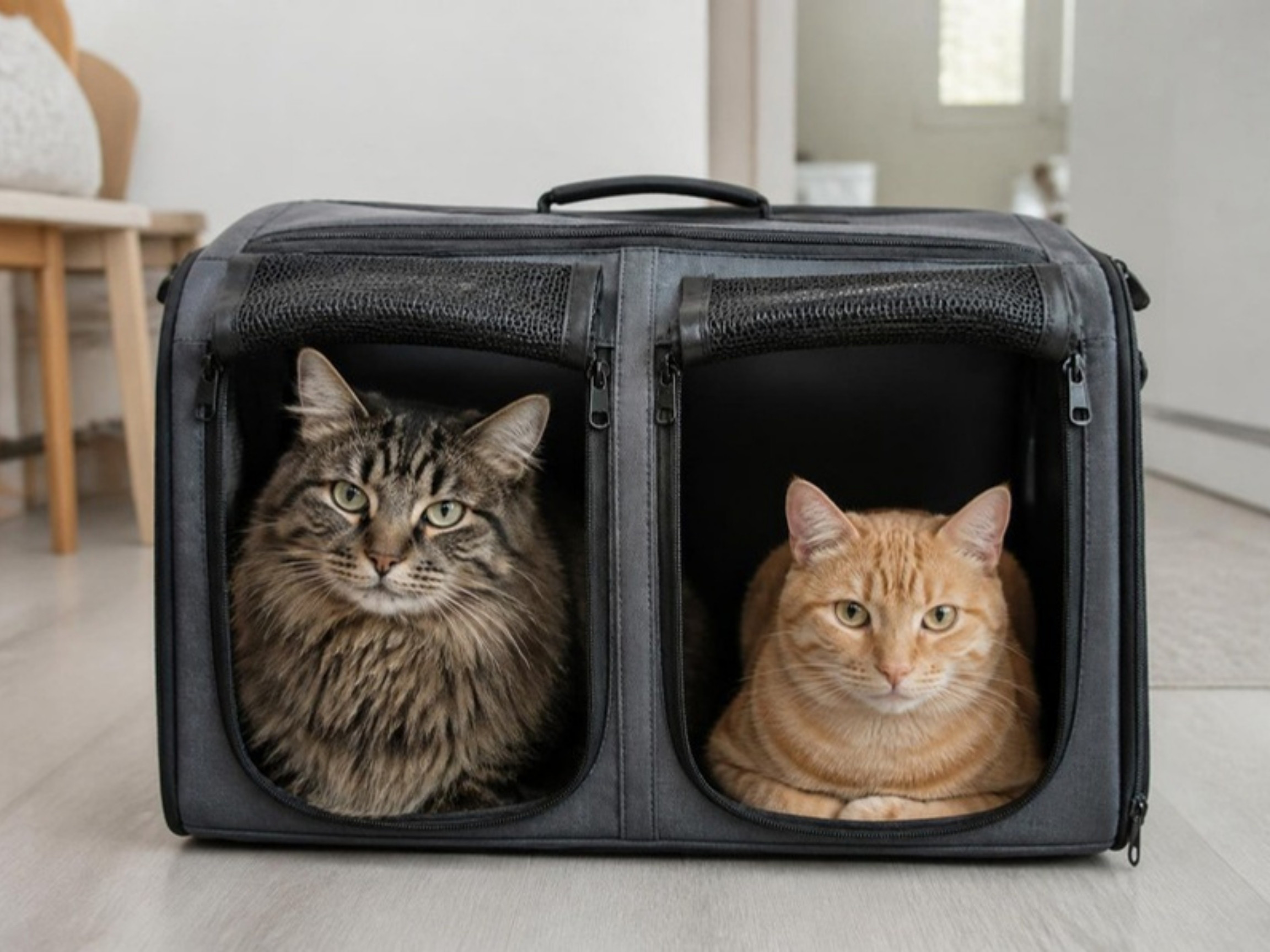
#3 Best for Two Cats: Multi-Compartment Carrier
Why it’s a good fit: A divided carrier lets two cats travel in one trip instead of two separate carriers and two car trips — each cat gets its own enclosed space, so they’re not forced to share a single compartment if they’d rather not.
- Style: Divided dual-compartment tote
- Separate entries per compartment
Pros
- One trip for two cats instead of two separate carriers
- Each cat gets a fully separate compartment
- Central carry handle balances the combined weight
Cons
- Heavier and bulkier than a single-cat carrier
- Each compartment is narrower than a standard single carrier
Who should NOT buy this: Skip if your cats are reactive to each other when stressed — separate single carriers may be calmer even if it means two trips.
Our Analysis
Worth it mainly for cats that are already comfortable near each other — the shared carrier means one cat’s stress response (yowling, scratching at the divider) is audible and visible to the other, which can work for bonded pairs or backfire for cats that don’t get along.
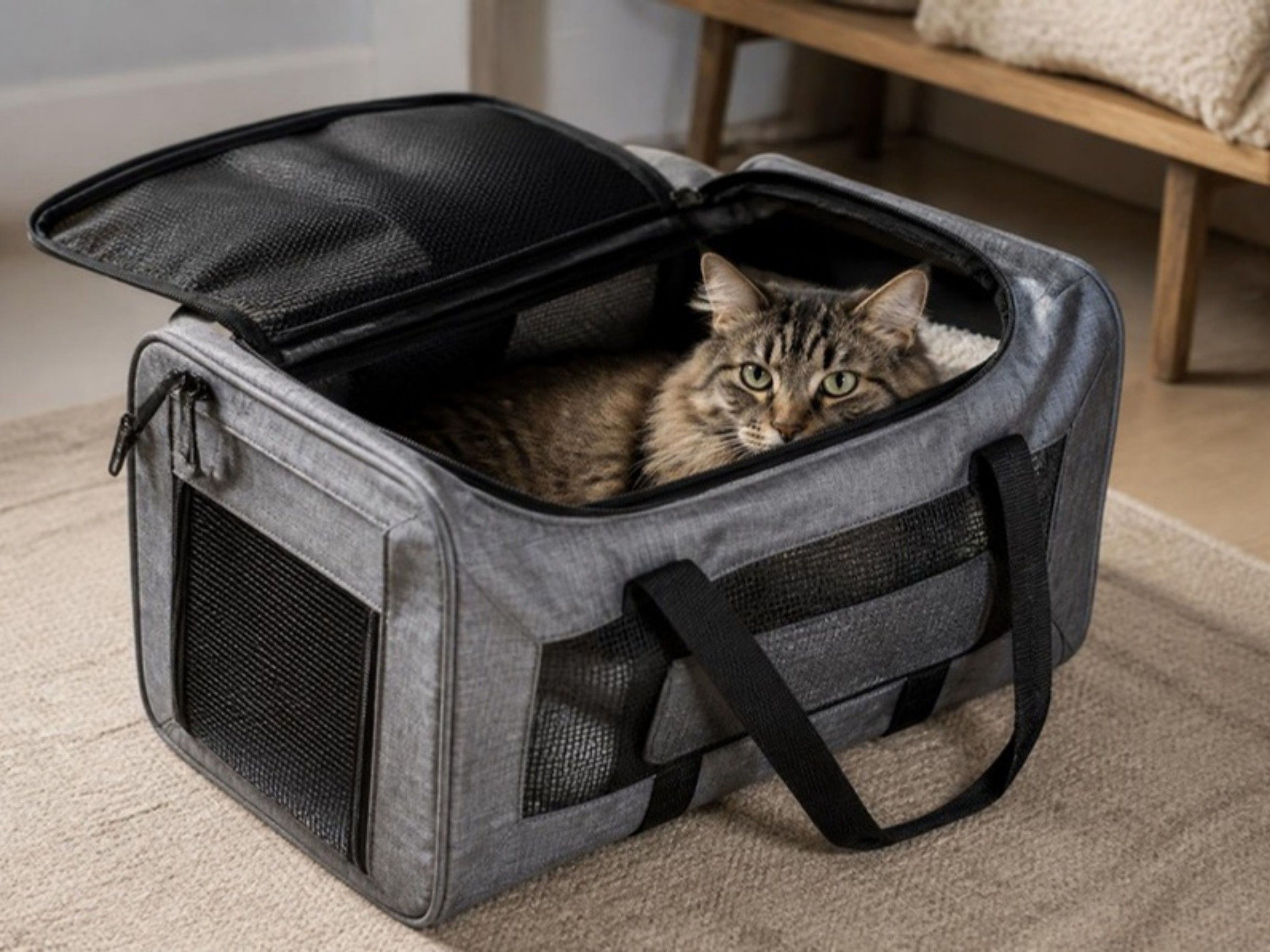
#4 Best for Anxious Cats: Expandable Carrier with Removable Top
Why it’s a good fit: A removable or fully unzippable top turns the carrier into an open-topped box at the vet — many clinics will examine a nervous cat right inside its own carrier base rather than pulling it out entirely, which cuts down on added handling stress.
- Style: Expandable, removable top panel
- Vet-exam friendly
Pros
- Removable top lets vets examine a cat without fully extracting it
- Expandable sides give extra room once stationary
- Reduces the “forced out of the carrier” stress point
Cons
- Bulkier than a basic tote due to the expansion panels
- More zippers and seams means more potential failure points over time
Who should NOT buy this: Skip if your cat tolerates vet visits calmly — this style’s benefit is specifically for in-carrier exams, which isn’t worth the extra bulk otherwise.
Our Analysis
Mention to your vet ahead of time that your carrier has a removable top — many clinics are glad to examine an anxious cat in place rather than lifting it out onto a table, and it’s one of the more effective low-stress handling options available for carrier-averse cats.
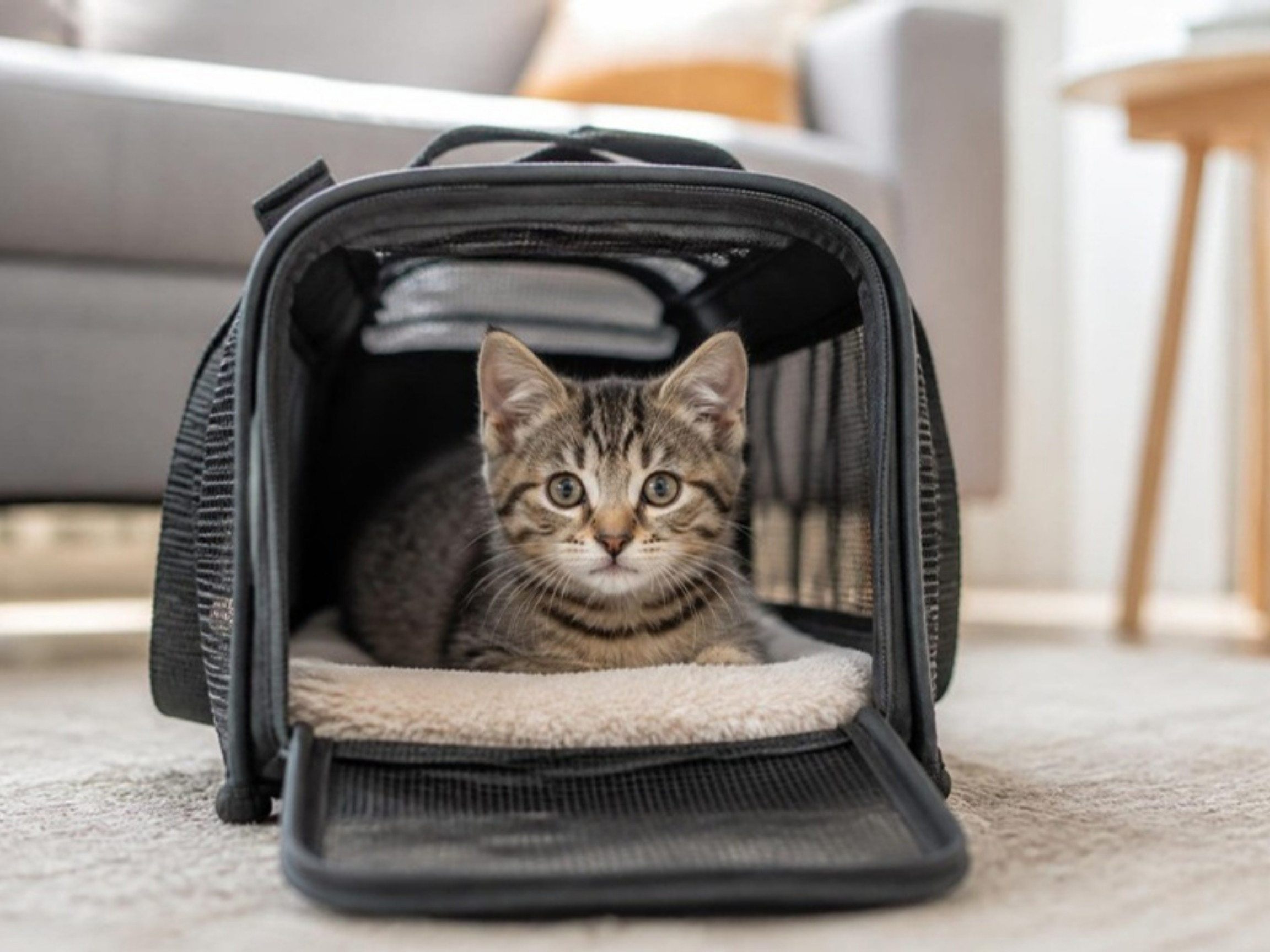
#5 Best Kitten Carrier: Compact Lightweight Soft Carrier
Why it’s a good fit: A full-size carrier leaves a kitten with too much room to slide around during transport. A compact, lightweight carrier sized for a kitten keeps them more secure and is easier to carry one-handed on quick first vet visits.
- Style: Compact soft-sided
- Lightweight frame
Pros
- Snugger fit keeps a small kitten from sliding during transport
- Lighter and easier to carry one-handed
- Usually the lowest-cost option on this list
Cons
- Kittens outgrow it within several months
- Too small for an adult cat — plan to size up later
Who should NOT buy this: Skip if your cat is already full-grown — size up to one of the full-size picks above instead.
Our Analysis
Treat this as a starter carrier: it’s sized for comfort and security during a kitten’s early vet visits, but check your kitten’s length against the product’s size chart every couple of months, since most kittens outgrow a compact carrier well before their first birthday.
Frequently Asked Questions
How do I get a scared cat into a carrier?
A top-entry carrier makes this much easier — lower the cat in from above rather than pushing it through a front door. Draping a towel over the cat’s eyes briefly during loading, and keeping the carrier out and accessible between trips (rather than only appearing right before the vet), both reduce the association between carrier and stress.
What size carrier does my cat need?
Big enough to stand, turn around, and lie down — not much more. Measure nose-to-tail length and shoulder height and compare against the brand’s size chart rather than estimating from weight alone.
Is a soft-sided or hard-sided carrier better?
Soft-sided is lighter, more comfortable to lean against, and easier to store; hard-sided offers more structural protection and is easier to clean. For routine vet visits and most travel, soft-sided is the more practical everyday choice.
Can I bring a soft carrier on a plane?
Most airlines accept soft-sided carriers that fit under the seat in front of you, but exact dimensions and pet policies vary by airline and aircraft. Always confirm directly with your airline before booking rather than relying solely on a manufacturer’s “airline-approved” label.
How do I get my cat used to a carrier?
Leave the carrier out in a regular living space with the door open, add a blanket or a treat inside, and let the cat explore it on its own schedule — ideally weeks before it’s actually needed for a trip, so it stops being a signal that something stressful is about to happen.
Can I wash a soft-sided cat carrier?
Many soft-sided carriers have a removable, machine-washable liner or pad — check the specific product’s care instructions. The outer shell on most models should be spot-cleaned rather than fully machine washed, since washing can affect stitching and structural panels.
Looking for more travel and everyday gear? Check out our full Best Cat Toys & Gear hub for strollers, trackers, and harnesses to pair with your carrier.
Research Disclaimer: This content was compiled from manufacturer specs, retailer listings, and owner-review patterns for informational purposes only — products on this page were not purchased or tested in-house. Individual cat tolerance for carrier travel varies widely; introduce any carrier gradually before a trip, and if your cat shows signs of extreme distress (panting, excessive drooling, prolonged yowling) during transport, talk to your veterinarian about additional low-stress handling strategies.