
We independently research every product mentioned on this page, drawing on real owner reviews, product specs, and vet-reviewed sources. If you buy through a link here, Catverdict may earn a small commission — this never affects our picks or costs you anything extra. Details in our affiliate disclosure.
Bottom line: High calorie cat food is formulated for cats that need to gain weight back — after illness, surgery, a shelter rescue, or simple age-related appetite decline — not for a cat that’s already a healthy weight. For most underweight cats, a calorie-dense wet pâté built around fat and animal protein is the easiest first step; cats recovering from a medical setback often do better on a vet-formulated recovery diet instead.
This guide is for owners working with their vet to help a cat gain or maintain weight — it covers wet, dry, and recovery-style options, plus how to introduce extra calories without triggering stomach upset.
Curious how we evaluate and rank every pick on this page? See our How We Choose Our Picks.
Jump to a section
At-a-Glance Comparison: Best High Calorie Cat Food
| Pick | Best For | Format |
|---|---|---|
| Best Overall | Everyday weight gain, picky eaters | Calorie-dense wet pâté |
| Best Dry Food | Free-feeding, multi-cat households | High-fat dry kibble |
| Best Booster | Adding calories to existing food | Nutrient gel/paste supplement |
| Best Budget Pick | Calorie-dense without a “recovery” price tag | Kitten-formula dry or wet food |
| Best for Medical Recovery | Post-surgery, illness, severe underweight | Vet-style recovery diet |
Buyer’s Guide: Helping an Underweight Cat Gain Weight Safely
How We Chose These Foods
Weight gain in cats isn’t just “more food” — it’s about calorie density per serving, since a cat with a reduced appetite often can’t simply eat a larger volume. We prioritized products with a clearly stated high kcal/cup or kcal/can figure, animal fat and protein as primary calorie sources rather than carbohydrate filler, and a track record of being palatable to cats with a reduced appetite. None of these were purchased and tested in-house — this is a selection built from product specs, label data, and owner feedback patterns, not hands-on testing.
When Weight Gain Food Actually Makes Sense
High calorie food is appropriate for a cat that’s medically underweight, recovering from surgery or illness, a rescue coming off poor nutrition, or a senior cat losing weight from reduced appetite. It is not something to feed a healthy-weight cat “just in case” — unmonitored weight gain carries its own health risks (joint stress, diabetes risk, fatty liver if a cat refuses food and loses weight too fast in the other direction). A vet visit to rule out an underlying medical cause for the weight loss should come before switching foods, not after.
How to Introduce Calorie-Dense Food Without Stomach Upset
Sudden rich, fatty food can cause diarrhea or vomiting in a cat whose gut isn’t used to it — which defeats the purpose. Mix the new food in gradually over 5–7 days, starting at about 25% new food to 75% current food, and increase the ratio every couple of days. Smaller, more frequent meals are generally better tolerated than one or two large ones when the goal is weight gain.
Top 5 High Calorie Cat Food Reviews

#1 Best Overall: Calorie-Dense Wet Pâté
Why it’s a good fit: A soft, high-fat pâté delivers more calories per bite than kibble, so a cat eating a smaller volume still takes in meaningful energy. The smooth texture is also easier on cats recovering from dental work or with a reduced appetite from illness.
- Format: Wet pâté
- ~1.3–1.6x the calorie density of standard wet food
- Animal fat + protein led
Pros
- High calorie density per can, so less volume needed
- Soft texture easy on cats with reduced appetite or dental issues
- High moisture also supports hydration during recovery
- Generally very palatable, even to picky or ill cats
Cons
- Higher cost per day than standard wet food
- Rich fat content can cause loose stool if introduced too fast
Who should NOT buy this: Skip if your cat is already a healthy weight, or has a history of pancreatitis — check with your vet before adding a high-fat food in that case.
Our Analysis
Calorie density matters more than total food volume for a cat with a suppressed appetite. A pâté that packs more kcal into the same can size lets an owner hit a target calorie intake without forcing an already-reluctant eater to eat more food than it wants to.

#2 Best Dry Food: High-Fat Kibble for Weight Gain
Why it’s a good fit: For households that free-feed or have multiple cats, a calorie-dense dry food lets an underweight cat take in more energy without a complete feeding-routine overhaul. Look for a performance or “muscle maintenance” style formula rather than a weight-management one.
- Format: Dry kibble
- ~450+ kcal/cup
- Higher fat % than standard adult formulas
Pros
- Convenient for free-feeding or multi-cat households
- Longer shelf life once opened than wet food
- Crunch can help with dental tartar as a side benefit
Cons
- Lower moisture than wet food — doesn’t help hydration during recovery
- Easy to overshoot calories in a multi-cat household without portioning
Who should NOT buy this: Skip if your cat needs extra hydration (post-surgery, kidney concerns) — a wet or mixed diet serves that need better than dry alone.
Our Analysis
A high-fat dry formula is a practical choice when a household can’t closely supervise individual feeding — the trade-off is that it’s harder to confirm exactly how much the underweight cat is actually eating versus a healthier housemate.
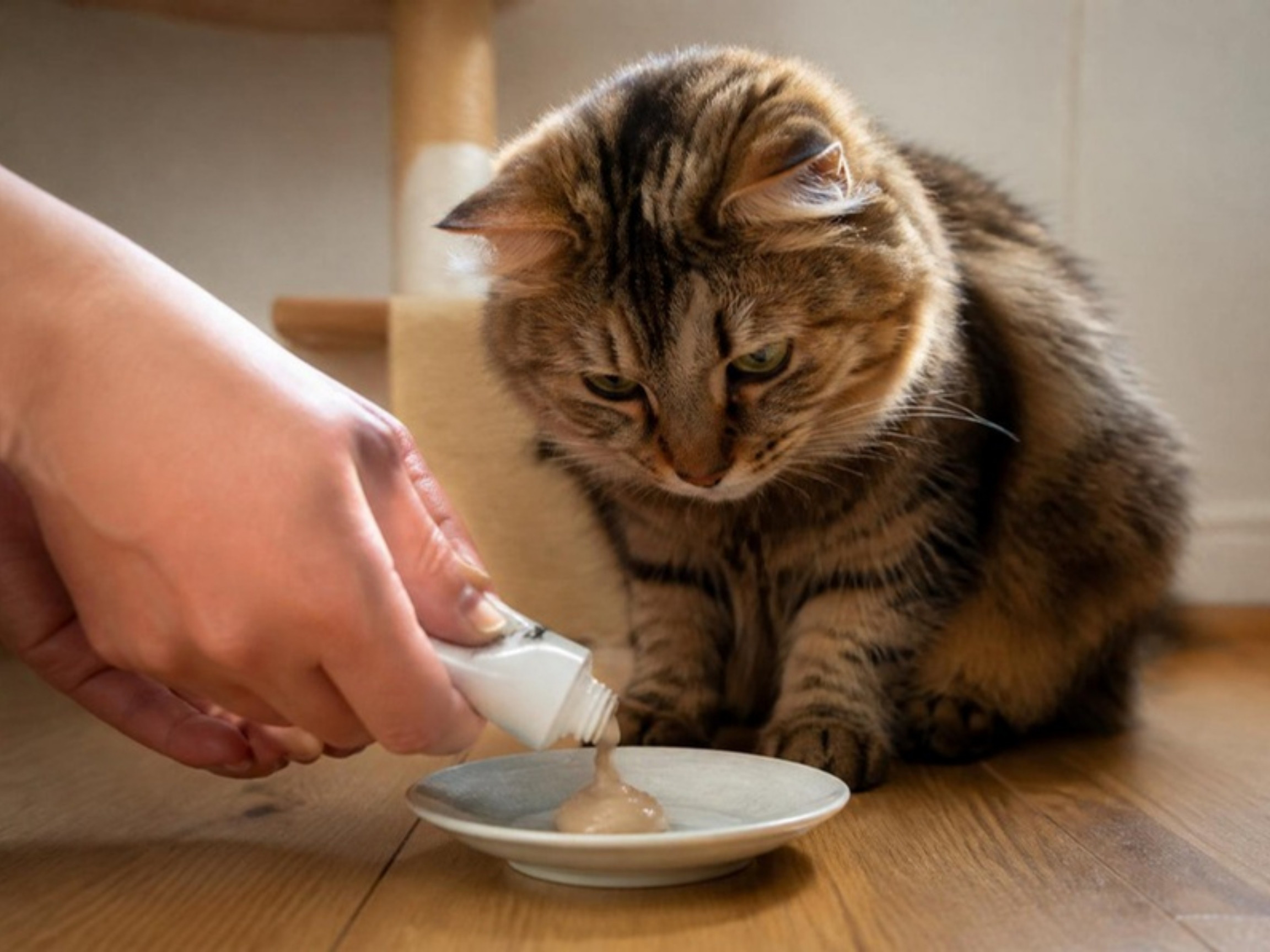
#3 Best Booster: Calorie Supplement Gel/Paste
Why it’s a good fit: Rather than switching foods entirely, a high-calorie gel or paste supplement can be added on top of a cat’s existing diet — useful for a cat that refuses to eat anything new, or as a bridge while transitioning foods gradually.
- Format: Gel/paste topper
- High-calorie per small serving
- Often includes vitamins/taurine
Pros
- Doesn’t require changing a cat’s main food
- Useful for cats that strongly resist new foods
- Easy to dose precisely, small volume
Cons
- Not a substitute for a complete, balanced diet on its own
- Added calories can be easy to under- or over-dose without a vet-set target
Who should NOT buy this: Skip relying on this alone if the underlying issue is a cat refusing food entirely — that calls for a vet visit, not just added calories.
Our Analysis
Supplement gels work best as a short-term bridge or an addition to a complete diet, not as the primary calorie source long-term. They’re most useful for cats mid-transition to a new food, or recovering from a short illness where appetite is expected to return soon.

#4 Best Budget Pick: Kitten-Formula Food for Adult Weight Gain
Why it’s a good fit: Kitten food is formulated to be more calorie- and protein-dense than standard adult food, since kittens need more energy per pound of body weight to grow. That same density makes it a reasonably priced short-term option for an adult cat needing to gain weight.
- Format: Kitten dry or wet food
- Higher protein + fat than adult formulas
- Short-term use (ask your vet about duration)
Pros
- Calorie-dense without the “prescription” price tag
- Widely available at any pet store
- Good texture variety across brands (wet and dry)
Cons
- Not formulated with adult cats’ nutrient balance in mind long-term
- Should be used as a temporary bridge, not a permanent diet, for most adult cats
Who should NOT buy this: Skip as a long-term solution — this works as a short, supervised bridge while gaining weight, not an indefinite adult diet.
Our Analysis
This is a budget-friendly option precisely because kitten food is already optimized for rapid, calorie-dense growth — the same density that benefits a growing kitten works for an adult cat that needs to put weight back on, as long as it’s a temporary strategy agreed with a vet rather than an indefinite swap.

#5 Best for Medical Recovery: Vet-Style Recovery Diet
Why it’s a good fit: Cats recovering from surgery, significant illness, or severe underweight conditions often need more than just extra calories — they need a nutrient profile built specifically for recovery, sometimes alongside syringe or tube feeding. These formulas are designed with a vet’s involvement in mind.
- Format: Recovery/convalescence diet
- Very high calorie density
- Often requires a vet recommendation
Pros
- Highest calorie density of any option on this list
- Formulated with recovery-specific nutrient needs in mind
- Often available in a syringe-feedable texture for cats that won’t eat on their own
Cons
- Most expensive option here
- Best used under direct veterinary guidance, not self-prescribed
Who should NOT buy this: Skip self-prescribing this for routine weight gain — it’s intended for medically supervised recovery, and a vet should confirm it’s the right fit first.
Our Analysis
Recovery diets exist because a cat bouncing back from surgery or serious illness has different needs than one that’s simply a picky eater — higher protein to rebuild muscle mass, easily digestible fat, and often a texture that works for syringe feeding when a cat won’t eat unassisted.
Frequently Asked Questions
How many calories does an underweight cat need per day?
It depends on the cat’s target weight, current weight, and the cause of the weight loss — there’s no single number. A vet can calculate a target daily calorie intake based on resting energy requirement formulas and adjust it as the cat’s weight responds. Don’t guess at a large calorie increase on your own, especially for a cat recovering from illness.
Is high calorie cat food safe for a healthy-weight cat?
Feeding dedicated weight-gain food to an already healthy-weight cat isn’t appropriate — it’s formulated to add weight, and doing so to a cat that doesn’t need it raises the risk of excess weight gain and related health problems like joint stress and diabetes risk. These products are meant for cats confirmed to be underweight, not as an everyday diet.
Why is my cat not gaining weight even on high calorie food?
Persistent weight loss or failure to gain despite a calorie-dense diet is a sign to go back to the vet, not to increase food further on your own. Causes range from hyperthyroidism and intestinal disease to dental pain preventing adequate eating, and these need diagnosis and treatment rather than a food change alone.
Can I just feed my cat more of its regular food instead?
You can, but it’s often less effective — a cat with a reduced appetite may not be willing or able to eat a larger volume of the same food. Calorie-dense food lets you deliver more energy in a smaller amount, which matters most for cats that are already struggling to eat enough.
How long should a cat stay on high calorie food?
This should be set by a vet based on the cat’s progress toward a target weight, not left indefinite by default. Once a healthy weight is reached, most cats are transitioned back to a standard maintenance diet to avoid overshooting into overweight territory.
Also feeding a kitten? See our best food for kittens guide for life-stage-specific picks.
Research Disclaimer: This article is for informational purposes and was researched using veterinary and nutrition sources — it was not written by a veterinarian, and no products listed here were purchased or tested in-house. Significant or unexplained weight loss in a cat should always be evaluated by a veterinarian before changing diet, since it can signal an underlying medical condition that food alone won’t fix.