
We independently research every product mentioned on this page, drawing on real owner reviews, product specs, and vet-reviewed sources. If you buy through a link here, Catverdict may earn a small commission — this never affects our picks or costs you anything extra. Details in our affiliate disclosure.
Bottom line: Kittens need noticeably more protein, fat, and calories per pound than adult cats to support rapid growth — a food simply labeled “cat food” without a kitten or “all life stages” formulation usually falls short. A high-protein dry kitten food is the easiest everyday base for most households; adding a wet kitten food at least once a day boosts hydration and gets kittens comfortable with both textures early.
This guide covers dry, wet, indoor-formula, and treat options for kittens from weaning through about 12 months, plus when to transition to adult food.
Curious how we evaluate and rank every pick on this page? See our How We Choose Our Picks.
Jump to a section
At-a-Glance Comparison: Best Food for Kittens
| Pick | Best For | Format |
|---|---|---|
| Best Overall | Everyday growth nutrition | High-protein dry kitten food |
| Best Wet Food | Hydration, weaning kittens | Wet kitten food |
| Best for Indoor Kittens | Smaller, less active kittens | Indoor kitten formula |
| Best Value | Multi-kitten litters, budget | Dry kitten food, large bag |
| Best Treats | Training and bonding | Soft kitten training treats |
Buyer’s Guide: Feeding a Growing Kitten
How We Chose These Foods
We prioritized foods labeled complete and balanced specifically for growth (kitten) or all life stages, with a named animal protein first on the ingredient list and a clearly stated higher calorie density than adult formulas. Palatability for weaning-age kittens and consistent availability across major retailers also factored in. None of these were purchased and tested in-house — this is a selection built from product specs, label data, and owner feedback patterns, not hands-on testing.
Why Kittens Need Different Nutrition Than Adult Cats
A kitten’s energy requirement per pound of body weight is roughly double an adult cat’s, driven by rapid skeletal growth, muscle development, and a developing immune system. Kitten formulas deliver more protein, fat, calcium, phosphorus, and DHA (important for brain and vision development) than adult maintenance food. Feeding an adult formula to a growing kitten risks undernourishment during the most critical growth window of its life.
Wet vs. Dry for Kittens — and When to Switch to Adult Food
Both textures have a place: wet food is easier for very young kittens to eat and chew, and its higher moisture supports hydration during weaning. Dry food is more convenient and calorie-dense for free-feeding as kittens grow. Most vets recommend offering both textures early so a kitten doesn’t become a picky eater locked into one format as an adult. Kittens are generally transitioned to adult food between 10 and 12 months, or around 9 months for large breeds that mature more slowly — ask your vet for timing specific to your kitten’s breed and growth curve.
Top 5 Kitten Food Reviews
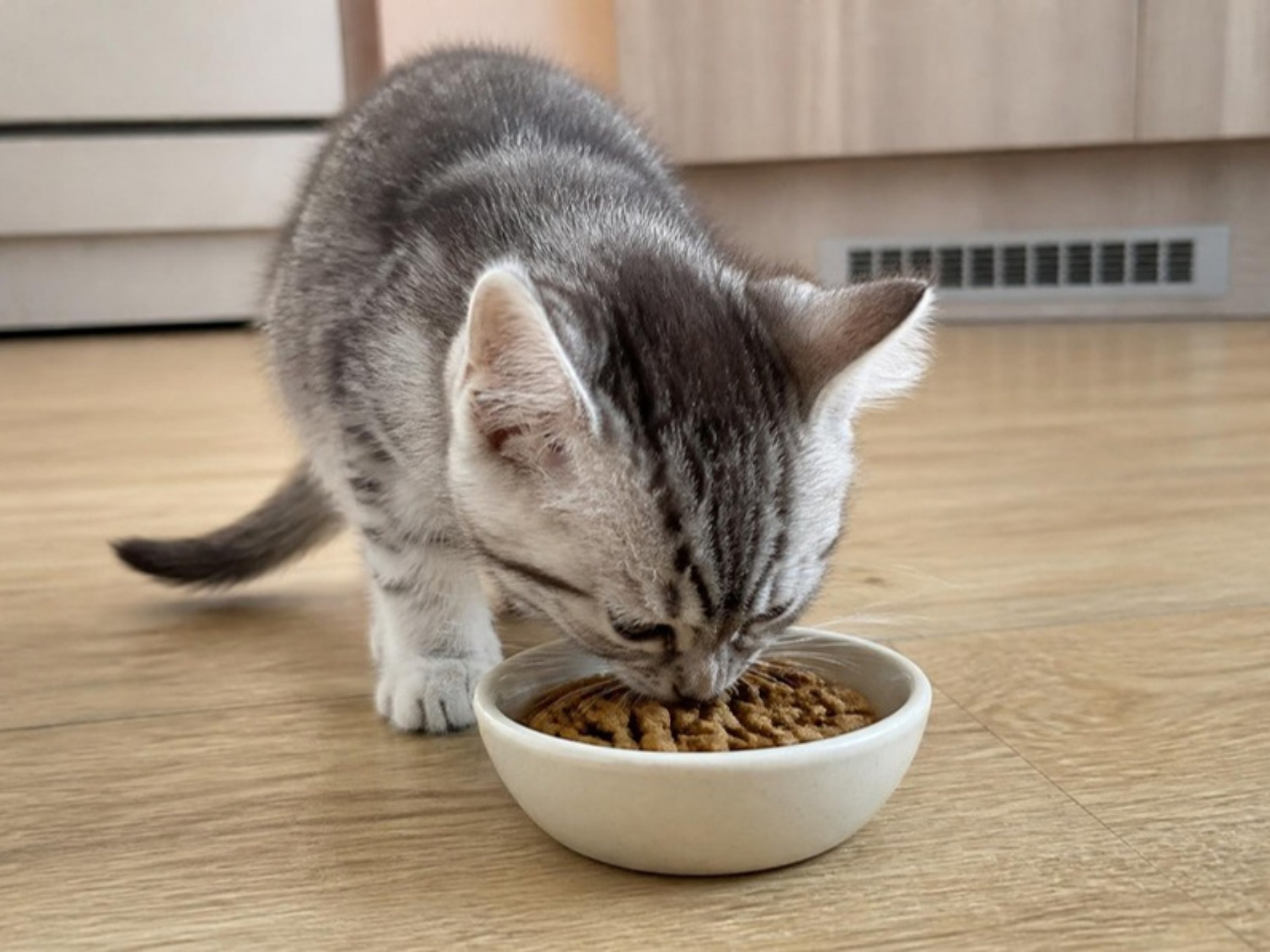
#1 Best Overall: High-Protein Dry Kitten Food
Why it’s a good fit: A dry kitten formula with real meat as the first ingredient delivers the protein and calorie density growing kittens need, in a convenient, shelf-stable format that works well for free-feeding multiple daily meals.
- Format: Dry kibble
- High protein + fat for growth
- DHA for brain/eye development
Pros
- Calorie-dense to match a kitten’s high energy needs
- Small kibble size suited to developing teeth and jaws
- Convenient for free-feeding during the day
- Long shelf life once opened
Cons
- Lower moisture — pair with wet food or water fountain access
- Too hard for very young kittens still weaning
Who should NOT buy this: Skip for kittens under about 4 weeks still nursing or just starting to wean — they need a softer, wet-food-based transition first.
Our Analysis
A dry food built around named meat protein and calorie density designed for growth supports the rapid weight gain and muscle development kittens go through in their first year, while being practical for households that can’t hand-feed multiple small meals a day.
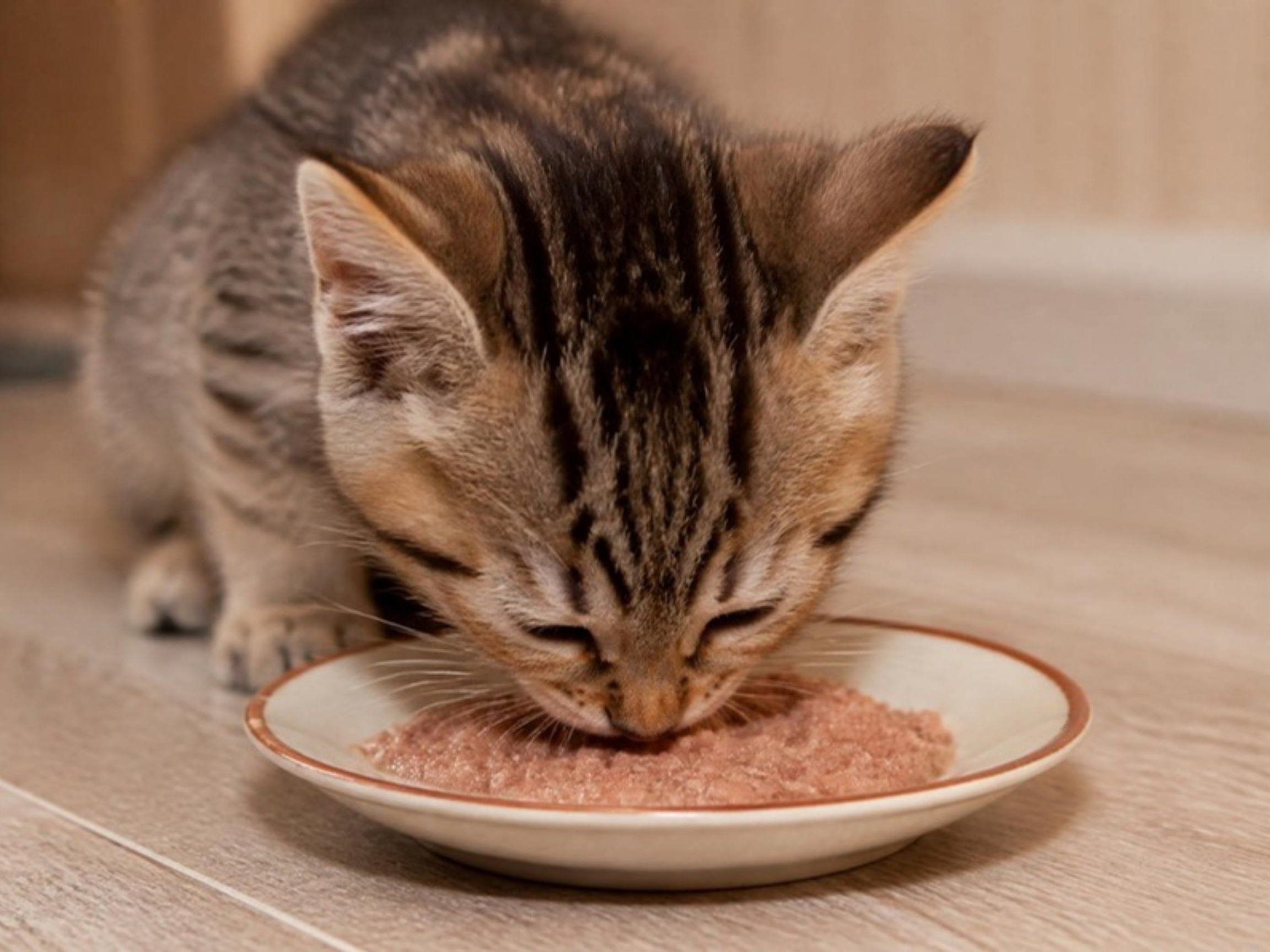
#2 Best Wet Food: Soft Wet Kitten Food
Why it’s a good fit: A soft pâté or minced wet formula is easy for young kittens to eat while their teeth are still developing, and the high moisture content supports hydration during and after weaning.
- Format: Wet pâté/minced
- High moisture
- Easy to eat for young kittens
Pros
- Soft texture ideal for weaning kittens
- High moisture supports hydration
- Generally very palatable, helps picky eaters
Cons
- More expensive per day than dry food
- Opened cans need refrigeration and short use windows
Who should NOT buy this: Skip as the sole food long-term for free-feeding households — it’s harder to leave out all day compared to dry food.
Our Analysis
Wet food is especially valuable during the weaning window (roughly 4–8 weeks), when kittens are transitioning off mother’s milk and need a soft, easy-to-eat texture. Continuing wet food alongside dry as kittens grow also helps prevent cats from becoming exclusively dry-food eaters as adults.

#3 Best for Indoor Kittens: Indoor Kitten Formula
Why it’s a good fit: Kittens raised exclusively indoors tend to be less physically active than kittens with outdoor access, so a formula balancing growth-level calories with controlled fat helps avoid excess weight gain while still supporting development.
- Format: Dry kibble
- Growth-appropriate calories, moderated fat
- Formulated for lower-activity kittens
Pros
- Balances growth needs with a less active lifestyle
- Can help prevent early overweight tendencies
- Still meets full kitten growth nutrient requirements
Cons
- Not necessary for very active or outdoor-access kittens
- Slightly less calorie-dense than standard growth formulas
Who should NOT buy this: Skip if your kitten has outdoor access or is unusually active — a standard growth formula with full calorie density is a better fit.
Our Analysis
Indoor-only kittens still need full growth-level nutrients, but with less built-in exercise than an outdoor kitten, some formulas moderate fat slightly while keeping protein and growth nutrients intact — a reasonable compromise for sedentary indoor households, without shortchanging development.
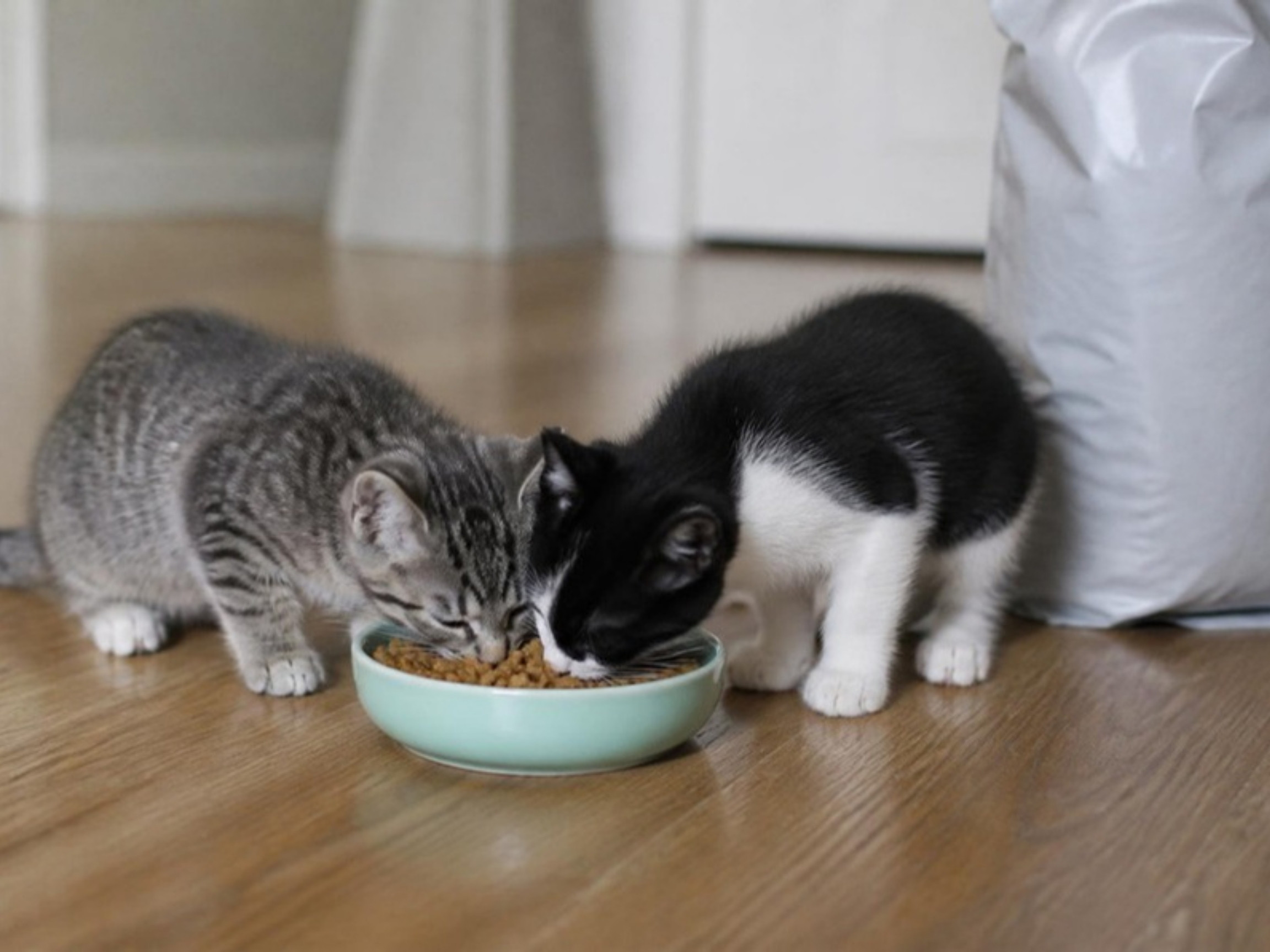
#4 Best Value: Large-Bag Dry Kitten Food
Why it’s a good fit: For multi-kitten litters or budget-conscious households, a larger bag of a solid growth formula brings the per-pound cost down meaningfully without compromising on core kitten nutrition requirements.
- Format: Dry kibble, large bag
- Meets AAFCO growth standards
- Lower cost per pound
Pros
- Lower cost per pound than smaller bags or boutique brands
- Practical for multi-kitten households
- Still meets full growth nutrient standards
Cons
- Large bags can go stale before a single kitten finishes them
- Fewer specialty formulations than premium brands
Who should NOT buy this: Skip the largest bag sizes for a single kitten household — buy a smaller bag to keep the food fresh, even if the per-pound price is slightly higher.
Our Analysis
Budget-friendly doesn’t have to mean nutritionally compromised — a large-format bag from a brand that still meets AAFCO growth standards gives multi-kitten households a practical way to manage feeding costs during the most food-intensive year of a cat’s life.

#5 Best Kitten Treats: Soft Training Treats
Why it’s a good fit: Soft, bite-sized treats sized for a kitten’s small mouth work well for litter-box training reinforcement, socialization, and bonding — without the choking risk of treats sized for adult cats.
- Format: Soft training treats
- Kitten-appropriate bite size
- Low-calorie per piece
Pros
- Sized appropriately for a kitten’s small mouth
- Useful for positive-reinforcement training and bonding
- Low-calorie, easy to use without overfeeding
Cons
- Should stay a small % of daily calories, not a meal substitute
- Not all treats are formulated specifically for kittens — check the label
Who should NOT buy this: Skip giving treats at all to kittens under 8 weeks — stick to their complete kitten food until they’re reliably eating solid food.
Our Analysis
Treats are a useful training and bonding tool, but they’re not nutritionally complete — the bulk of a kitten’s calories should always come from a complete growth-formula food, with treats kept to a small supplementary role.
Frequently Asked Questions
How often should I feed my kitten?
Young kittens (under 6 months) generally do best with 3–4 small meals a day, or free access to dry food with scheduled wet food meals, since their small stomachs can’t hold enough food for fewer, larger meals. By 6 months, many owners transition to 2–3 meals a day.
When should I switch my kitten to adult cat food?
Most kittens transition to adult food between 10 and 12 months old, once growth has largely leveled off. Large-breed kittens may stay on growth formula slightly longer, since they continue developing for longer. Your vet can confirm the right timing based on your kitten’s breed, size, and growth curve.
Can kittens eat regular adult cat food?
Not as a primary diet during the growth period — adult food doesn’t provide the higher protein, fat, and calorie density kittens need to support healthy development. An “all life stages” formula is formulated to meet kitten requirements and is an acceptable alternative to a dedicated kitten formula.
My kitten seems underweight even though it eats a lot — what should I do?
A kitten that eats well but doesn’t gain weight appropriately should be seen by a vet — this can signal parasites (very common in kittens), an underlying illness, or simply a feeding amount that’s too low for its growth stage. Don’t just switch to a calorie-dense food without ruling out a medical cause first.
How much should I feed my kitten per day?
This varies by age, weight, and the specific food’s calorie density — always start with the feeding chart on your kitten food’s packaging, which is based on current weight and expected adult weight, and adjust based on body condition as your vet advises at check-ups.
Helping an older or underweight cat gain weight instead? See our high calorie cat food guide.
Research Disclaimer: This article is for informational purposes and was researched using veterinary and nutrition sources — it was not written by a veterinarian, and no products listed here were purchased or tested in-house. A kitten that is not gaining weight normally, refusing food, or showing signs of illness should be evaluated by a veterinarian promptly, since kittens can decline quickly without intervention.