
We independently research every product mentioned on this page, drawing on real owner reviews, product specs, and vet-reviewed sources. If you buy through a link here, Catverdict may earn a small commission — this never affects our picks or costs you anything extra. Details in our affiliate disclosure.
Bottom line: Cat treats in a tube — squeezable, lickable purée treats — are one of the most reliably popular treat formats with cats, useful for bonding, pilling, vet-visit distraction, and as an occasional food topper to encourage eating. A classic chicken-flavor lickable tube treat is the safest starting pick for most cats; if hydration is a goal, look for a broth-based version instead.
This guide covers lickable tube treats for everyday treating, hydration, picky eaters, and as a food topper — plus how often they should realistically be used.
Curious how we evaluate and rank every pick on this page? See our How We Choose Our Picks.
Jump to a section
At-a-Glance Comparison: Best Cat Treats in a Tube
| Pick | Best For | Format |
|---|---|---|
| Best Overall | Everyday treating, bonding | Classic chicken lickable tube |
| Best for Hydration | Low water intake cats | Broth-based lickable tube |
| Best for Picky Eaters | Variety, finding a favorite flavor | Multi-flavor variety pack |
| Best Food Topper | Encouraging a hesitant eater | Tube treat mixed into meals |
| Best Value | Multi-cat households, frequent use | Large multipack box |
Buyer’s Guide: Using Tube Treats the Right Way
How We Chose These Treats
We prioritized tube treats with a named animal protein as the primary ingredient, minimal filler and thickener content, and a strong track record of palatability across different cats — since the entire point of this format is reliability with picky or stressed cats. None of these were purchased and tested in-house — this is a selection built from product specs, label data, and owner feedback patterns, not hands-on testing.
What Are Lickable Tube Treats, and Why Cats Love Them
Tube treats are a soft, purée-style treat dispensed from a squeezable pouch, designed to be licked rather than chewed. Their strong aroma and smooth texture make them unusually effective at getting a response even from cats that are stressed, sick, or generally uninterested in food — which is why they’re widely used for giving medication, distracting during nail trims, or coaxing a reluctant eater.
How Often Should You Give Tube Treats?
Treats, including tube treats, should generally make up no more than about 10% of a cat’s daily calorie intake — most single tube treats are low-calorie, but it’s easy to lose track with multiple cats or frequent use throughout the day. Using a tube treat as a food topper (mixed into a meal rather than given separately) is a good way to get the appetite benefit without adding extra treat calories on top of a full meal.
Top 5 Cat Treats in a Tube Reviews

#1 Best Overall: Classic Lickable Tube Treat
Why it’s a good fit: A straightforward chicken-flavor lickable tube treat is the safest starting point for almost any cat — it has the broadest appeal of any flavor and the lowest odds of an upset stomach from an unfamiliar ingredient.
- Format: Squeezable purée tube
- Chicken flavor, named protein first
- Low-calorie per tube
Pros
- Near-universal appeal across most cats
- Low mess, easy single-serve portion
- Useful for pilling and vet-visit distraction
- Low calorie per treat
Cons
- Not a complete meal replacement
- Some cats can become overly fixated on this treat specifically
Who should NOT buy this: Skip relying on this as a daily staple for a cat with a known chicken sensitivity — check a different protein source instead.
Our Analysis
Chicken is the most broadly tolerated and preferred protein for cats, which is why it’s the default starting flavor for this format. The lickable texture bypasses a lot of the pickiness that affects dry treats, making this one of the most consistently effective treats across different cats and temperaments.

#2 Best for Hydration: Broth-Based Tube Treat
Why it’s a good fit: A thinner, broth-style tube treat delivers extra moisture along with the flavor payoff, making it a useful tool for cats that don’t drink enough water or primarily eat dry food.
- Format: Broth-style squeeze treat
- Higher moisture than standard purée
- Can be diluted into water or food
Pros
- Adds extra moisture, useful for dry-food-only cats
- Can be mixed into water bowls to encourage drinking
- Lighter texture, generally very palatable
Cons
- Messier than a standard thick purée tube
- Not a substitute for addressing a cat’s primary water intake issue
Who should NOT buy this: Skip as your only hydration strategy for a cat with diagnosed urinary or kidney issues — talk to your vet about a complete wet-food-based hydration plan instead.
Our Analysis
For cats that are reluctant water drinkers, a broth-style tube treat is a low-effort way to add a bit of extra moisture intake, especially when diluted into a water fountain or bowl. It’s a supplement to good hydration habits, not a replacement for addressing low water intake more broadly.
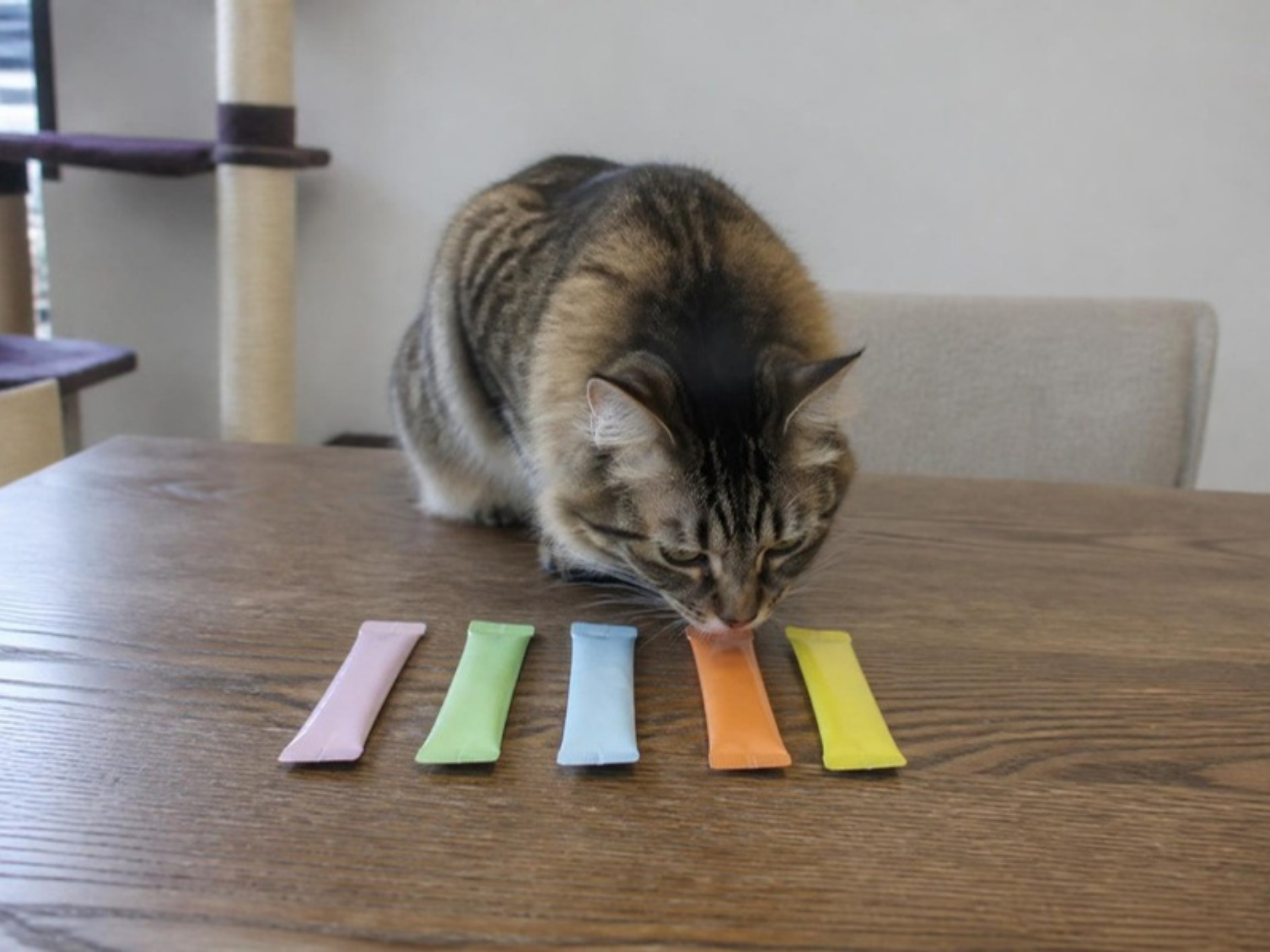
#3 Best for Picky Eaters: Multi-Flavor Variety Pack
Why it’s a good fit: A variety pack with several protein flavors (tuna, salmon, chicken, beef) lets you find which flavor a particular cat responds to best, without committing to a full box of a single flavor that might get rejected.
- Format: Multi-flavor assortment
- Several protein options per box
- Useful for trial-and-error with picky cats
Pros
- Lets you test multiple flavors without buying separate boxes
- Useful for multi-cat households with different preferences
- Keeps treating varied and interesting over time
Cons
- Some flavors in the mix may go unused if a cat has a strong preference
- Slightly higher cost than a single-flavor box
Who should NOT buy this: Skip if your cat already has a confirmed favorite flavor — a dedicated single-flavor box is more economical at that point.
Our Analysis
Cat flavor preferences are genuinely individual — a cat that ignores tuna might go wild for salmon, or vice versa. A variety pack removes the guesswork and is a reasonable low-cost way to identify a reliable “go-to” treat for a particularly selective cat.
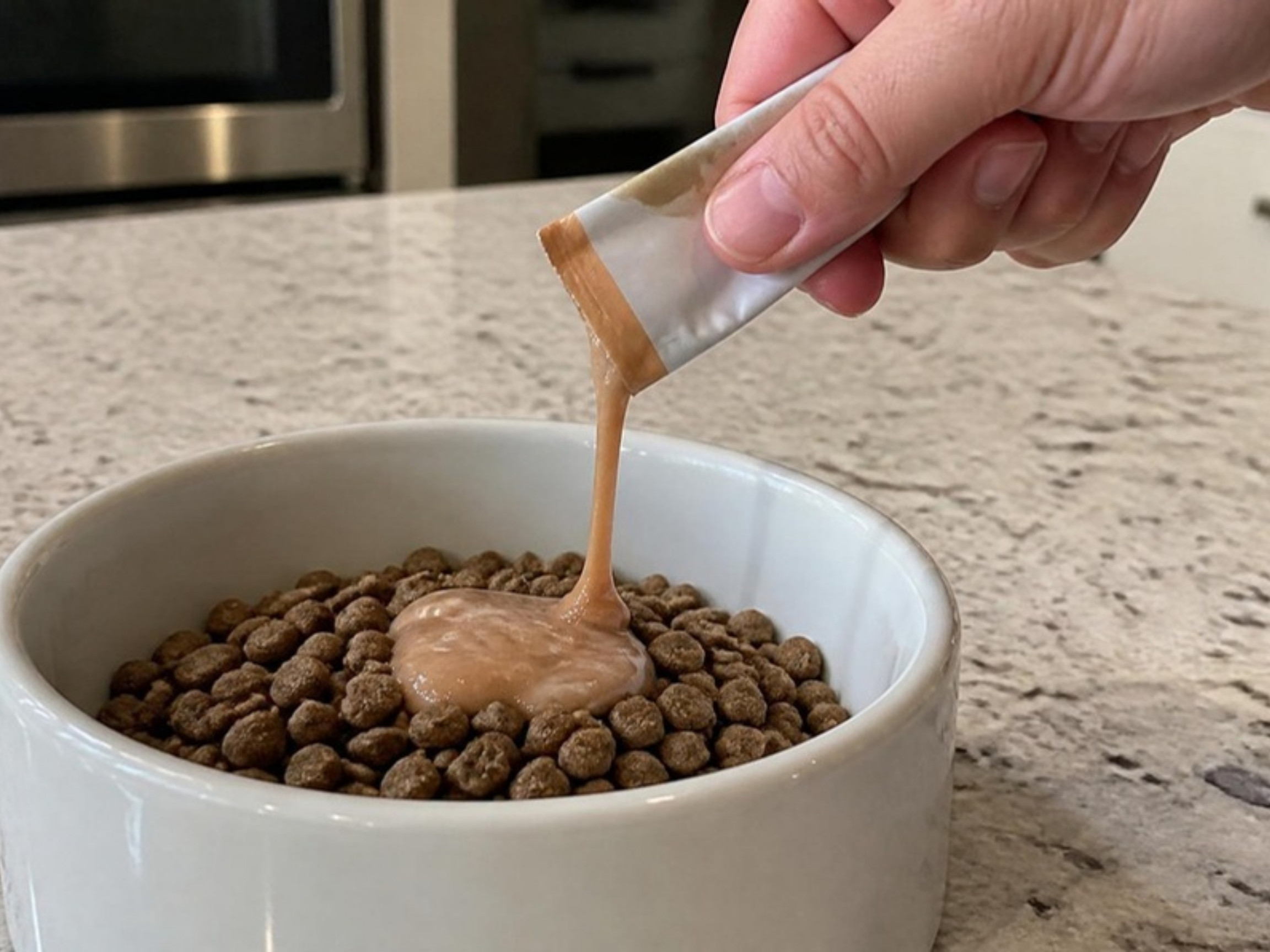
#4 Best as a Food Topper
Why it’s a good fit: Squeezed over regular food rather than given as a separate treat, a tube treat can make an unfamiliar food or a less-exciting meal (like a prescription diet) more appealing to a reluctant eater, without adding a full separate treat’s worth of calories.
- Format: Purée tube, used as topper
- Strong aroma to encourage eating
- Mixes easily into wet or dry food
Pros
- Can make unfamiliar or less palatable food more appealing
- Smaller portion used as a topper vs. a full separate treat
- Useful for transitioning foods or masking medication smell
Cons
- Shouldn’t become a permanent crutch for a food a cat otherwise refuses
- Easy to overuse and still add up in daily calories
Who should NOT buy this: Skip relying on this long-term if a cat consistently refuses its regular food even with a topper — that’s worth a vet visit to rule out an underlying issue.
Our Analysis
Using a tube treat as a topper is one of the more practical everyday uses of this format — it leverages the treat’s strong aromatic appeal to get a cat eating a complete, balanced meal, rather than letting treat calories substitute for real nutrition.

#5 Best Value: Large Multipack Box
Why it’s a good fit: For households that use tube treats daily or have multiple cats, a large multipack brings the per-tube cost down noticeably compared to buying smaller boxes repeatedly.
- Format: Large multipack box
- Lower cost per tube
- Practical for multi-cat daily use
Pros
- Lower cost per tube at scale
- Convenient for multi-cat households
- Long shelf life unopened
Cons
- Easy to overuse simply because supply feels abundant
- Large box commits you to one flavor for a while
Who should NOT buy this: Skip the largest multipack for a single-cat household using treats only occasionally — a smaller box keeps things fresher and more intentional.
Our Analysis
A large multipack makes sense once a household has confirmed which flavor works and treats regularly — buying in bulk at that point is a straightforward way to reduce the per-treat cost without any real downside, as long as daily treat calorie totals are still kept in check.
Frequently Asked Questions
Are tube treats bad for cats?
Used in moderation, lickable tube treats are generally fine for healthy cats — they’re low-calorie per serving. The concern is overuse: because cats respond to them so strongly, it’s easy for owners to give more than intended, which can add up in daily calories or crowd out a complete, balanced diet.
Can tube treats replace a meal?
No — tube treats are not nutritionally complete and balanced the way a cat’s regular food is. They’re a supplement or topper, not a meal substitute, even for a cat that seems to prefer them over its regular food.
Can I use tube treats to give my cat medication?
Many owners do use tube treats to help administer oral medication, since the strong flavor can mask a pill or liquid medicine. Check with your vet first, since not every medication is safe to mix with food or treats, and some need to be given on an empty stomach.
Why does my cat go crazy for tube treats specifically?
The texture, concentrated aroma, and often higher fat/umami content of lickable purée treats make them unusually appealing compared to kibble or even regular wet food — this is a normal, expected response and not a sign of anything wrong with your cat.
How many tube treats can I give my cat per day?
As a general rule, all treats combined should stay under about 10% of a cat’s daily calories. Check the calorie count on your specific product and your cat’s total daily calorie needs — for most adult cats, that means one to two tube treats a day is a reasonable ceiling, not an amount to use freely throughout the day.
Looking for treats that double as a training tool for a kitten? See our best food for kittens guide.
Research Disclaimer: This article is for informational purposes and was researched using veterinary and nutrition sources — it was not written by a veterinarian, and no products listed here were purchased or tested in-house. A cat that refuses all food, not just treats, for more than 24 hours should be seen by a veterinarian promptly, since prolonged appetite loss in cats can lead to serious complications.