We independently research every product mentioned on this page, drawing on real owner reviews, product specs, and vet-reviewed sources. If you buy through a link here, Catverdict may earn a small commission — this never affects our picks or costs you anything extra. Details in our affiliate disclosure.
Bottom line: Cat food brands split roughly into three camps: fresh/human-grade subscriptions, vet-formulated kibble, and grain-free or novel-protein wet food. For most owners comparing Smalls against the usual grocery-aisle names, the fresh-food subscription model is the biggest practical difference — it trades lower per-meal cost for a recurring delivery commitment. Purina Pro Plan remains the most widely vet-recommended dry option, and brands like Royal Canin specialize in breed- and condition-specific formulas a general-purpose food won’t match.
This guide compares the most-searched cat food brands by what they’re actually built for — fresh delivery, everyday kibble, breed-specific needs, grain-free wet food, and lickable treats — so you can match a brand to your cat instead of guessing from packaging claims.
Curious how we evaluate and rank every pick on this page? See our How We Choose Our Picks.
Jump to a section
At-a-Glance Comparison: Best Cat Food Brands
| Brand | Best For | Format |
|---|---|---|
| Smalls | Fresh, human-grade subscription | Fresh/freeze-dried, delivered |
| Purina Pro Plan | Everyday vet-recommended kibble | Dry & wet, retail |
| Royal Canin | Breed- or condition-specific needs | Dry & wet, retail/vet |
| Tiki Cat | Grain-free, high-protein wet food | Wet, retail |
| Churu | Lickable treats & food toppers | Treat tube, retail |
Buyer’s Guide: Choosing a Cat Food Brand
How We Chose These Brands
“Smalls cat food” is one of the highest-volume searches in this category, almost always alongside comparisons to Fancy Feast, Royal Canin, Purina, Blue Buffalo, and similar names — so instead of reviewing one product, we compared the brands people actually weigh against each other. We grouped them by what they’re built to solve: fresh/human-grade delivery, everyday vet-recommended kibble, breed- or condition-specific formulas, grain-free wet food, and treat/topper use. None of these were purchased and tested in-house; this is a selection compiled from ingredient lists, AAFCO statements, and owner-review patterns, not hands-on feeding trials.
Fresh vs. Kibble vs. Wet: What Actually Matters
Fresh and freeze-dried brands like Smalls tend to use fewer fillers and higher meat content, but cost significantly more per meal and require a subscription. Kibble brands like Purina Pro Plan or Royal Canin are shelf-stable, budget-friendly, and back their formulas with AAFCO feeding trials — a meaningful distinction from brands that only meet “formulated to” nutrient profiles on paper. Wet food brands like Tiki Cat or Weruva lean grain-free and high-protein, which matters more for cats with sensitive digestion than for a healthy adult cat with no dietary restrictions.
Reading an Ingredient Label
Look for a named animal protein (chicken, salmon, turkey) as the first ingredient rather than a generic “meat meal,” and check for an AAFCO nutritional adequacy statement specifying the life stage the food is formulated for. A brand’s marketing claims (“human-grade,” “vet-recommended”) are not independently verified the same way AAFCO feeding-trial statements are — the label’s fine print tells you more than the front of the bag.
Top 5 Cat Food Brand Reviews

#1 Best Fresh/Subscription: Smalls
Why it’s a good fit: Smalls built its model around fresh, human-grade recipes shipped in pre-portioned packs, which sidesteps the filler-heavy ingredient lists common in shelf-stable kibble. For owners comparing it against grocery-aisle brands, the main trade-off is cost and commitment versus ingredient quality.
- Format: Fresh & freeze-dried
- Delivery: Subscription
- Recipes: Chicken, beef, fish
Pros
- Few fillers — high named-meat content
- Pre-portioned, easy to transition cats onto
- Recipes built around real cuts of meat, not meal
Cons
- Meaningfully more expensive per meal than kibble
- Requires a recurring subscription and freezer/fridge space
- Not sold in retail stores — online only
Who should NOT buy this: Skip if budget is the top priority or your cat does fine on standard kibble — the cost premium is hard to justify without a specific reason (sensitive stomach, picky eater, weight management).
Our Analysis
Smalls earns its place at #1 for owners specifically searching fresh or human-grade options, since it’s the brand most directly built around that positioning rather than offering it as one line among many.
#2 Best Everyday Vet-Recommended: Purina Pro Plan
Why it’s a good fit: Pro Plan is one of the most widely stocked, vet-recommended dry food lines, backed by AAFCO feeding trials rather than just formulation on paper — a meaningful difference from budget brands that only meet nutrient profiles theoretically.
- Format: Dry & wet
- AAFCO: Feeding-trial tested
- Life stages: Kitten, adult, senior
Pros
- Backed by AAFCO feeding trials, not just formulation
- Widely available at retail and online
- Specific lines for sensitive skin, weight, and urinary health
Cons
- Not grain-free or novel-protein by default
- Formulas vary a lot between lines — read the specific bag, not just the brand name
Who should NOT buy this: Skip if your cat has a diagnosed grain or chicken-by-product sensitivity — check the specific Pro Plan line’s ingredient list, since it varies more than the brand name suggests.
Our Analysis
Pro Plan’s feeding-trial backing is the reason it shows up repeatedly in vet recommendations compared to brands that only meet AAFCO’s nutrient-profile standard without live feeding trials.
#3 Best Breed/Condition-Specific: Royal Canin
Why it’s a good fit: Royal Canin formulates by breed, age, and specific health condition rather than one general formula — useful when a cat has a known need a generic food doesn’t target, like urinary health or a flat-faced breed’s kibble shape.
- Format: Dry & wet
- Specialty: Breed & condition formulas
- Vet exclusive lines available
Pros
- Formulas tailored to specific breeds and conditions
- Some lines available only through a vet, with closer nutritional oversight
- Strong reputation in urinary and weight-management formulas
Cons
- Pricier than general-purpose kibble
- Breed-specific formulas are unnecessary if your cat has no particular need
Who should NOT buy this: Skip the breed- or condition-specific lines if your cat is a healthy mixed-breed with no diagnosed issue — a general-purpose formula from any reputable brand covers that case just as well, for less.
Our Analysis
The value in Royal Canin is narrow but real: it’s worth the premium specifically when a vet has identified a condition (urinary crystals, obesity, a flat-faced breed’s bite shape) that a targeted formula addresses.
#4 Best Grain-Free Wet: Tiki Cat
Why it’s a good fit: Tiki Cat’s wet lines lean high-protein and grain-free with simple ingredient lists, which tends to suit cats with sensitive digestion better than a grain-inclusive formula.
- Format: Wet
- Grain-free
- High protein content
Pros
- Simple, short ingredient lists
- High protein content per can
- Multiple protein options for rotation
Cons
- Pricier per ounce than mainstream wet brands
- Some formulas are rich enough to cause loose stool if introduced too fast
Who should NOT buy this: Skip if you’re on a tight food budget — grain-free, high-protein wet food brands cost noticeably more per feeding than standard wet food lines.
Our Analysis
Introduce any grain-free, high-protein wet food gradually over 5–7 days mixed with your cat’s current food, since a sudden full switch to a richer formula is the most common cause of digestive upset.
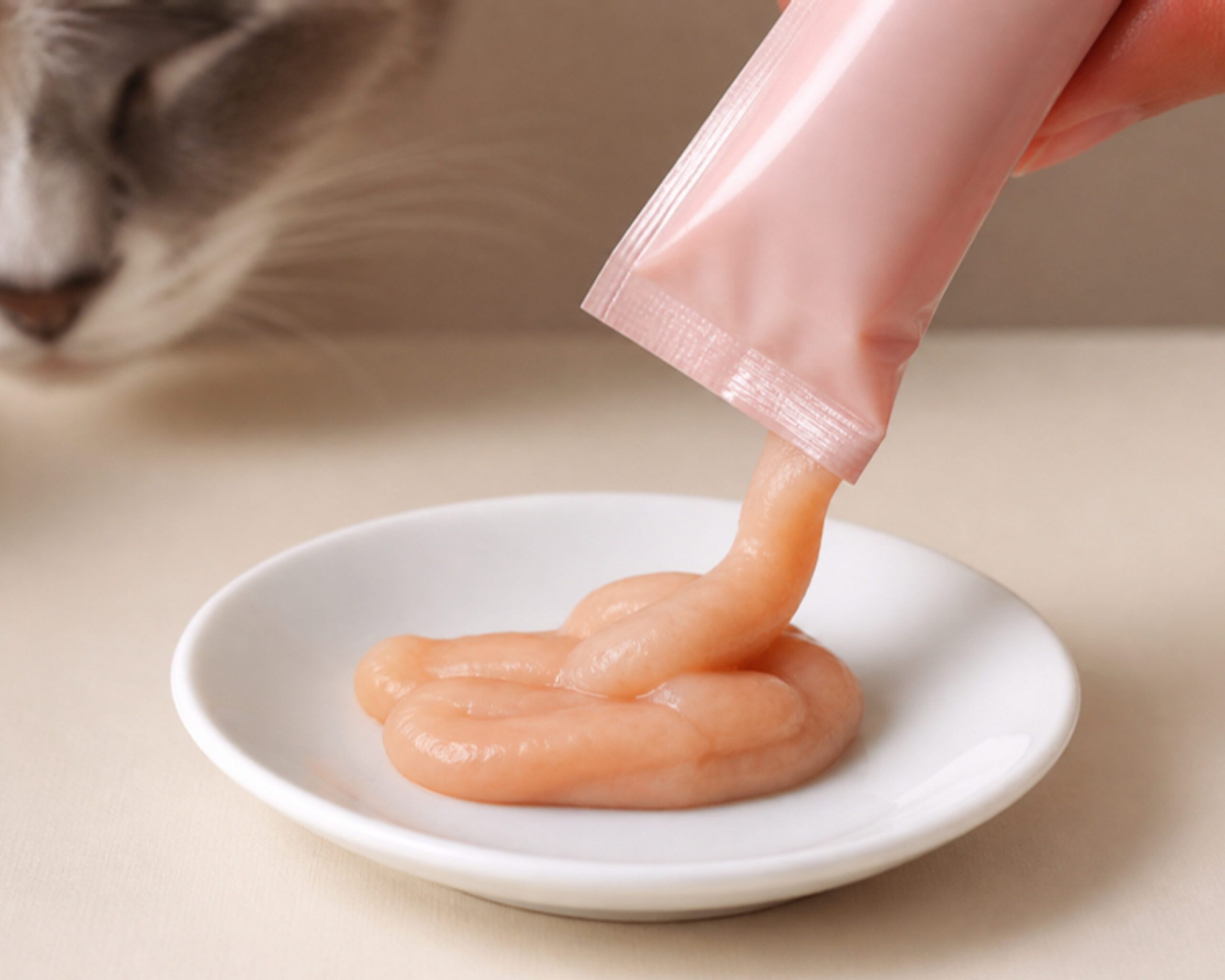
#5 Best Treat/Topper: Churu
Why it’s a good fit: Churu’s lickable tube format is less a meal replacement and more a high-value treat or food topper — useful for picky eaters, medication time, or bonding, which is why it shows up so often alongside full meal brands in searches.
- Format: Lickable treat tube
- Use: Treat/topper, not a full meal
- Multiple protein flavors
Pros
- Extremely palatable — useful for picky eaters or medicating
- Easy to use as a food topper to encourage eating
- Individually wrapped, mess-free tubes
Cons
- Not nutritionally complete — not a meal replacement
- High in moisture/calories per tube if overused as a treat
Who should NOT buy this: Skip relying on it as a meal substitute — Churu and similar lickable tubes are treats, not AAFCO-complete food, and shouldn’t make up a significant share of daily calories.
Our Analysis
Churu’s main practical use is getting a reluctant eater to finish a meal (as a topper) or making medication time less stressful — not as a food brand competing with the four above.
Frequently Asked Questions
Is Smalls worth the extra cost compared to Purina or Royal Canin?
It depends on your priority. Smalls’ fresh, human-grade recipes generally contain less filler and more named meat than shelf-stable kibble, but cost several times more per meal. For a healthy cat with no dietary issues, a reputable AAFCO-tested kibble brand is nutritionally adequate at a fraction of the cost.
Do I need to buy breed-specific food like Royal Canin?
Only if your vet has identified a specific need — a breed trait, weight issue, or urinary condition. A healthy mixed-breed cat does not need a breed-specific formula.
How do I switch my cat to a new food brand safely?
Mix the new food in gradually over 5–10 days, increasing the new brand’s share each day. A sudden full switch is the most common cause of vomiting or loose stool when changing brands.
Is grain-free food better for cats?
Not automatically — it mainly matters for cats with a diagnosed grain sensitivity. Most healthy cats digest grain-inclusive formulas without issue, and grain-free is not inherently higher quality.
Are lickable treat tubes like Churu safe to feed daily?
In small amounts as a treat or topper, yes for most healthy cats. They are not a complete meal, so they shouldn’t replace a significant share of daily food intake.
Looking for a specific diet need instead? See our High-Calorie Cat Food guide or browse the full Best Cat Food hub.
Research Disclaimer: This content was compiled from manufacturer ingredient lists, AAFCO statements, retailer listings, and owner-review patterns for informational purposes only — products on this page were not purchased or tested in-house. Nutritional needs vary by individual cat; consult your veterinarian before changing your cat’s diet, especially if your cat has a diagnosed health condition.