
We independently research every product mentioned on this page, drawing on real owner reviews, product specs, and vet-reviewed sources. If you buy through a link here, Catverdict may earn a small commission — this never affects our picks or costs you anything extra. Details in our affiliate disclosure.
Bottom line: “Robot litter box” searches usually mean one of three different approaches: fully automatic sifting robots like Litter-Robot 4 and Pet Pivot, disposable-tray systems like PetSafe ScoopFree, or simpler pellet-and-pad systems like Breeze. Litter-Robot 4 is the most established all-around pick, but the right choice depends on how many cats you have, your budget, and how much mechanical maintenance you want to deal with.
This guide compares the main automatic and low-maintenance litter box systems people search for alongside “robot litter box” — by mechanism, maintenance, and who each is actually built for.
Curious how we evaluate and rank every pick on this page? See our How We Choose Our Picks.
Jump to a section
At-a-Glance Comparison: Best Automatic & Robot Litter Boxes
| Model | Best For | Mechanism |
|---|---|---|
| Litter-Robot 4 | Overall reliability & app tracking | Rotating globe, sifting |
| PetSafe ScoopFree | Multi-cat, low mechanical wear | Disposable crystal tray |
| Breeze System | Budget, low-maintenance (manual) | Pellet + absorbent pad |
| Pet Pivot | Small/senior cats, low entry | Rotating drum, sifting |
Buyer’s Guide: Choosing an Automatic Litter Box
How We Chose These Products
“Robot litter box” searches cluster around a few recurring names: Litter-Robot, Breeze, and Pet Pivot (PetPivot), plus disposable-tray systems like ScoopFree that solve the same low-maintenance problem differently. We grouped picks by mechanism and household fit — full robotic sifting, disposable tray, and manual pellet/pad — rather than ranking by price alone. These were not purchased and tested in-house; this is a selection compiled from product specs and owner-review patterns.
Robot vs. Disposable-Tray vs. Pellet Systems
Fully robotic boxes (Litter-Robot, Pet Pivot) automate waste separation using your regular clumping litter, but have more moving parts to maintain. Disposable-tray systems (ScoopFree) swap mechanical complexity for a recurring tray cost. Pellet-and-pad systems (Breeze) are the simplest and cheapest, but still require manual pad changes — they reduce scooping, not all maintenance.
Introducing a Cat to an Automatic Litter Box
Some cats are startled by the motor noise or movement of a robotic box. Most manufacturers recommend running the unit in manual/unlocked mode for the first week or two, or keeping a familiar manual box available alongside it during the transition.
Top 4 Automatic Litter Box Reviews
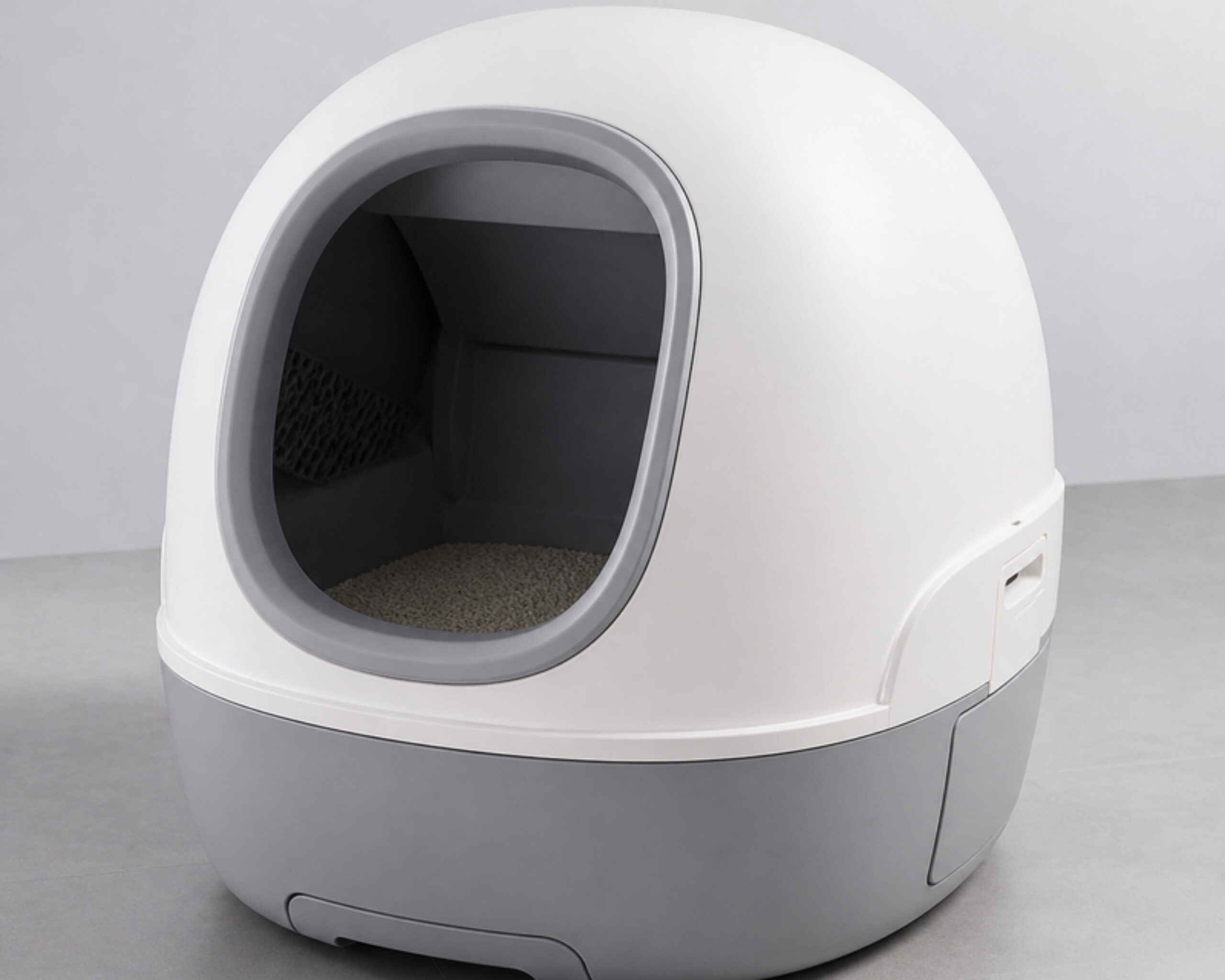
#1 Best Overall: Litter-Robot 4
Why it’s a good fit: Litter-Robot 4 is the most established automatic litter box on the market, using a rotating globe-shaped bowl to sift waste into a sealed bin after each use, with app monitoring for weight and cleaning cycles.
- Fully automatic sifting
- App-connected monitoring
- Large sealed waste bin
Pros
- Long track record and wide replacement-part availability
- App tracks each cat’s weight and visits over time
- Sealed bin keeps odor contained between empties
Cons
- High upfront cost compared to manual boxes
- Larger footprint needs dedicated floor space
Who should NOT buy this: Skip if you have more than 2-3 cats sharing one unit heavily, or if your home can’t fit its footprint.
Our Analysis
Litter-Robot 4 earns the top spot mainly on reliability and app feedback depth, which matters most for owners who want data on litter box visits as an early health signal.
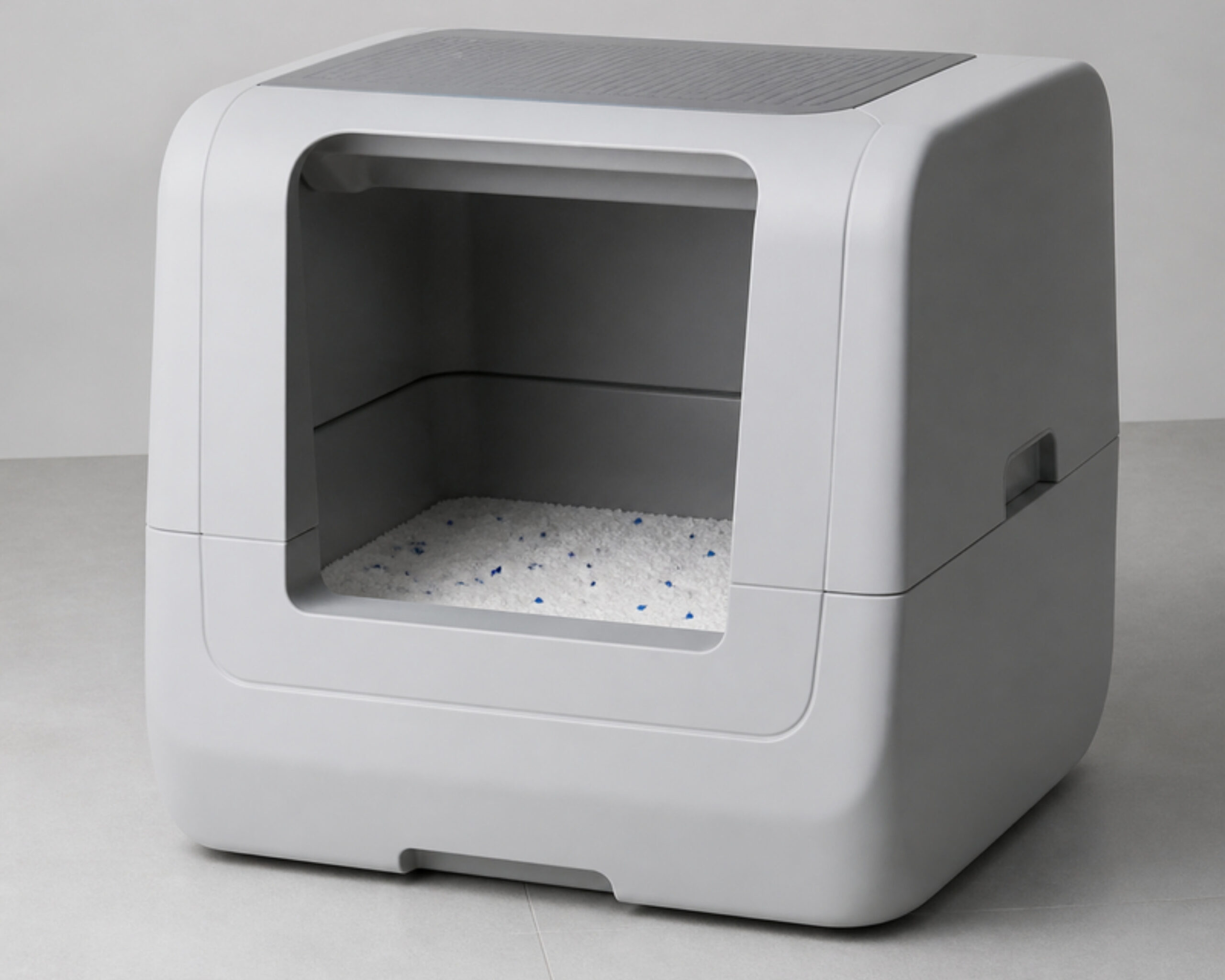
#2 Best for Multi-Cat Homes: PetSafe ScoopFree
Why it’s a good fit: ScoopFree uses disposable crystal litter trays, which sidesteps the mechanical sifting wear that heavy multi-cat use puts on robot-style boxes, trading a recurring tray cost for lower moving-part maintenance.
- Disposable crystal tray system
- Lower moving-part maintenance
- Compact footprint options
Pros
- No litter-type matching needed, trays are pre-filled
- Less mechanical wear under heavy multi-cat use
- Good odor control from crystal litter
Cons
- Ongoing cost of replacement trays adds up
- Crystal litter texture isn’t accepted by every cat
Who should NOT buy this: Skip if your cat strongly prefers traditional clumping clay texture, or if you want to control exact litter brand/type.
Our Analysis
The disposable-tray approach trades recurring cost for lower long-term mechanical maintenance, which can be the better call for households running a box hard with 3+ cats.
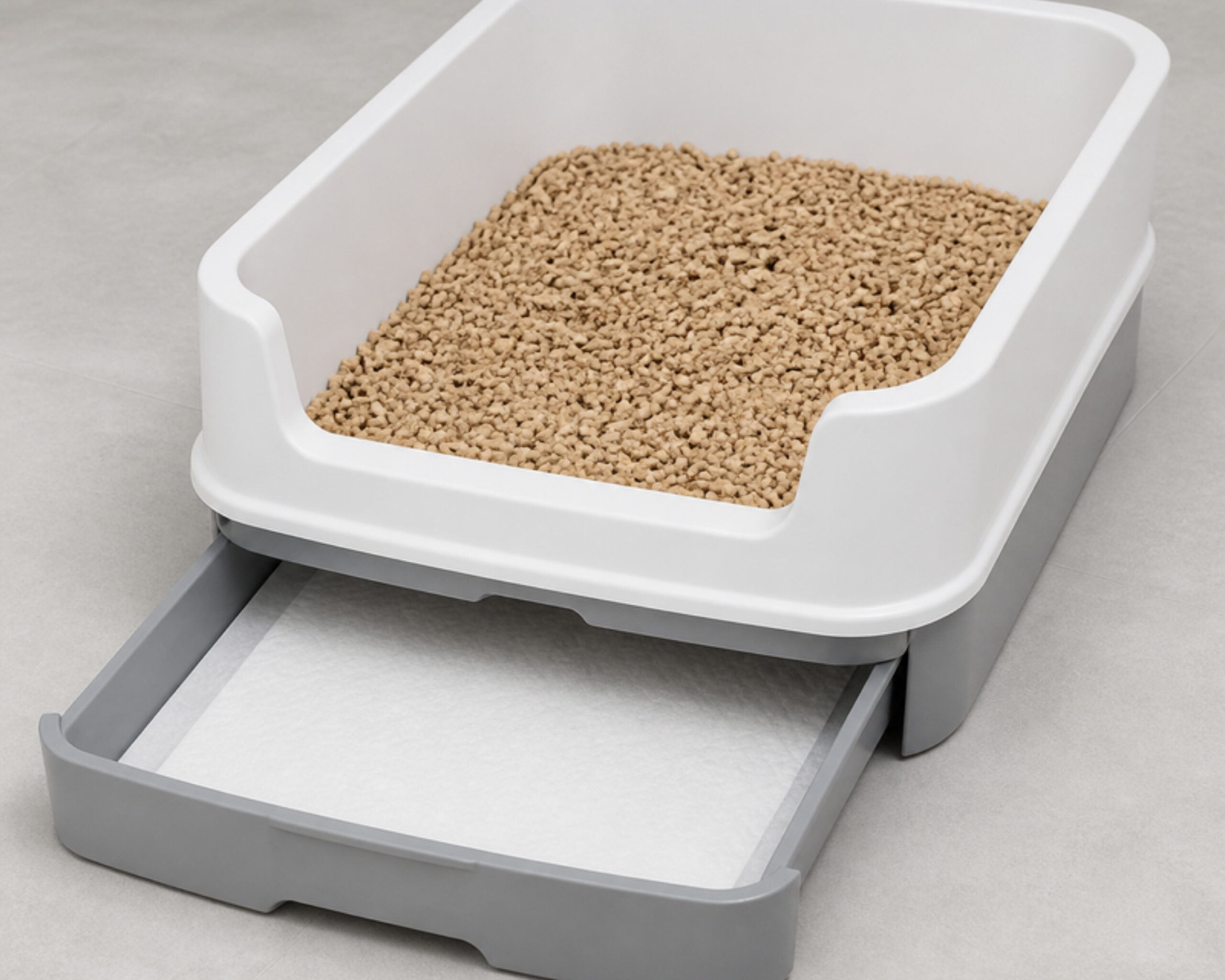
#3 Best Budget Automatic: Breeze Litter Box System
Why it’s a good fit: The Breeze system (non-robotic) uses a pellet-and-pad separation method, letting liquid drain through plastic pellets onto an absorbent pad below, which is a simpler and cheaper entry point into low-maintenance litter boxes than a full robot.
- Pellet + absorbent pad system
- Manual (not app-connected)
- Lower upfront cost than robot boxes
Pros
- Much cheaper than motorized robot boxes
- Simple two-part consumable system (pellets + pads)
- Pellets track less than traditional clumping litter
Cons
- Still requires manual pad changes, not fully automatic
- No app monitoring or health-tracking features
Who should NOT buy this: Skip if you specifically want automatic waste removal and app health tracking — this is a low-maintenance system, not a robotic one.
Our Analysis
Breeze-style systems are the right call for owners who want less daily scooping without committing to robot-box pricing or a learning curve for the cat.
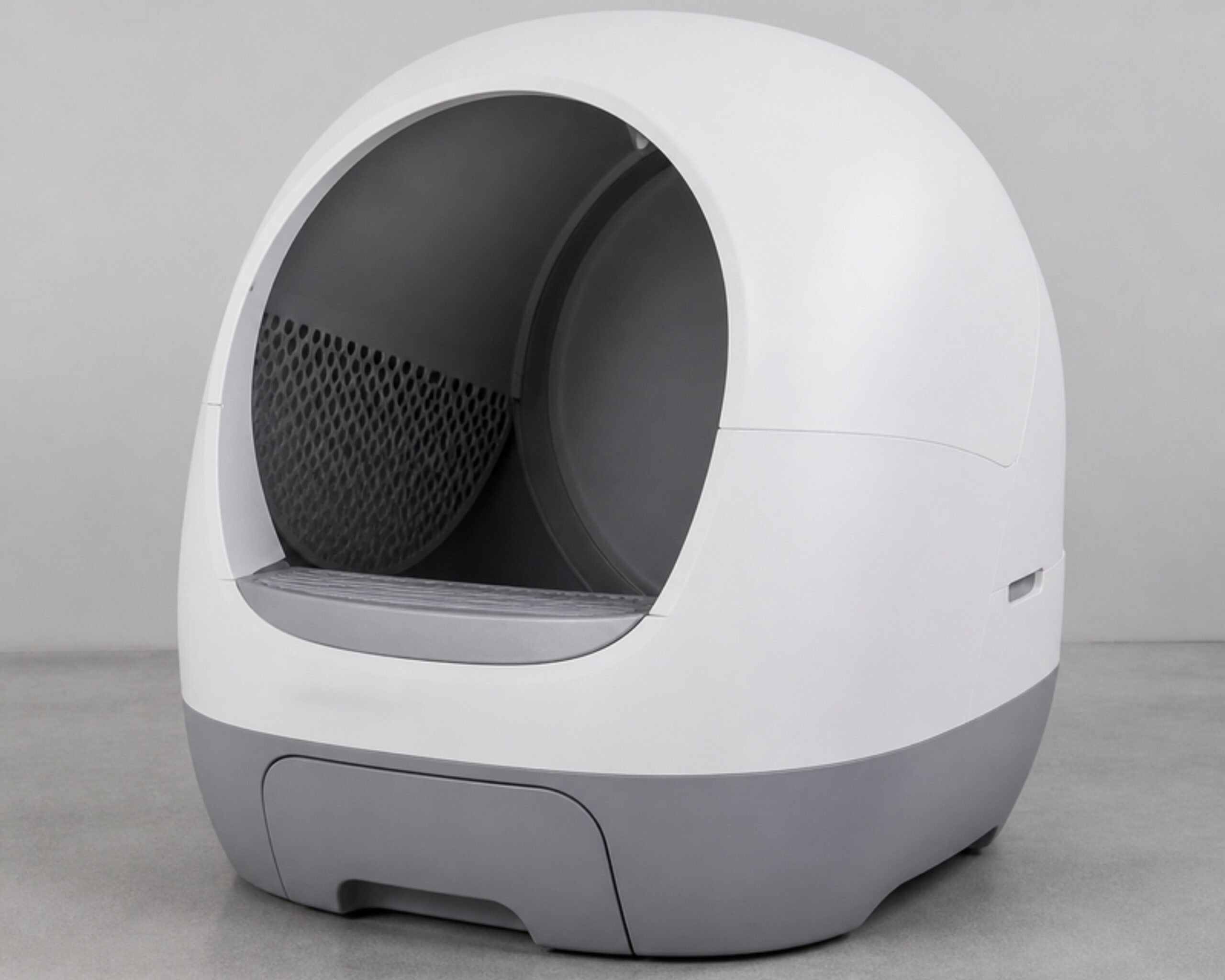
#4 Best for Smaller Cats: Pet Pivot Litter Box
Why it’s a good fit: Pet Pivot (PetPivot) uses a rotating-drum design similar in concept to Litter-Robot but at a different price point, with some models offering a lower entry height that can suit smaller or older cats better than taller robot boxes.
- Rotating drum automatic sifting
- Lower entry option on some models
- Mid-range price point
Pros
- Lower entry height helps smaller, older, or arthritic cats
- Automatic sifting cycle reduces daily scooping
- Generally priced below premium robot boxes
Cons
- Smaller brand footprint means fewer long-term reviews than Litter-Robot
- Replacement parts may be less widely available
Who should NOT buy this: Skip if you want the widest possible track record and parts availability — Litter-Robot has more years of real-world data behind it.
Our Analysis
Pet Pivot is worth considering specifically for small-cat or senior-cat households where entry height into the box is the deciding factor, not just automation.
Frequently Asked Questions
Is Litter-Robot 4 worth the price?
For single or two-cat households that want reliable automatic sifting and long-term health-tracking data via the app, most owners find the price justified by years of reduced daily scooping. For larger multi-cat households running the unit hard, a disposable-tray system may hold up with less mechanical wear.
What’s the difference between a Breeze box and a robot litter box?
Breeze is not robotic — it’s a pellet-and-absorbent-pad system you still empty manually, just less often and with less odor than scooping traditional clumping litter. A true robot box like Litter-Robot automatically separates and seals waste after each use.
Is Pet Pivot (PetPivot) a legitimate alternative to Litter-Robot?
Pet Pivot uses a similar rotating-drum mechanism at a different price point, with some models offering a lower entry height for small or older cats. It has a smaller track record than Litter-Robot, so weigh that against the lower entry point if that’s your priority.
Will an automatic litter box work for more than one cat?
Most are rated for 2-3 cats depending on weight and usage frequency. Heavier multi-cat households tend to put more mechanical wear on sifting robots, which is why a disposable-tray system is worth considering for larger households.
Looking for a manual litter box upgrade instead? See our Best Cat Litter Boxes hub.
Research Disclaimer: This content was compiled from manufacturer product specs, retailer listings, and owner-review patterns for informational purposes only — products on this page were not purchased or tested in-house. Introduce any new litter box gradually and consult your veterinarian if your cat shows signs of litter box avoidance.