
We independently research every product on this page, drawing on publicly available specs and owner reviews. If you buy through a link here, Catverdict may earn a small commission — this never affects our picks or costs you anything extra. Details in our affiliate disclosure.
Bottom line: A cute cat tree doesn’t have to mean sacrificing sturdiness — the best picks pair a soft, decor-friendly look with real climbing stability for cats of any size. We compared compact apartment-friendly towers, heavy-duty trees built for large cats, and budget options that still hold up to daily scratching and jumping.
Curious how we evaluate and rank every pick on this page? See our How We Choose Our Picks.
Jump to a section
At-a-Glance Comparison: Best Cute Cat Trees
| Pick | Best For | Cat Size |
|---|---|---|
| Plush Multi-Level Tree | Soft, decor-friendly everyday pick | Small–medium |
| Heavy-Duty Extra-Large Tree | Large or multiple cats, max durability | Large/multi-cat |
| Compact Cute Tower | Small apartments, limited floor space | Small–medium |
| Modern Design Tree | Blending into living-room decor | Small–medium |
| Budget Sturdy Tree | First tree on a tight budget | Small–medium |
Buyer’s Guide: Choosing a Cute Cat Tree
How We Chose These Options
We compared products on build quality (base width, post diameter, material durability), how well the look fits a living space without feeling like typical pet furniture, and how owners report stability during normal jumping and scratching. This is a selection built from published specs and owner reviews, not an in-house trial.
Stability Matters More Than Looks
A cat tree that looks great but wobbles during a jump gets avoided fast — cats are sensitive to unstable footing. Check the base width relative to the tree’s total height (a wider base and heavier base weight generally means a sturdier tree), and look for a thick, tightly-wrapped sisal post rather than a thin one that unravels quickly.
Sizing for Large or Multiple Cats
Large-breed cats and multi-cat households need wider platforms and a reinforced base — a tree sized for one average cat can tip or feel crowded with two cats using it at once. Look specifically for “large cat” or “heavy duty” in the product description, plus a stated maximum weight capacity per platform.
Top 5 Cute Cat Trees
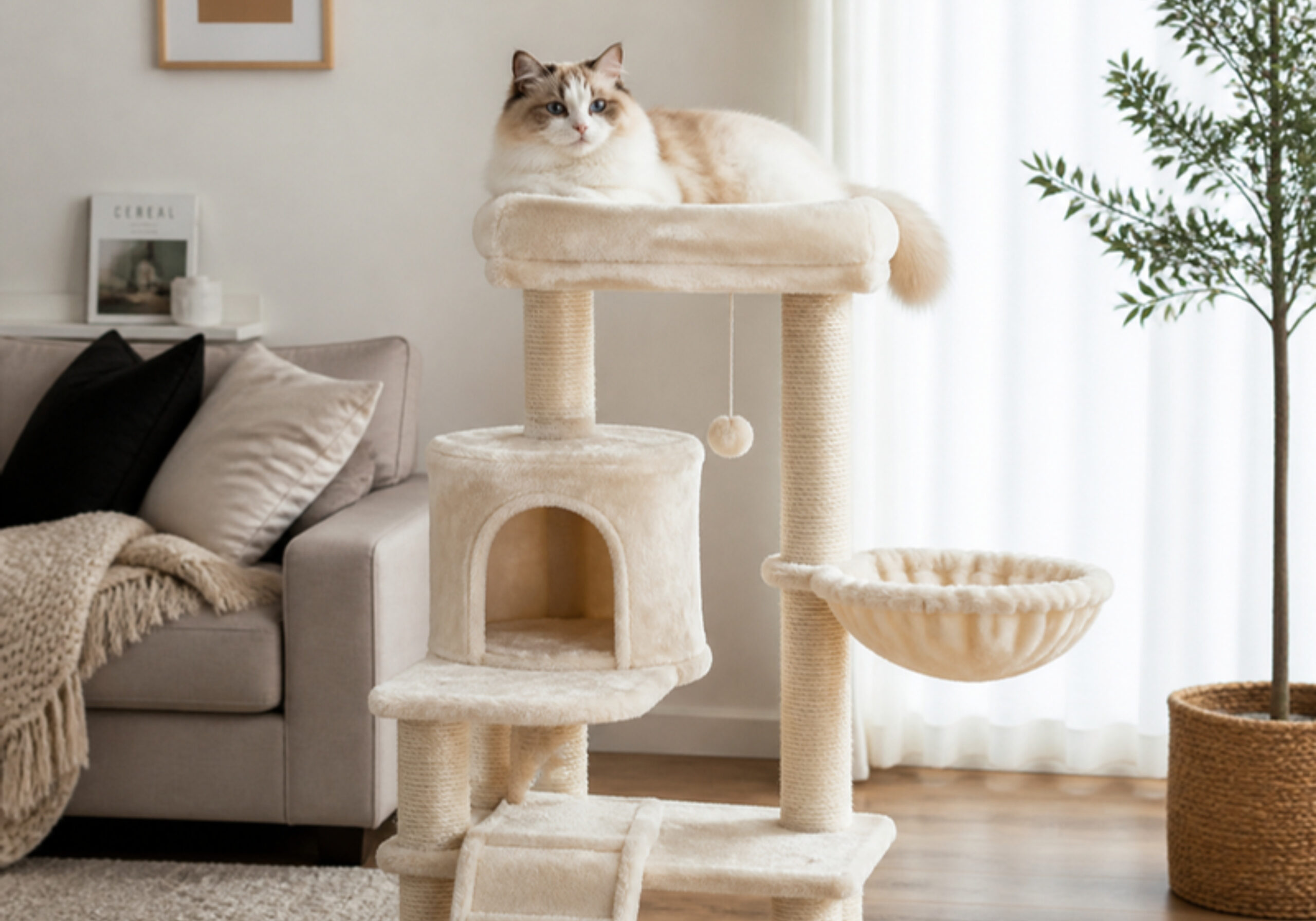
#1 Best Overall: Plush Multi-Level Cat Tree
Why it’s a good fit: A soft faux-fur covering over a sturdy multi-level frame gives the cute, cozy look most owners want while still offering real climbing and lounging space — the easiest everyday pick for most households.
- Soft plush covering
- Multiple levels + enclosed perch
- Sisal-wrapped scratching posts
Pros
- Blends into most living rooms, not obviously “pet furniture”
- Soft covering is comfortable for napping
- Good mix of climbing, scratching, and lounging spots
Cons
- Plush covering sheds and needs occasional vacuuming
- Not rated for the heaviest large-breed cats
Who should NOT use this: Skip if you have a large-breed cat or multiple cats climbing at once — size down to the heavy-duty pick below instead.
Our Analysis
A solid default for a single small-to-medium cat where appearance matters as much as function — check the base width against your cat’s jumping style before buying if your cat tends to leap aggressively.
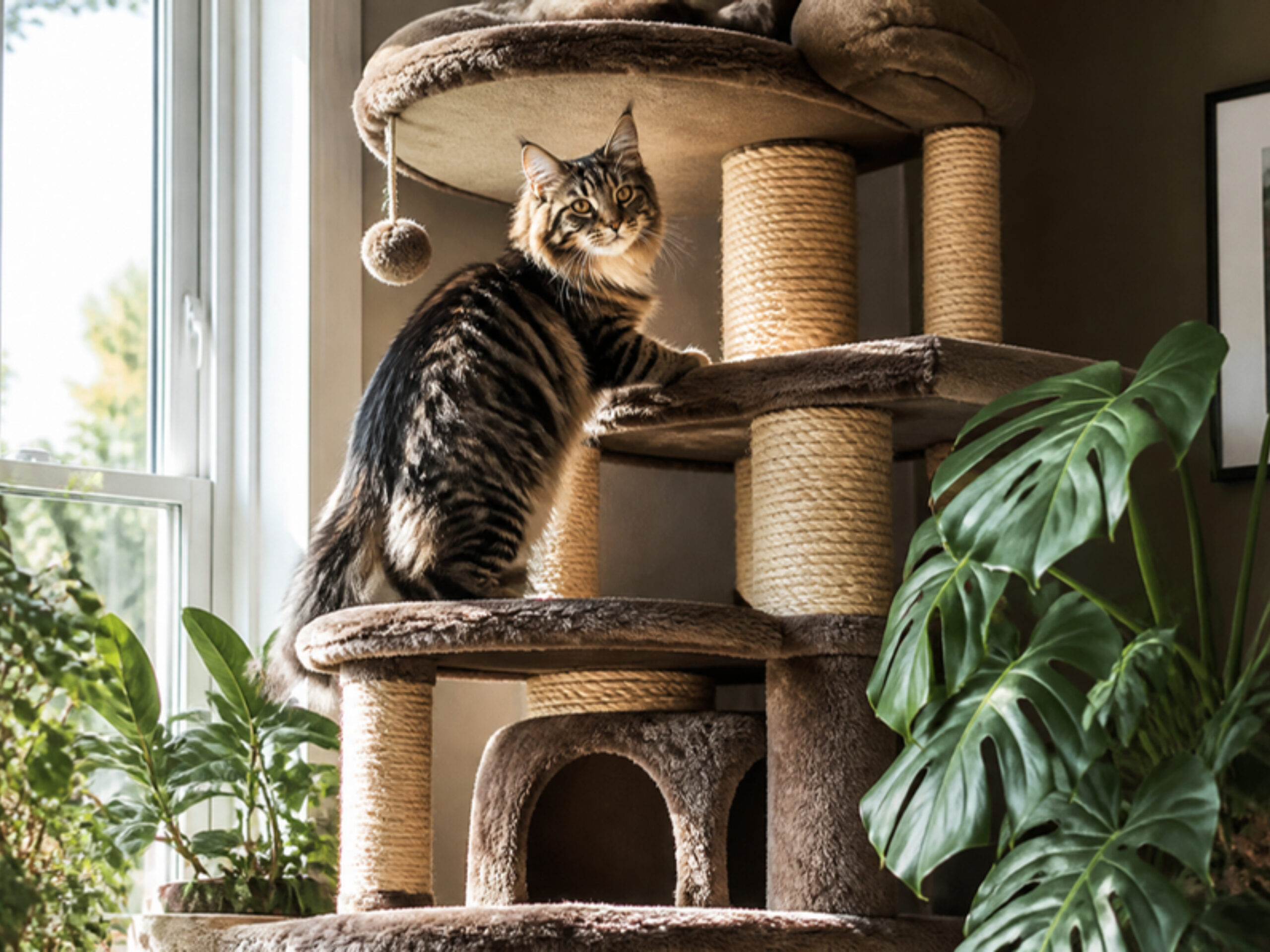
#2 Best for Large Cats: Heavy-Duty Extra-Large Cat Tree
Why it’s a good fit: A reinforced base, thicker posts, and wider platforms give large-breed cats and multi-cat households a tree that won’t tip or feel cramped, without giving up a decor-friendly look.
- Reinforced wide base
- Extra-thick sisal posts
- Wide platforms rated for large cats
Pros
- Stable even with large or multiple cats climbing together
- Thicker posts hold up longer to heavy scratching
- Wide platforms are comfortable for bigger breeds
Cons
- Larger footprint needs more floor space
- Heavier to move once assembled
Who should NOT use this: Skip if floor space is tight — this is the largest footprint on the list, and the compact tower below fits small apartments better.
Our Analysis
Worth the larger footprint specifically for large-breed cats (Maine Coon, Ragdoll) or multi-cat homes where a standard-size tree tips or feels crowded.
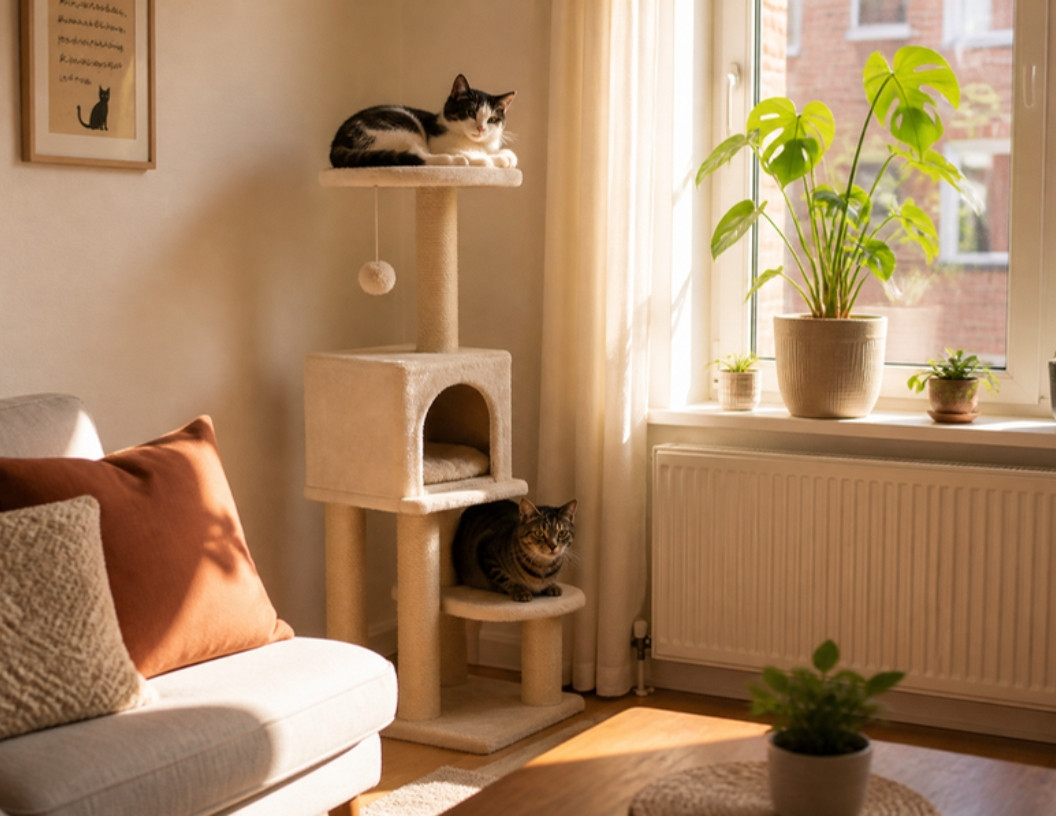
#3 Best for Small Spaces: Compact Cute Cat Tower
Why it’s a good fit: A narrow footprint fits apartment corners without losing multiple levels — a good middle ground between a full cat tree and a single scratching post.
- Small footprint, corner-friendly
- 2–3 levels in a compact frame
- Lightweight to reposition
Pros
- Fits small apartments and tight corners
- Easy to move or reposition
- Still offers vertical climbing, not just a flat perch
Cons
- Fewer levels than a full-size tree
- Narrower base — not ideal for aggressive jumpers
Who should NOT use this: Skip if you have a large or heavy cat, or multiple cats — the narrower base is less stable than the heavy-duty pick above.
Our Analysis
A practical pick when floor space, not budget or cat size, is the limiting factor — pair it with a wall-mounted shelf if your cat wants more vertical territory.
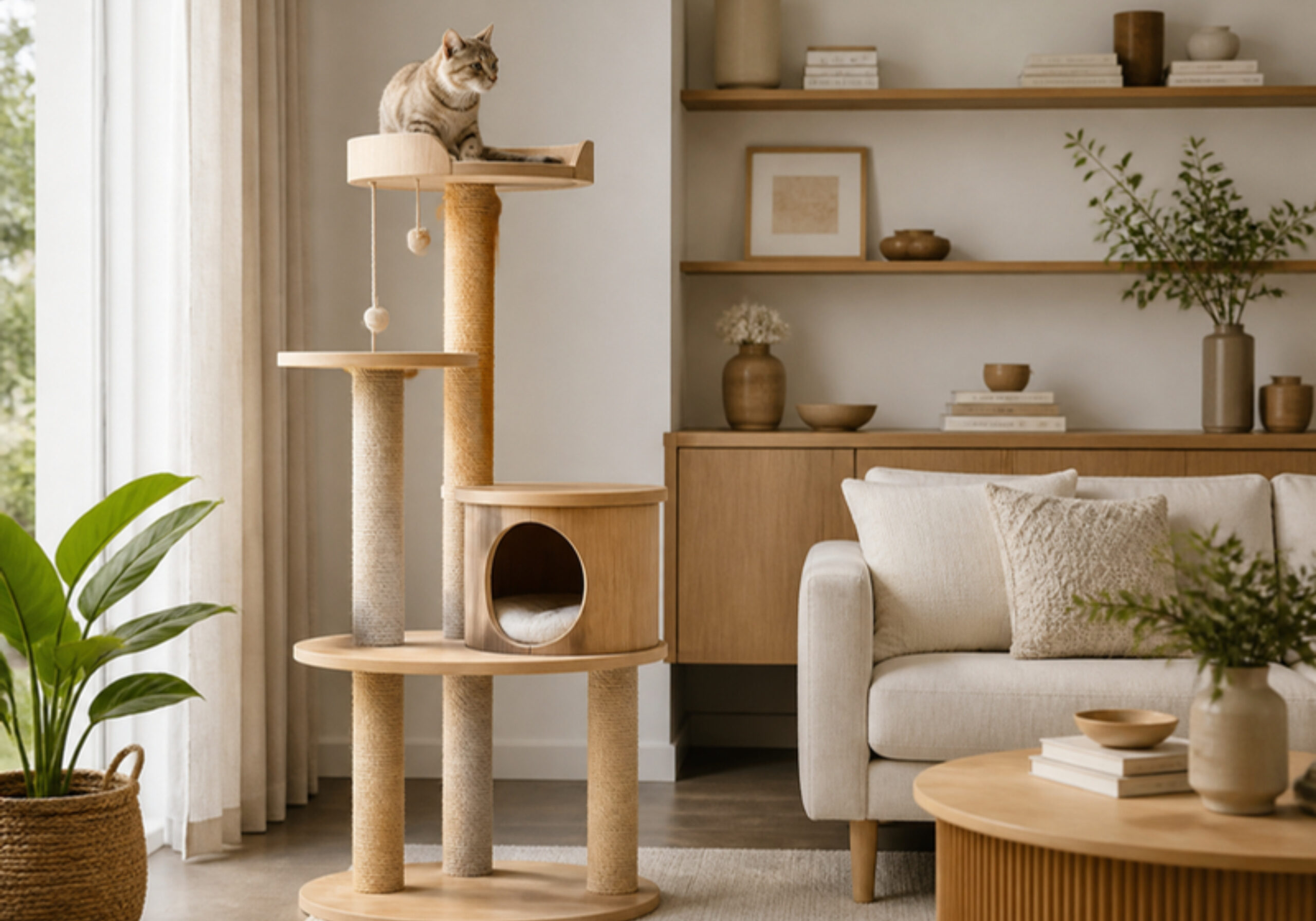
#4 Best Modern Design: Decor-Friendly Cat Tree
Why it’s a good fit: A clean-lined frame in neutral wood tones or muted colors looks more like furniture than a typical carpeted cat tree — a good fit for owners who care about how it looks in the room.
- Neutral, furniture-like finish
- Minimal visible carpet/plush
- Multiple perches and a scratching post
Pros
- Looks intentional in a styled living room
- Easier to keep clean than heavily carpeted designs
- Still functional for climbing and scratching
Cons
- Usually pricier than carpeted equivalents
- Less plush/cozy feel than the plush pick above
Who should NOT use this: Skip if your cat strongly prefers soft, plush surfaces for napping — the minimalist finish favors looks over maximum coziness.
Our Analysis
Best for owners who’ve skipped a cat tree before specifically because it clashed with their decor — this is the pick built to solve that problem.
#5 Best Budget: Sturdy Starter Cat Tree
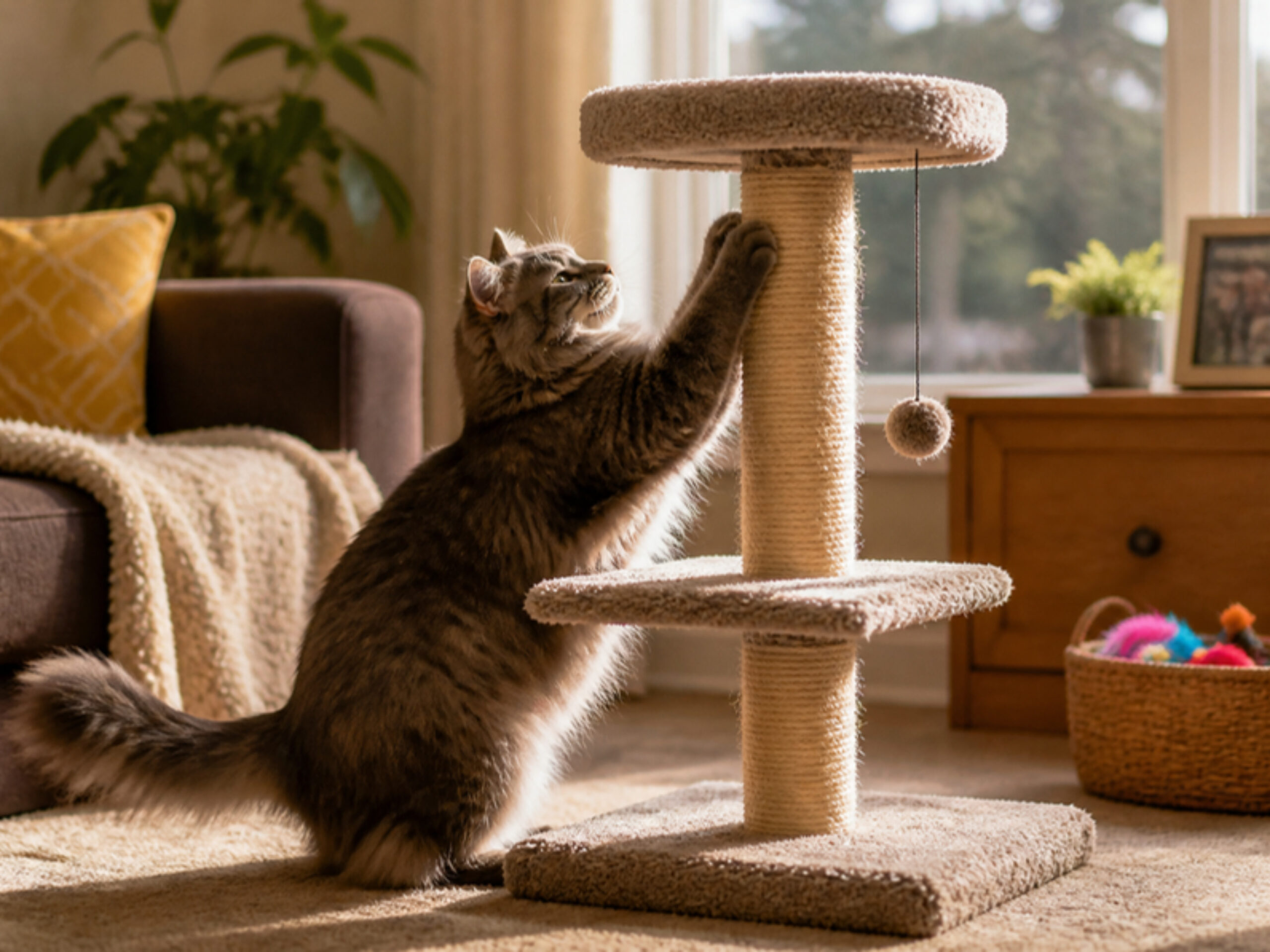
Why it’s a good fit: A no-frills carpeted tree with a solid base covers the climbing-and-scratching basics at the lowest price point on this list — a reasonable way to test whether your cat uses a tree at all before spending more.
- Budget-friendly price point
- Basic carpet covering
- Solid, stable base
Pros
- Lowest price on this list
- Still stable for normal jumping and scratching
- Good way to test cat interest before upgrading
Cons
- Basic carpet look, not especially “cute” or decor-forward
- Carpet wears faster than premium plush/sisal
Who should NOT use this: Skip if appearance is the top priority — this pick is about function and price, not the cute factor the rest of this list focuses on.
Our Analysis
A sensible starting point for a first-time cat owner or a second tree in a multi-room home, where spending less on one unit makes more sense.
Frequently Asked Questions
What makes a cat tree sturdy, not just cute?
Base width relative to height, base weight, and post thickness are the main factors — a wide, heavy base and a thick, tightly-wrapped sisal post resist tipping far better than a tall, narrow tree with thin posts, regardless of how the covering looks.
Do large cats need a different cat tree than small cats?
Generally yes — look for a tree specifically labeled for large cats or heavy-duty use, with a reinforced base and wider platforms, since a standard-size tree can tip or feel cramped under a large-breed cat’s weight.
My cat won’t use the cat tree I bought — what should I try?
Placement matters as much as the tree itself — try moving it near a window, in a social area rather than an isolated corner, and rubbing a little catnip on the scratching posts to encourage first use. Give it a few weeks before concluding your cat won’t use it.
Looking for more enrichment options? Browse our full cat toys and gear reviews, or see our best cat bed picks for a cozier napping spot nearby.
Research Disclaimer: This article is for informational purposes and was researched using publicly available product specs and owner reviews — it was not written by a veterinarian or professional pet furniture tester, and no products listed here were used in-house for this comparison.