We independently research every product on this page, drawing on publicly available specs and owner reviews. If you buy through a link here, Catverdict may earn a small commission — this never affects our picks or costs you anything extra. Details in our affiliate disclosure.
Bottom line: An elevated cat food bowl raises the dish to a more natural head-and-neck angle, which many owners find helps cats who regurgitate shortly after eating or who seem uncomfortable bending down to a flat floor bowl. We compared ceramic and stainless steel sets, multi-cat stands, and slow-feeder combinations.
Curious how we evaluate and rank every pick on this page? See our How We Choose Our Picks.
Jump to a section
At-a-Glance Comparison: Best Elevated Cat Food Bowls
| Pick | Best For | Material |
|---|---|---|
| Ceramic Double-Bowl Set | Everyday default, easy to clean | Ceramic |
| Multi-Cat Elevated Stand | Multiple cats eating at once | Stainless steel |
| Slow-Feeder Elevated Bowl | Fast eaters who regurgitate | Stainless steel / plastic |
| Adjustable-Height Stand | Kittens growing into adulthood | Stainless steel |
| Budget Elevated Bowl | Trying elevation before upgrading | Plastic/ceramic |
Buyer’s Guide: Choosing an Elevated Cat Food Bowl
How We Chose These Options
We compared products on bowl height relative to typical cat shoulder height, material (ceramic and stainless steel resist bacterial buildup better than plastic), ease of cleaning, and how owners report their cats adjusting to the elevated angle. This is a selection built from published specs and owner reviews, not an in-house trial.
Why Some Owners Choose Elevated Bowls
Raising the bowl reduces how far a cat has to bend its neck down to eat, which some owners find useful for senior cats with joint stiffness, flat-faced breeds, or cats who regurgitate undigested food shortly after fast eating. It’s a management approach some owners use alongside — not instead of — a vet visit if regurgitation or vomiting is frequent or new.
Material: Ceramic and Steel vs. Plastic
Plastic bowls scratch over time, and those micro-scratches can harbor bacteria linked to feline chin acne in some cats. Ceramic and stainless steel are easier to sanitize thoroughly and are the more common recommendation for food and water bowls generally.
Top 5 Elevated Cat Food Bowls

#1 Best Overall: Ceramic Double-Bowl Set
Why it’s a good fit: A ceramic double-bowl set raised to a comfortable height covers food and water in one stand, with a non-porous surface that’s easy to sanitize thoroughly between washes.
- Ceramic, non-porous surface
- Dishwasher-safe bowls
- Non-slip stand base
Pros
- Easy to sanitize thoroughly, unlike scratched plastic
- Covers food and water in one stand
- Stable non-slip base
Cons
- Ceramic bowls can chip if dropped
- Fixed height, not adjustable
Who should NOT use this: Skip if you have a kitten who’ll need the height to grow with them — see the adjustable-height pick below instead.
Our Analysis
A sensible everyday default for a single adult cat where easy cleaning matters as much as the elevation itself.
#2 Best for Multiple Cats: Multi-Cat Elevated Stand
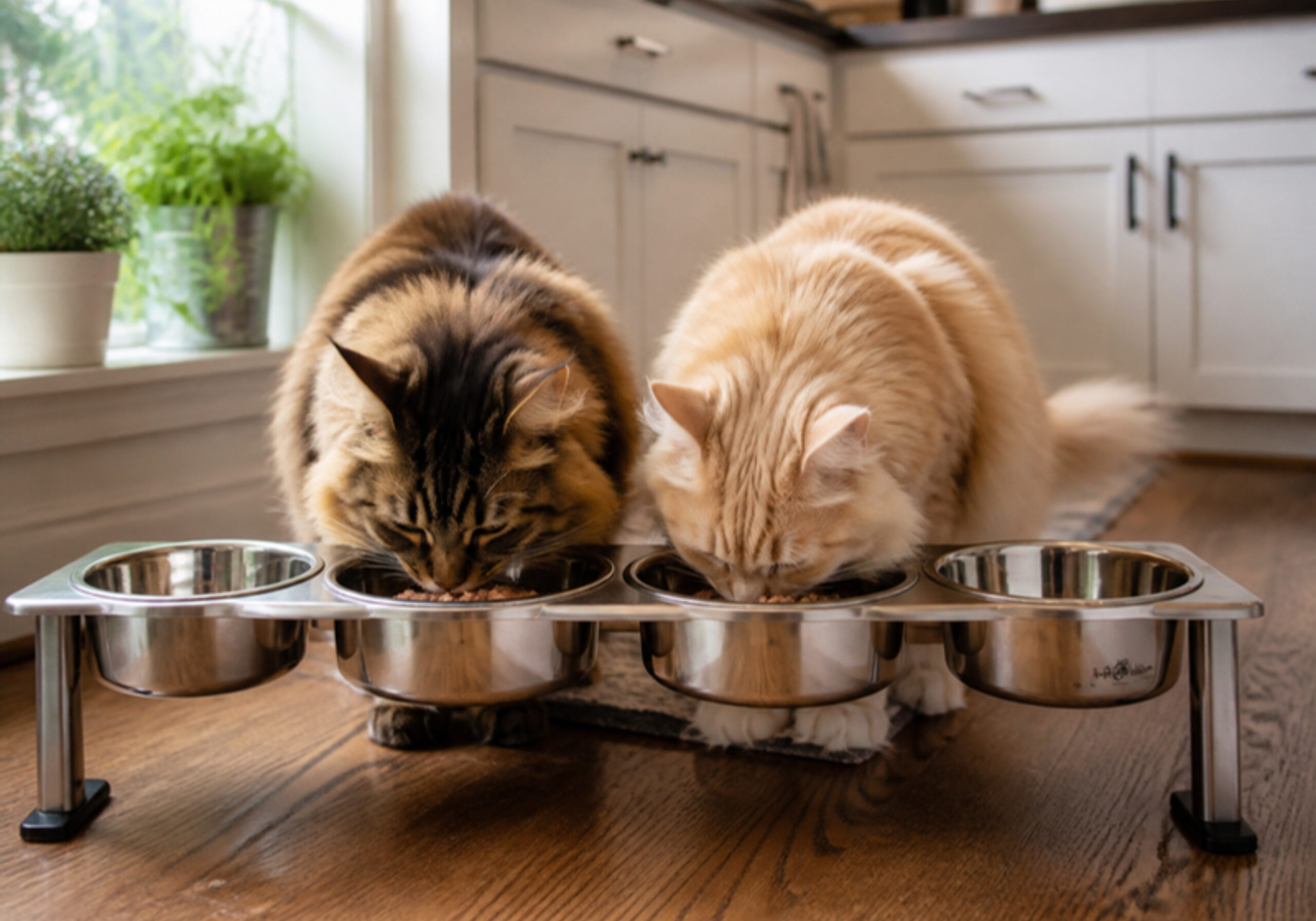
Why it’s a good fit: A wider stand with multiple stainless steel bowls lets several cats eat side-by-side at the same elevated height, without the stand tipping under multiple cats leaning in at once.
- Multiple stainless steel bowls
- Wide, stable multi-cat stand
- Removable bowls for washing
Pros
- Lets multiple cats eat at once without crowding
- Stainless steel resists bacterial buildup
- Bowls remove individually for washing
Cons
- Larger footprint than a single-cat stand
- Fixed height, not adjustable
Who should NOT use this: Skip if you only have one cat — the smaller ceramic set above is a better fit for a single-cat household.
Our Analysis
Worth the larger footprint specifically for multi-cat households where food-guarding or crowding around one bowl is an issue.

#3 Best for Fast Eaters: Elevated Slow-Feeder Bowl
Why it’s a good fit: Raised ridges inside the bowl slow down fast eaters, and combining that with elevation addresses two common causes of post-meal regurgitation at once.
- Raised interior ridges/maze pattern
- Elevated base, comfortable angle
- BPA-free materials
Pros
- Addresses fast eating and bowl height together
- Can reduce regurgitation in cats who eat too quickly
- Works for both wet and dry food in most designs
Cons
- Ridges need more careful cleaning than a flat bowl
- Some cats need an adjustment period
Who should NOT use this: Skip if regurgitation is frequent or sudden — that’s worth a vet visit first, not just a bowl change.
Our Analysis
A reasonable first step for an otherwise-healthy cat who simply eats too fast — pair it with smaller, more frequent meals for the best effect.
#4 Best Adjustable Height: Adjustable-Height Elevated Stand
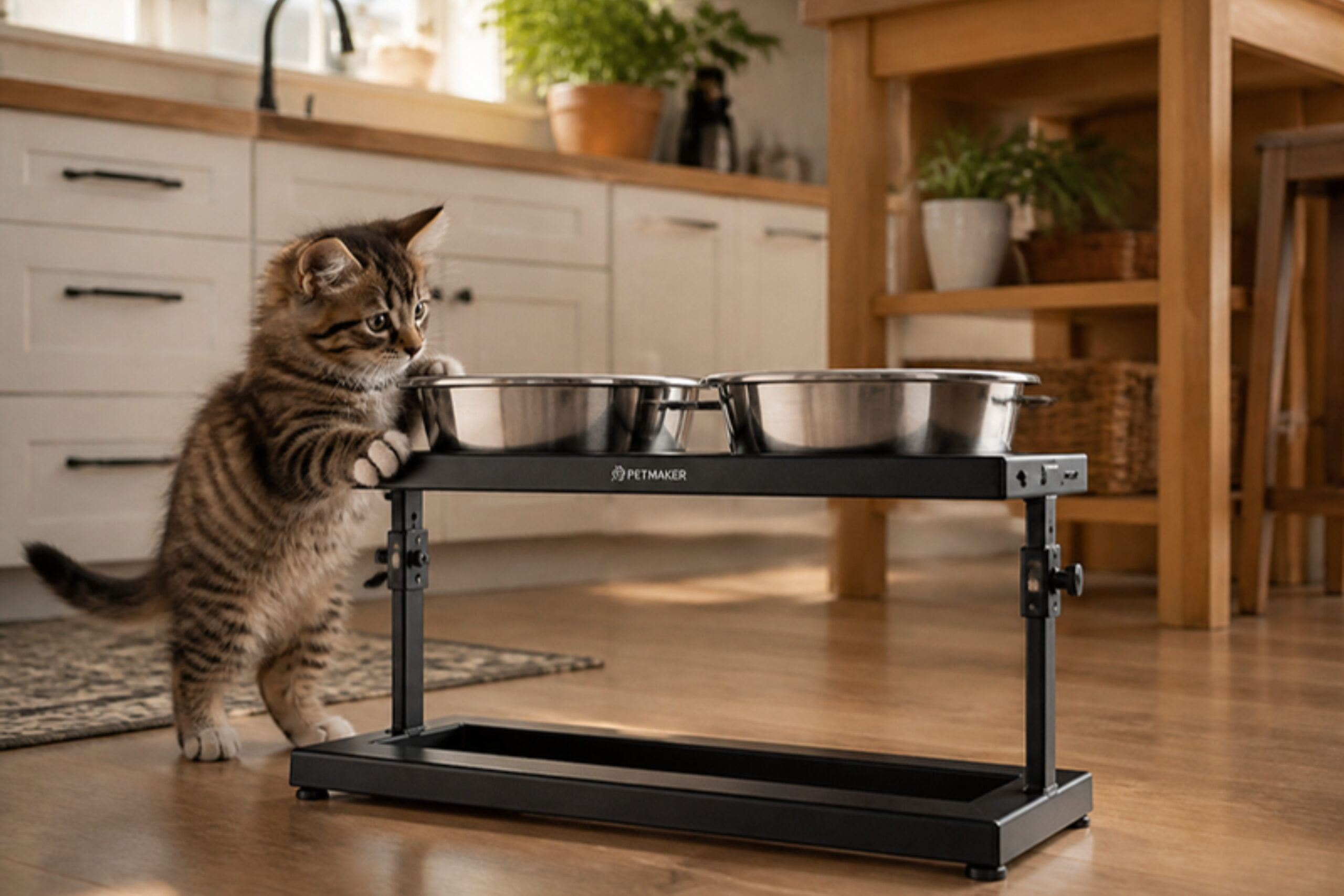
Why it’s a good fit: A stand with 2–3 height settings grows with a kitten into adulthood, or adjusts down for a senior cat with reduced mobility — one stand instead of replacing bowls as needs change.
- 2–3 adjustable height settings
- Stainless steel bowls
- Non-slip rubber base
Pros
- Adapts as a kitten grows or a cat ages
- One purchase covers multiple life stages
- Stainless steel bowls are easy to sanitize
Cons
- Pricier than a fixed-height set
- Height adjustment mechanism adds a moving part to maintain
Who should NOT use this: Skip if you only ever have one adult cat at a stable size — a fixed-height set is simpler and usually cheaper.
Our Analysis
Makes the most sense for households raising a kitten or managing a senior cat, where the right height genuinely changes over time.
#5 Best Budget: Simple Elevated Bowl
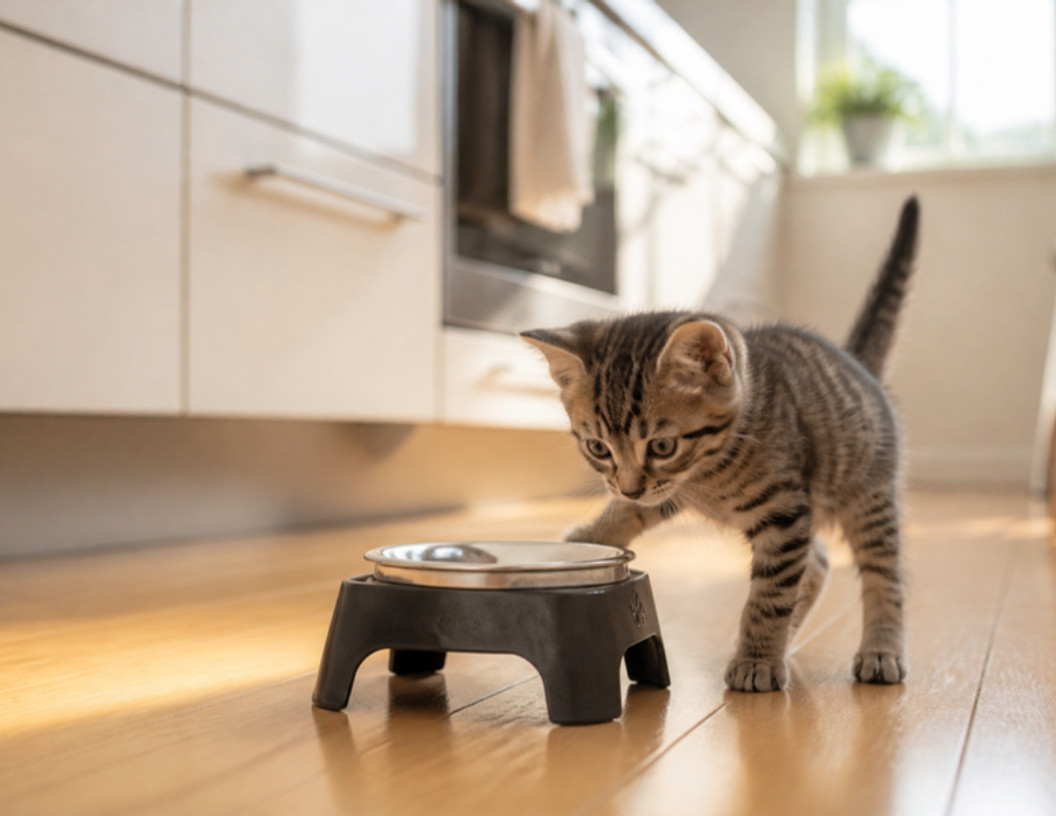
Why it’s a good fit: A single bowl on a low stand is the cheapest way to test whether elevation actually helps your cat before spending more on a multi-bowl or adjustable set.
- Budget-friendly price point
- Single bowl, fixed low stand
- Lightweight and portable
Pros
- Lowest price on this list
- Easy way to trial elevation before upgrading
- Lightweight, easy to move or wash
Cons
- Single bowl only — not for multi-cat households
- Plastic/basic materials on some models
Who should NOT use this: Skip if you already know you want ceramic or steel long-term — the material on budget models is usually the first thing to replace later.
Our Analysis
A low-risk way to find out if your cat even prefers an elevated bowl before committing to a pricier multi-bowl stand.
Frequently Asked Questions
Do elevated bowls actually help cats who throw up after eating?
Many owners report fewer episodes after switching to an elevated, slower-feeding setup, but regurgitation can have several causes. If it’s frequent, sudden, or paired with weight loss or lethargy, treat the bowl change as one piece of management and talk to your vet rather than relying on it alone.
What height should an elevated cat bowl be?
Most elevated stands sit around 3–5 inches off the floor, which is a modest lift rather than a dramatic one — the goal is reducing how far the neck bends down, not raising the bowl to standing height.
Is ceramic or stainless steel better for an elevated bowl?
Both resist scratching and bacterial buildup far better than plastic. Ceramic is heavier and more chip-prone; stainless steel is lighter and more durable if dropped. Either is a reasonable choice over plastic for daily food and water use.
Also dealing with a cat who eats too fast? See our automatic cat feeder picks, or browse the full cat toys and gear reviews.
Research Disclaimer: This article is for informational purposes and was researched using publicly available product specs and owner reviews — it was not written by a veterinarian, and no products listed here were used in-house for this comparison. If your cat shows frequent vomiting, weight loss, or other symptoms, contact your vet rather than relying on a bowl change alone.