
We independently research every product we recommend, drawing on real owner reviews, product specs, and vet-reviewed sources. If you buy through a link on this page, Catverdict may earn a small commission — this never affects our picks or costs you anything extra. Details in our affiliate disclosure.
Wondering whether kittens can eat adult cat food after sneaking a bite from the household bowl? A one-off nibble usually isn’t a crisis, but kitten food and adult cat food aren’t interchangeable — the gap in calories, protein, and key nutrients matters a lot during the first year of growth. Here’s what’s actually different between the two, what happens if a kitten eats adult food, and when it’s safe to make the switch.
Table of Contents
| Quick answer | A single accidental taste is rarely a problem; a regular diet of adult food is not recommended for kittens |
| Main risk | Adult food is lower in calories, protein, and fat than kittens need during their growth phase |
| When to switch | Most kittens transition to adult food around 12 months (slower-maturing large breeds later) — see a vet for the right timeline for your kitten |
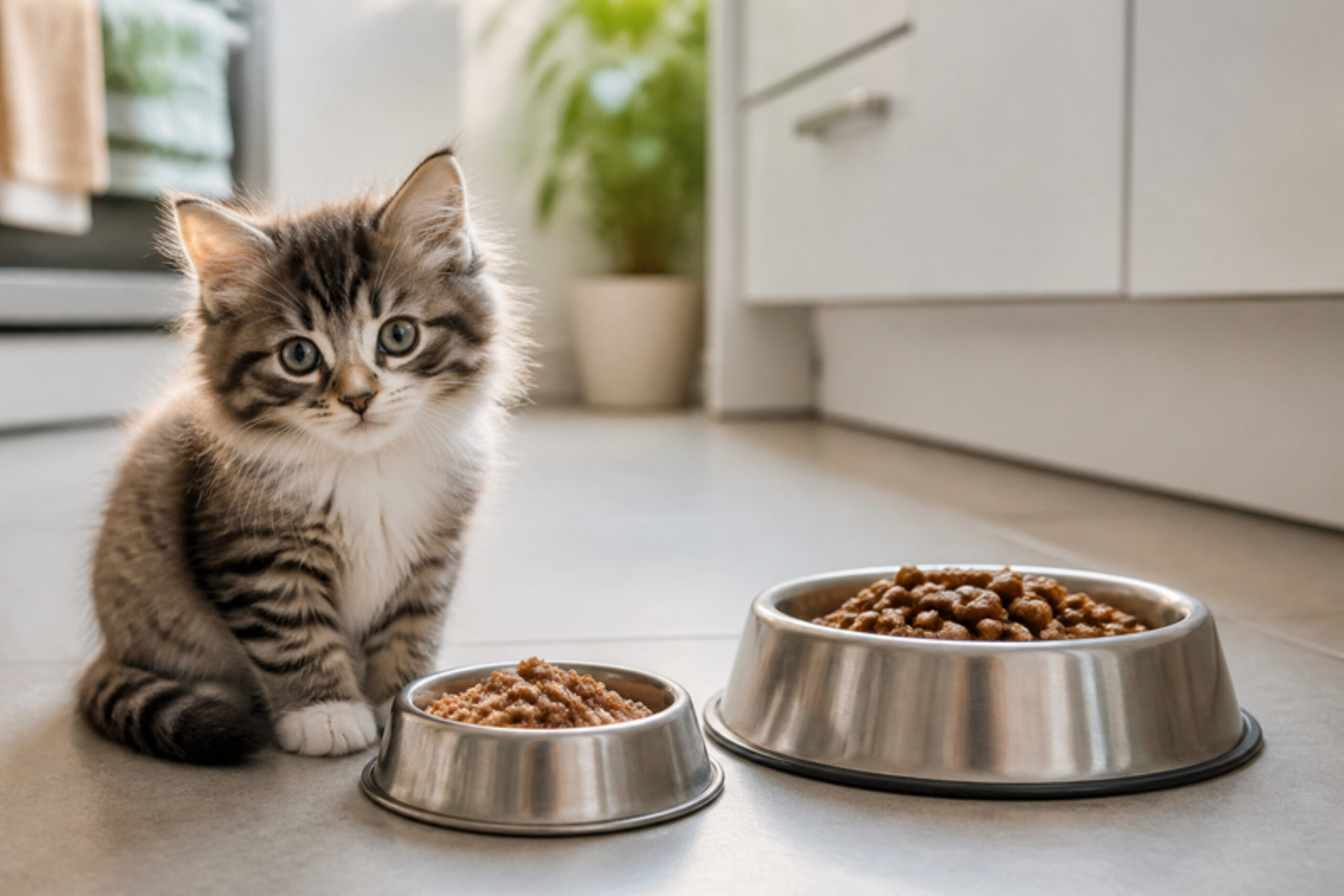
Kitten Food vs. Cat Food: What’s the Difference?
Kitten food and adult cat food are formulated for different jobs. A growing kitten needs roughly 1.5–2 times more calories per pound of body weight than an adult cat, along with higher levels of protein, fat, calcium, and phosphorus to support rapid bone and muscle development. Kitten formulas are built around AAFCO’s “growth and reproduction” nutrient profile, while most adult cat foods are formulated for “maintenance” — enough to keep a fully grown cat healthy, but not enough to properly fuel a kitten’s development.
The kibble or wet food texture is usually smaller and softer in kitten formulas too, since kittens have smaller mouths and are often still developing their bite strength.
[PRODUCT: high-protein kitten-formula dry or wet food — meets AAFCO growth nutrient levels for kittens under 12 months | PLATFORM: Amazon]
What Happens If a Kitten Eats Adult Cat Food?
A One-Off Taste or Single Meal
If a kitten eats one meal — or steals a few bites — of adult cat food, it’s generally not an emergency. Adult cat food isn’t toxic to kittens; it’s simply less nutrient-dense than what they need. One meal won’t meaningfully affect growth. Just make sure the kitten gets back to a kitten-formula diet for its next regular meal.
A Steady Diet of Adult Food
Feeding a kitten adult cat food as its regular diet over weeks or months is the actual concern. Without enough calories, protein, and calcium/phosphorus for its growth stage, a kitten on adult food long-term can show up as slower weight gain, lower energy, a duller coat, or in more serious cases, stunted bone development. If this has been happening in your household, the fix is simply switching the kitten over to a dedicated kitten food — long-term nutritional gaps generally catch up once the right diet resumes, but a vet check is a reasonable precaution if the kitten seems underweight or lethargic.
When Can Kittens Start Eating Adult Cat Food?
Most kittens are ready to transition to adult cat food around 12 months old, once they’ve reached close to their adult size. Large and giant breeds — Maine Coons, Ragdolls, and similar slow-maturing breeds — keep growing until 18–24 months, so their breeder or vet may recommend staying on kitten or “all life stages” food a bit longer. If you’re not sure which category your kitten’s breed falls into, ask your vet at the next checkup rather than guessing from the kitten’s size alone.
How to Transition a Kitten to Adult Food
Switching foods abruptly can upset a cat’s stomach at any age, so a gradual changeover works best:
- Days 1–3: Mix about 25% adult food into the kitten’s usual food.
- Days 4–6: Move to a 50/50 mix of adult and kitten food.
- Days 7–9: Shift to roughly 75% adult food.
- Day 10 onward: Fully switch to adult food, watching for any digestive upset along the way.
If the kitten has loose stool, vomiting, or refuses to eat during the transition, slow the pace down or go back a step before trying again.
[PRODUCT: sensitive-stomach or limited-ingredient cat food — useful if a kitten’s digestion is sensitive during the food transition | PLATFORM: Amazon]
For more on feeding cats of any age safely, see our cat food reviews hub.
Frequently Asked Questions
My kitten accidentally ate adult cat food once — should I worry?
No — a single accidental meal of adult food isn’t harmful to a kitten. Just return to its regular kitten food afterward and keep an eye on appetite and stool as you would after any diet slip-up.
Can a kitten and adult cat eat the same food if I only buy kitten food?
An adult cat can eat kitten food occasionally without harm, though it’s more calorie-dense than most adult cats need day to day and isn’t ideal as a permanent diet for a less active adult cat. Kitten food shouldn’t become the adult cat’s everyday food long-term.
Do large-breed kittens switch to adult food later?
Yes — large and giant breeds like Maine Coons keep growing well past 12 months, so vets often recommend keeping them on kitten or all-life-stages food until 18–24 months instead of switching at the usual one-year mark.


