
We independently research every product on this page, drawing on publicly available specs and owner reviews. If you buy through a link here, Catverdict may earn a small commission — this never affects our picks or costs you anything extra. Details in our affiliate disclosure.
Bottom line: Litter box furniture hides the box inside a cabinet, planter, or side-table shape, which helps the room look and smell better — but only if the enclosure is large enough for your cat to turn around and dig comfortably, and has enough ventilation to not trap odor. A side-table style cabinet with a large interior is the safest default pick for most cats and most rooms.
Curious how we evaluate and rank every pick on this page? See our How We Choose Our Picks.
Jump to a section
At-a-Glance Comparison: Best Litter Box Furniture
| Pick | Best For | Interior Size |
|---|---|---|
| Side-Table Cabinet | Most homes, living/bedroom placement | Large |
| Planter-Style Enclosure | Blending into a plant-filled room | Medium |
| Cabinet with Storage | Also storing litter/supplies nearby | Large |
| Corner Enclosure | Tight spaces, small apartments | Small–Medium |
| Bench-Style Cabinet | Entryway or mudroom double duty | Large |
Buyer’s Guide: Choosing Litter Box Furniture
How We Chose These Options
We compared litter box furniture on interior space (relative to common litter box sizes), ventilation design, ease of cleaning access, and how well the piece actually disguises its purpose. This is a selection built from published dimensions and owner reviews, not an in-house trial.
Interior Size Matters More Than the Exterior Look
A cabinet that looks spacious from the outside can still have a cramped interior once walls, a door cutout, and any internal lip are accounted for. Check the actual interior dimensions against your current litter box (or a slightly larger one) rather than judging by the furniture’s overall footprint — a cat that can’t turn around and dig comfortably may avoid the box entirely.
Ventilation and Odor
An enclosed cabinet traps odor more than an open box unless it has deliberate airflow — vents, a gap at the base, or a fan-equipped design. Combine any enclosure with regular scooping and a litter deodorizer rather than expecting the furniture itself to control smell.
Top 5 Litter Box Furniture Picks
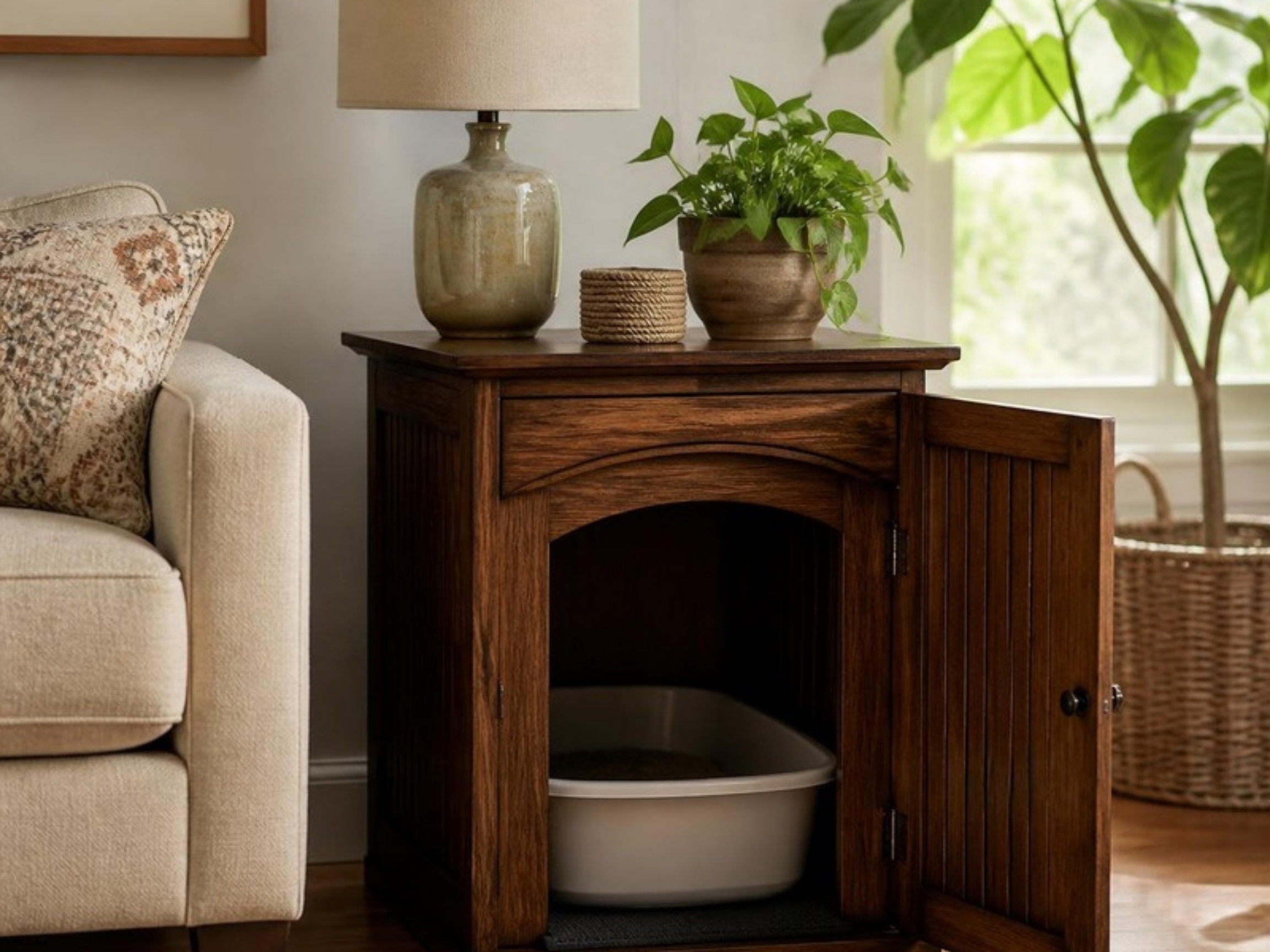
#1 Best Overall: Side-Table Cabinet
Why it’s a good fit: Shaped like an ordinary end table, this style blends into most rooms while offering a large interior — the safest default for most cats and most homes, including multi-cat households needing a bigger box inside.
- Large interior relative to footprint
- Doubles as furniture (can hold a lamp, plant)
- Front or side entry depending on model
Pros
- Genuinely looks like furniture, not a litter box
- Large enough interior for most cats to turn and dig
- Works in a living room, bedroom, or hallway
Cons
- Bulkier and heavier than a plain litter box
- Still needs the top removed or a door opened for full cleaning access
Who should NOT use this: Skip if floor space is very limited — a plain open box or the compact corner enclosure below fits tighter spaces better.
Our Analysis
The side-table shape is popular specifically because it looks unremarkable in a shared living space while still fitting a full-size litter box inside — a reasonable default unless your room is unusually tight.
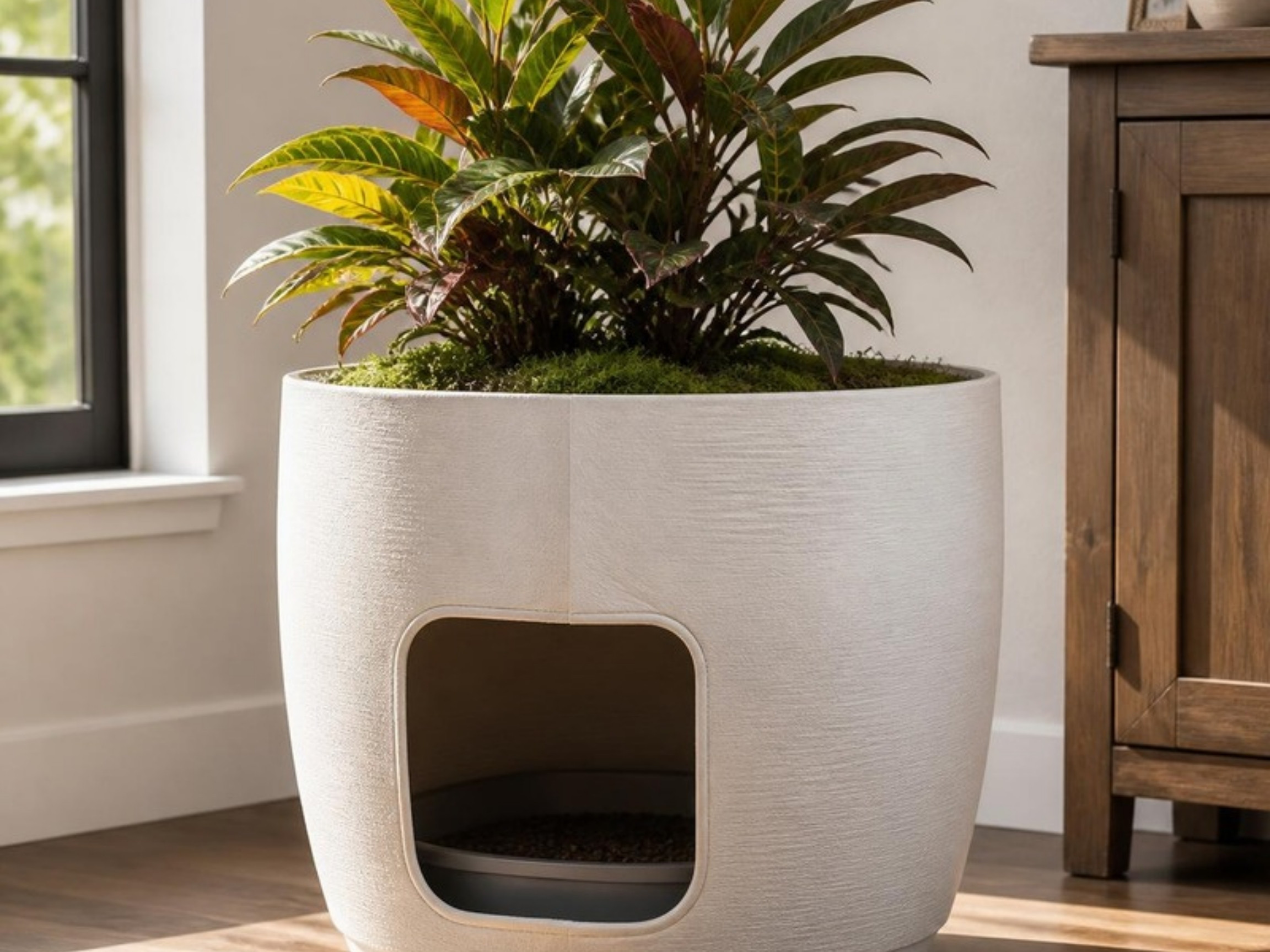
#2 Best for Blending In: Planter-Style Enclosure
Why it’s a good fit: Shaped like a large planter, often with a faux plant on top, this style disguises the box especially well in a room with other greenery — a good fit if you want the furniture to disappear visually rather than just look neutral.
- Planter shape with decorative top
- Medium interior size
- Top or side-loading access
Pros
- Among the most effective disguises available
- Fits naturally into a plant-decorated room
- Compact footprint for its interior size
Cons
- Interior is typically smaller than a side-table cabinet
- Awkward entry angle for some larger cats
Who should NOT use this: Skip for a large or senior cat that needs easy, low-step access — the entry shape on planter-style enclosures tends to be less accommodating than a side-table design.
Our Analysis
This is the pick for disguise above all else — if blending into decor matters more than maximizing interior space, it’s a reasonable trade-off, especially for an average-sized, agile cat.
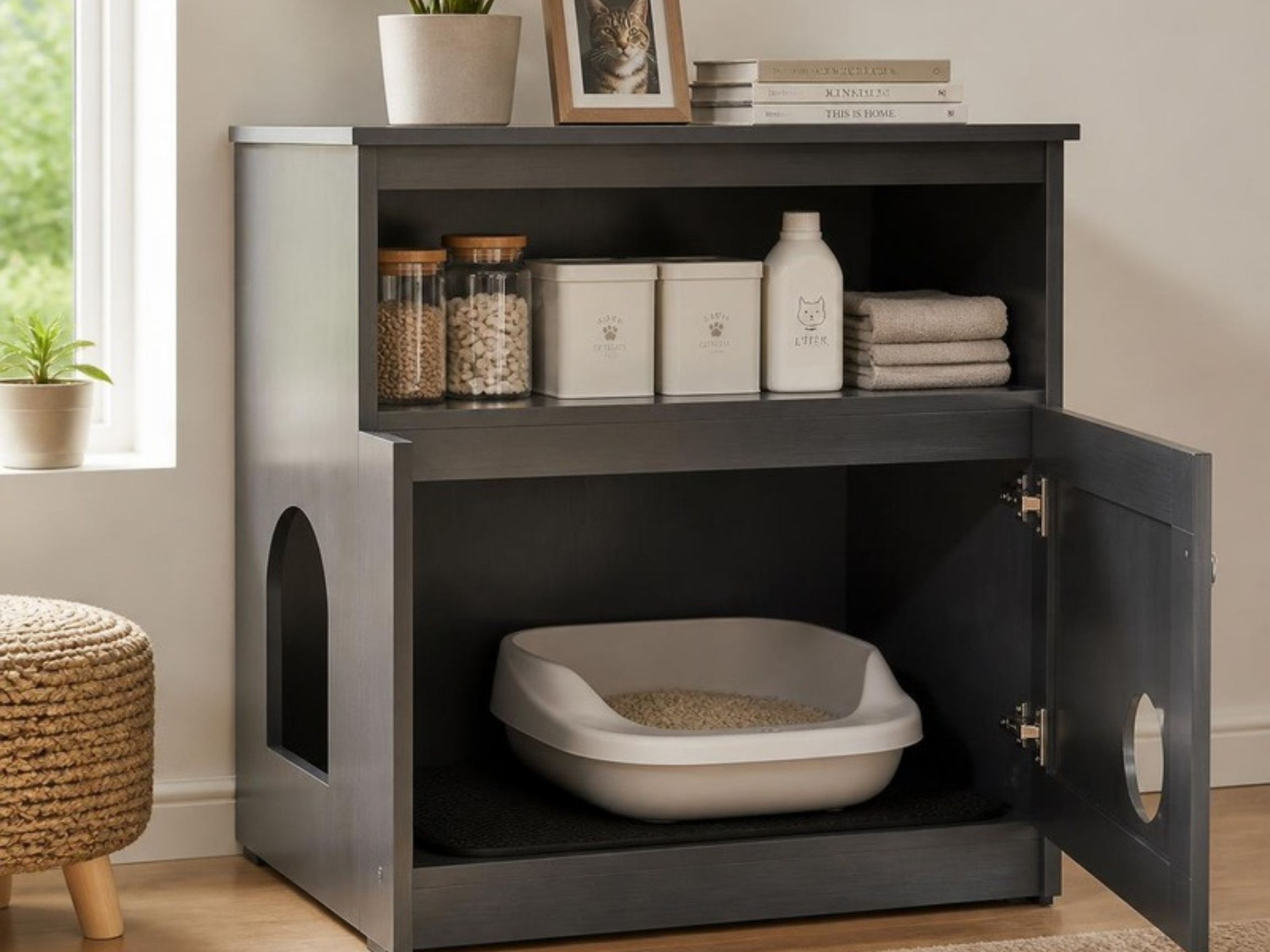
#3 Best for Storage: Litter Box Cabinet with Storage
Why it’s a good fit: This style adds a shelf or small cabinet above or beside the litter compartment, which is useful for keeping litter bags, scoops, and trash bags out of sight but within reach in the same spot.
- Large interior plus separate storage area
- Keeps litter supplies in one place
- Larger overall footprint than other styles
Pros
- Consolidates the box and supplies in one piece
- Reduces visible clutter around the litter area
- Good for small laundry rooms or closets doing double duty
Cons
- Larger footprint than a simple cabinet
- Usually a higher price point given the added storage
Who should NOT use this: Skip if you don’t need the extra storage — you’ll pay more for space you won’t use.
Our Analysis
Worth the extra size and cost specifically if your litter supplies are currently cluttering the floor or a nearby shelf — otherwise, a plain cabinet covers the core need for less.
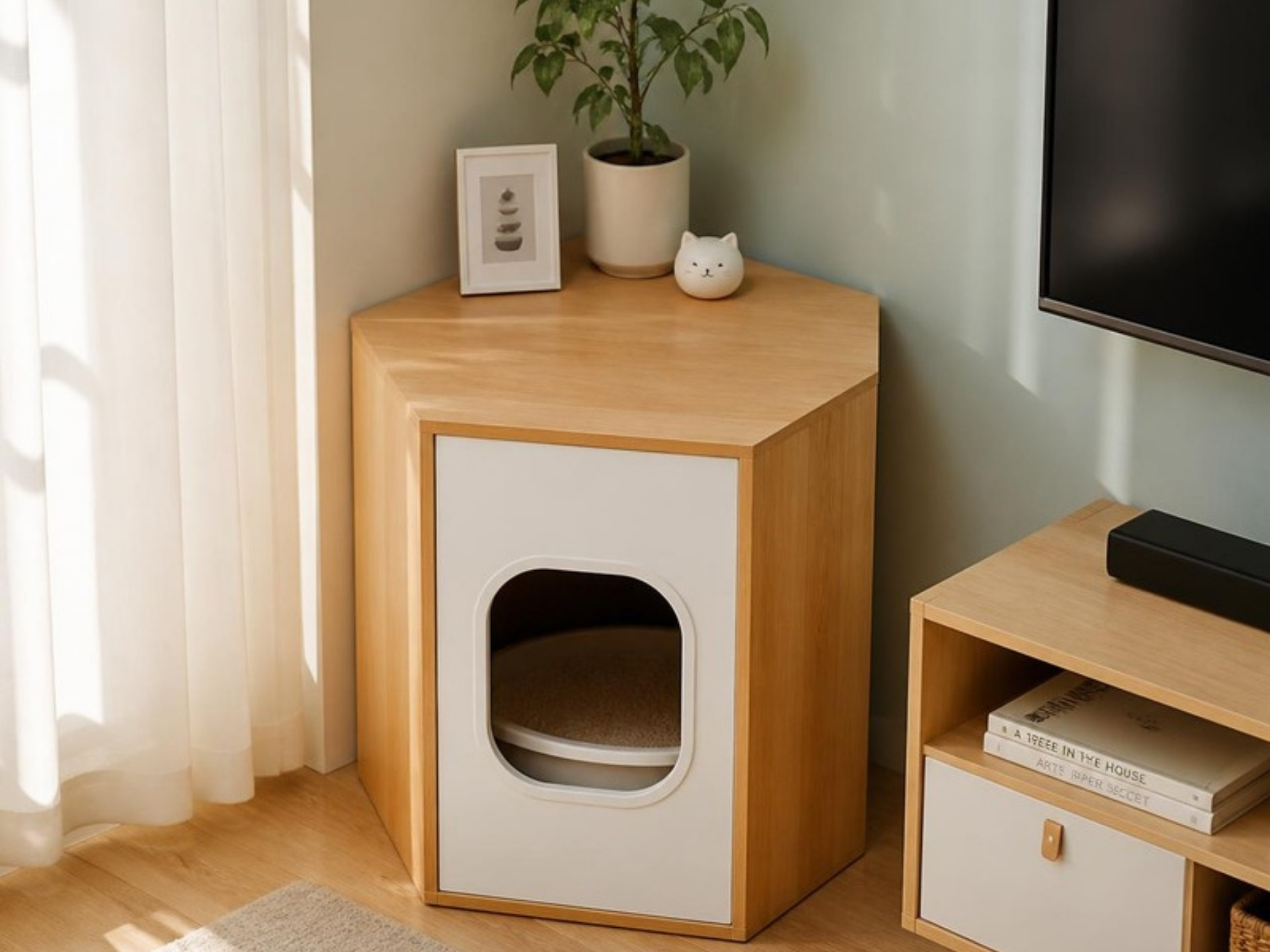
#4 Best for Tight Spaces: Compact Corner Enclosure
Why it’s a good fit: A triangular or corner-fitting design makes use of otherwise-wasted space, which is the main appeal for small apartments or rooms where a standard rectangular cabinet won’t fit well.
- Corner-fitting triangular shape
- Smaller interior than most other styles
- Smallest footprint in this list
Pros
- Makes use of corner space other furniture can’t
- Smallest footprint of the options here
- Good for studio apartments or small bathrooms
Cons
- Smaller usable interior than rectangular cabinets
- May not suit a large cat comfortably
Who should NOT use this: Skip for a large breed cat or multi-cat household sharing one box — the compact interior is the main trade-off for the space savings.
Our Analysis
This is purely a space-constraint solution — choose it because your room genuinely can’t fit a bigger cabinet, not as an upgrade over the side-table style.
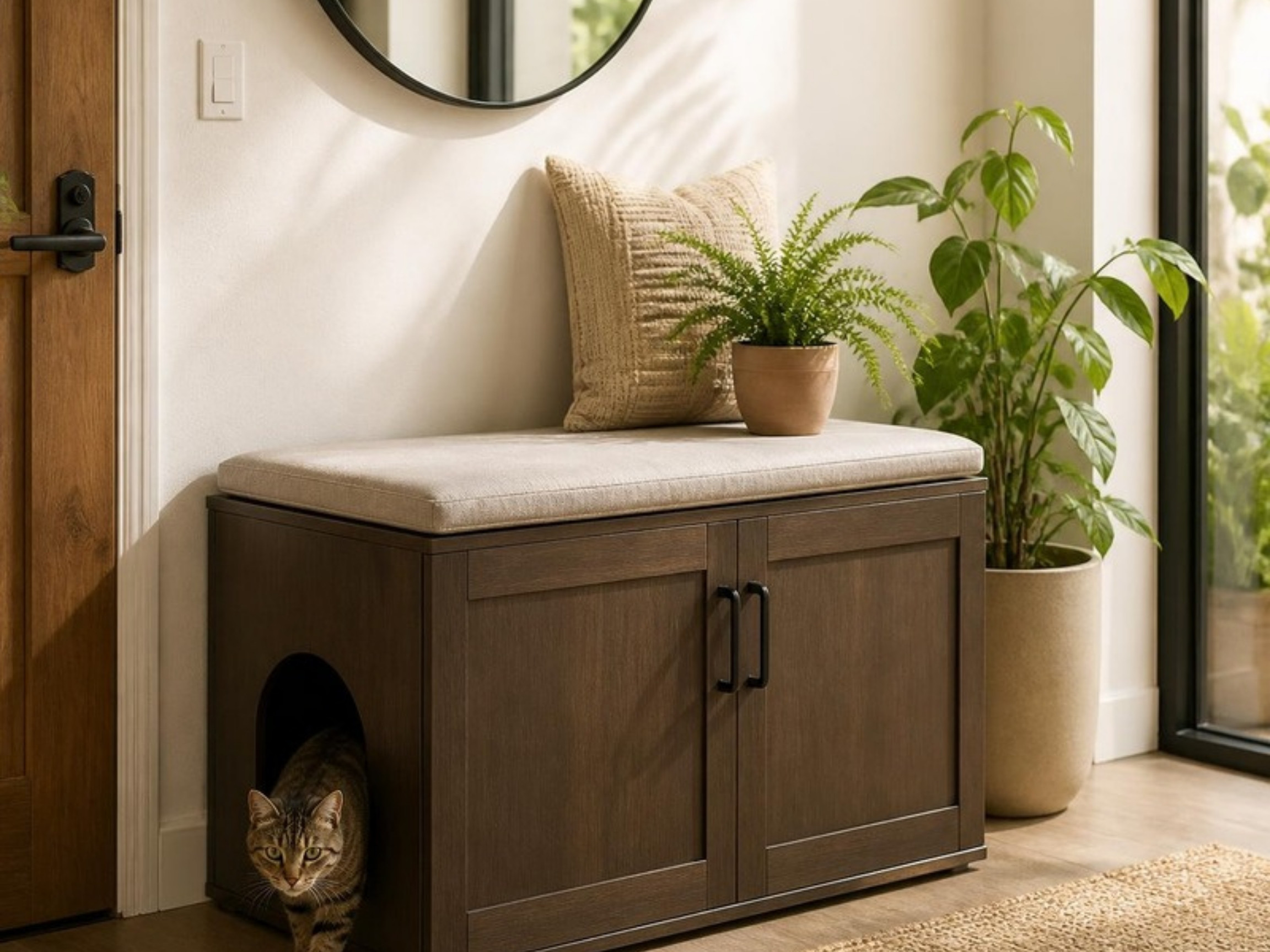
#5 Best for Double Duty: Washroom/Bench-Style Cabinet
Why it’s a good fit: Built like a bench or low cabinet, often with a cushioned or flat top, this style works as actual seating or a shoe-storage bench in an entryway or mudroom while hiding the litter box inside.
- Bench shape, sit-on-top design
- Large interior
- Good for entryway or mudroom placement
Pros
- Doubles as real seating or a landing spot for shoes/bags
- Large interior similar to the side-table style
- Fits naturally in an entryway
Cons
- Larger and heavier than most other styles
- Less of a fit for a living room or bedroom
Who should NOT use this: Skip if you don’t have an entryway, mudroom, or similar spot where the bench function actually gets used — otherwise it’s just a bulky cabinet.
Our Analysis
The dual-purpose design only pays off if the bench function is genuinely useful in your home — in the right spot (an entryway), it’s one of the more practical options on this list.
Frequently Asked Questions
Will my cat refuse to use an enclosed litter box cabinet?
Some cats adjust without issue, while others are hesitant about enclosed spaces, especially at first. Keep the entrance easy to access, make sure the interior is large enough to turn around in, and introduce it gradually alongside the old box rather than swapping cold.
How do I clean a litter box hidden inside furniture?
Most designs have a removable top, hinged door, or pull-out tray specifically for scooping and full litter changes — check this before buying, since a design that’s hard to access makes daily scooping more of a chore than it should be.
Does litter box furniture trap more odor than an open box?
It can, if the enclosure lacks ventilation. Look for designs with vents or gaps built in, and pair the furniture with regular scooping and a litter deodorizer rather than expecting the enclosure alone to manage smell.
Still deciding on the box itself before the furniture around it? See our best litter box guide.
Research Disclaimer: This article is for informational purposes and was researched using publicly available product dimensions and owner reviews — it was not written by a veterinarian, and no products listed here were used in-house for this comparison. If your cat stops using the litter box after switching to an enclosure, rule out a medical cause with your vet before assuming it’s purely about the furniture.