
We independently research every product mentioned on this page, drawing on real owner reviews, product specs, and vet-reviewed sources. If you buy through a link here, Catverdict may earn a small commission — this never affects our picks or costs you anything extra. Details in our affiliate disclosure.
Bottom line: Most cats rarely need a full bath — self-grooming usually keeps their coat clean. When you do need to shampoo (messes, skin conditions, allergies, or a senior cat that’s stopped self-grooming), a gentle, pH-balanced cat-specific shampoo is the safest default. Never use human or dog shampoo on a cat — the pH is wrong and some ingredients are toxic to them.
This guide covers shampoo for different situations (sensitive skin, shedding, medicated needs, waterless touch-ups) plus a few other grooming essentials worth having on hand.
Curious how we evaluate and rank every pick on this page? See our How We Choose Our Picks.
Jump to a section
At-a-Glance Comparison: Best Cat Shampoo
| Pick | Best For | Formula |
|---|---|---|
| Best Overall | Most cats, occasional baths | Gentle, pH-balanced, tearless |
| Best Hypoallergenic | Sensitive or allergy-prone skin | Fragrance-free, oatmeal/soothing |
| Best Medicated | Vet-diagnosed skin conditions | Antifungal/antibacterial, vet-recommended |
| Best Deshedding | Heavy shedders | Loosens undercoat during wash |
| Best Waterless | Cats who hate baths, quick touch-ups | No-rinse spray or foam |
Buyer’s Guide: Choosing the Right Cat Shampoo
How We Chose These Shampoos
We built this list around four practical criteria: pH-balance and safety for cat skin, fragrance and irritant levels, suitability for specific needs (shedding, skin conditions, allergies), and ease of rinsing. None of these were purchased and tested in-house — this is a selection built from product specs, ingredients, and owner feedback patterns, not hands-on testing.
Why You Can’t Use Human or Dog Shampoo on a Cat
Cat skin has a different pH than human or dog skin, and human shampoos can strip natural oils or cause irritation. Some dog shampoos and many human products also contain essential oils or compounds (like certain phenols) that are toxic to cats even in small amounts. Always use a shampoo formulated specifically for cats.
Does My Cat Actually Need a Bath?
Most healthy cats groom themselves effectively and rarely need a full bath. Reasons to bathe include a genuinely dirty or sticky coat, a vet-diagnosed skin condition, severe shedding season, or an elderly/overweight cat that can no longer groom itself well. For everyday touch-ups, a waterless spray is usually less stressful for both of you than a full bath.
Top 5 Cat Shampoo Reviews
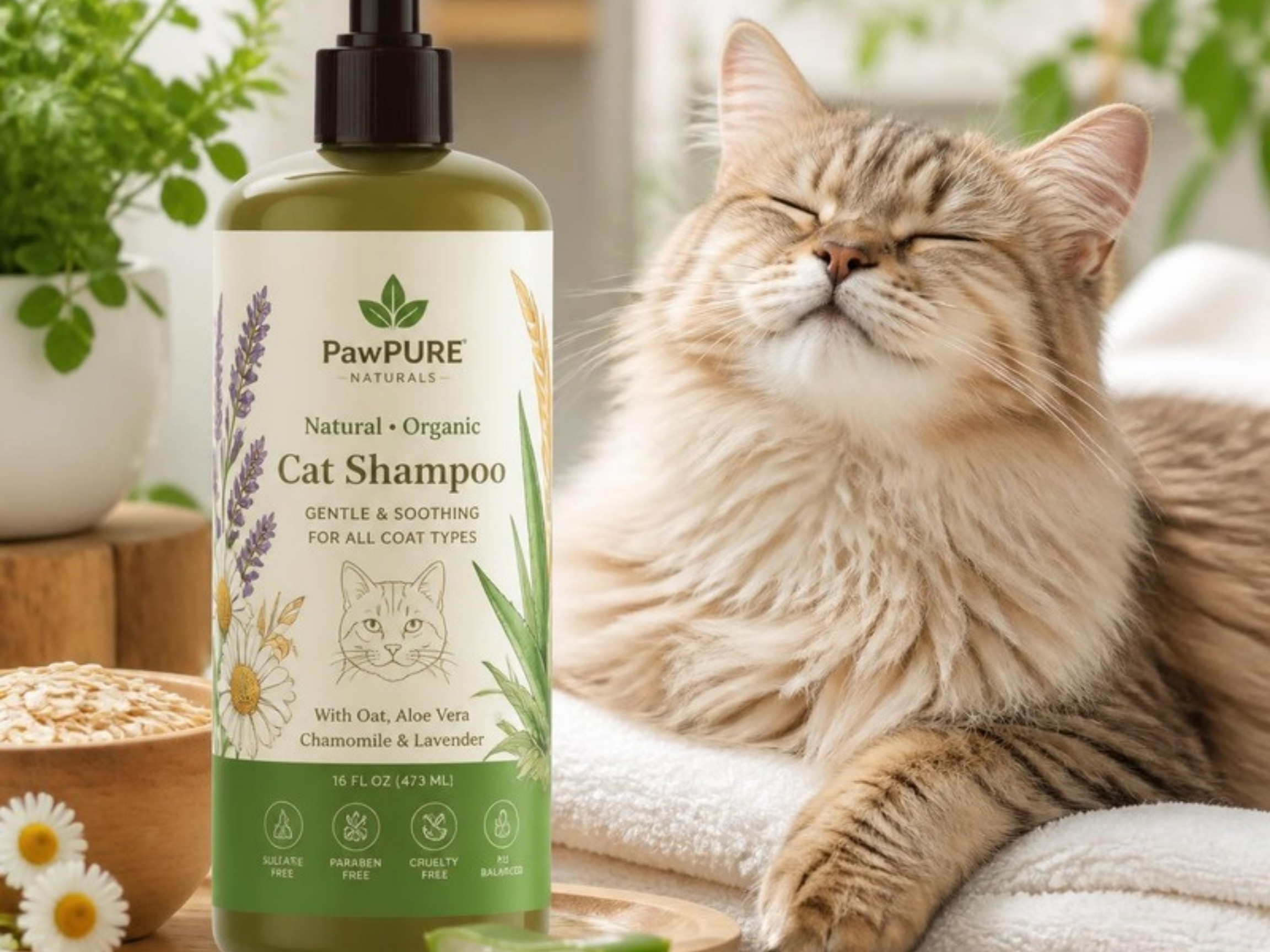
#1 Best Overall: Gentle All-Purpose Shampoo
Why it’s a good fit: A gentle, pH-balanced, tearless formula covers the majority of households that just need an occasional bath — not for a specific skin issue, just routine cleaning after a mess or before a vet visit.
- pH-balanced for cat skin
- Tearless formula
- Mild, low-fragrance scent
Pros
- Safe, gentle default for most healthy cats
- Tearless formula reduces stress during bathing
- Rinses out cleanly, less residue left in the coat
Cons
- Not formulated for specific skin conditions
- Some cats still react to mild fragrance — patch-test first
Who should NOT buy this: Skip if your cat has diagnosed sensitive skin or allergies — the hypoallergenic pick below is formulated for that.
Our Analysis
For a healthy cat with no known skin issues, this is the safest starting point — reserve the more specialized picks below for cats with an actual diagnosed need.
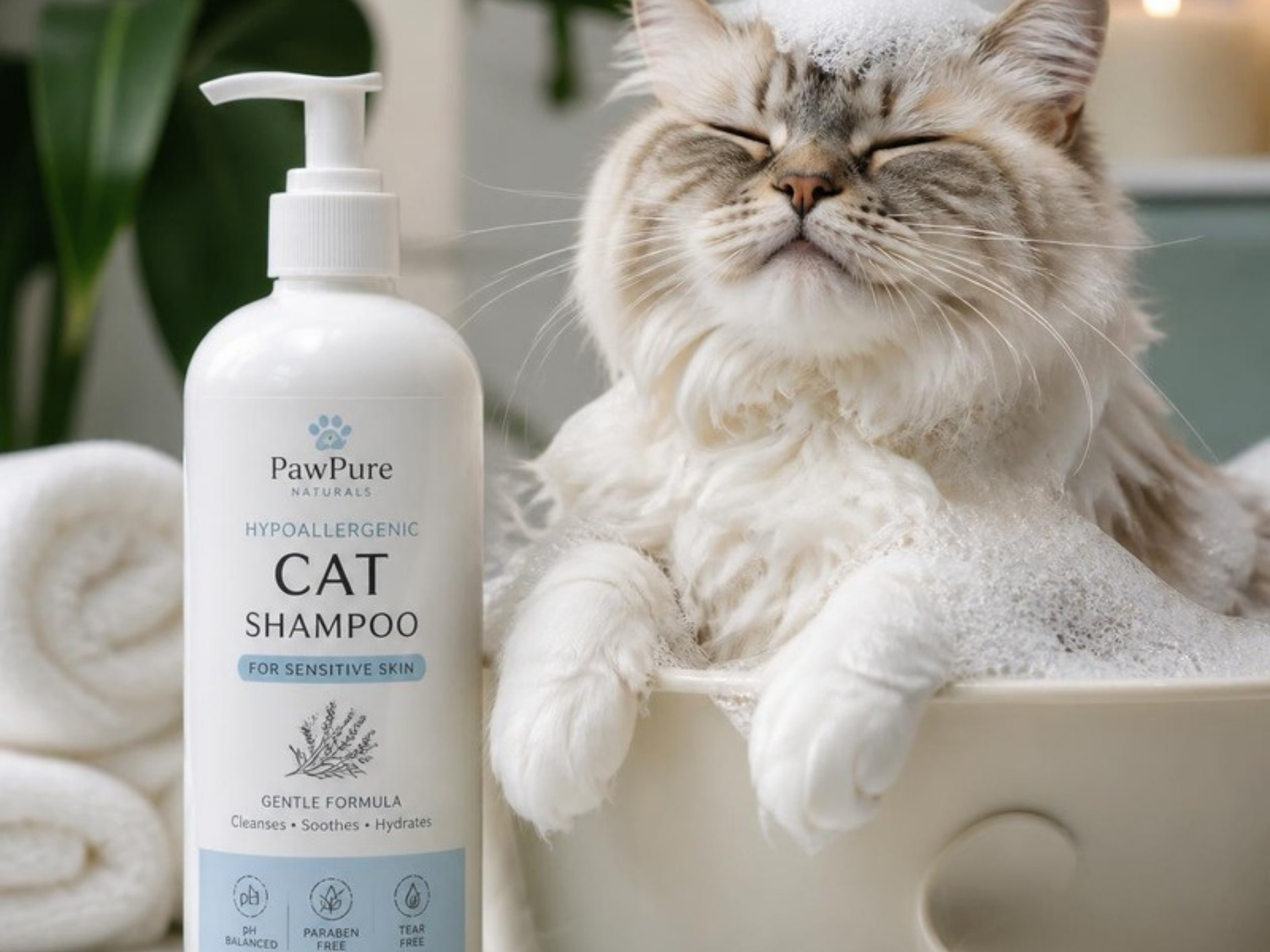
#2 Best Hypoallergenic: Sensitive Skin Formula
Why it’s a good fit: Fragrance-free and formulated with soothing ingredients like oatmeal, this type is designed to minimize irritation for cats with sensitive skin or known allergies.
- Fragrance-free
- Oatmeal or soothing-ingredient base
- Free of common irritants
Pros
- Lower risk of triggering a reaction in sensitive cats
- Soothing ingredients can calm already-irritated skin
- Fragrance-free formula is gentler overall
Cons
- Not a substitute for a vet-prescribed medicated shampoo if there’s a diagnosed condition
- Slightly pricier than basic all-purpose formulas
Who should NOT buy this: Skip if your cat has a vet-diagnosed skin condition like ringworm or a bacterial infection — go with the medicated pick below instead.
Our Analysis
If your cat has reacted to shampoo before, or has generally sensitive or flaky skin, this is worth the extra cost over a basic formula — but a true diagnosed skin condition still calls for the medicated pick below, ideally on your vet’s recommendation.
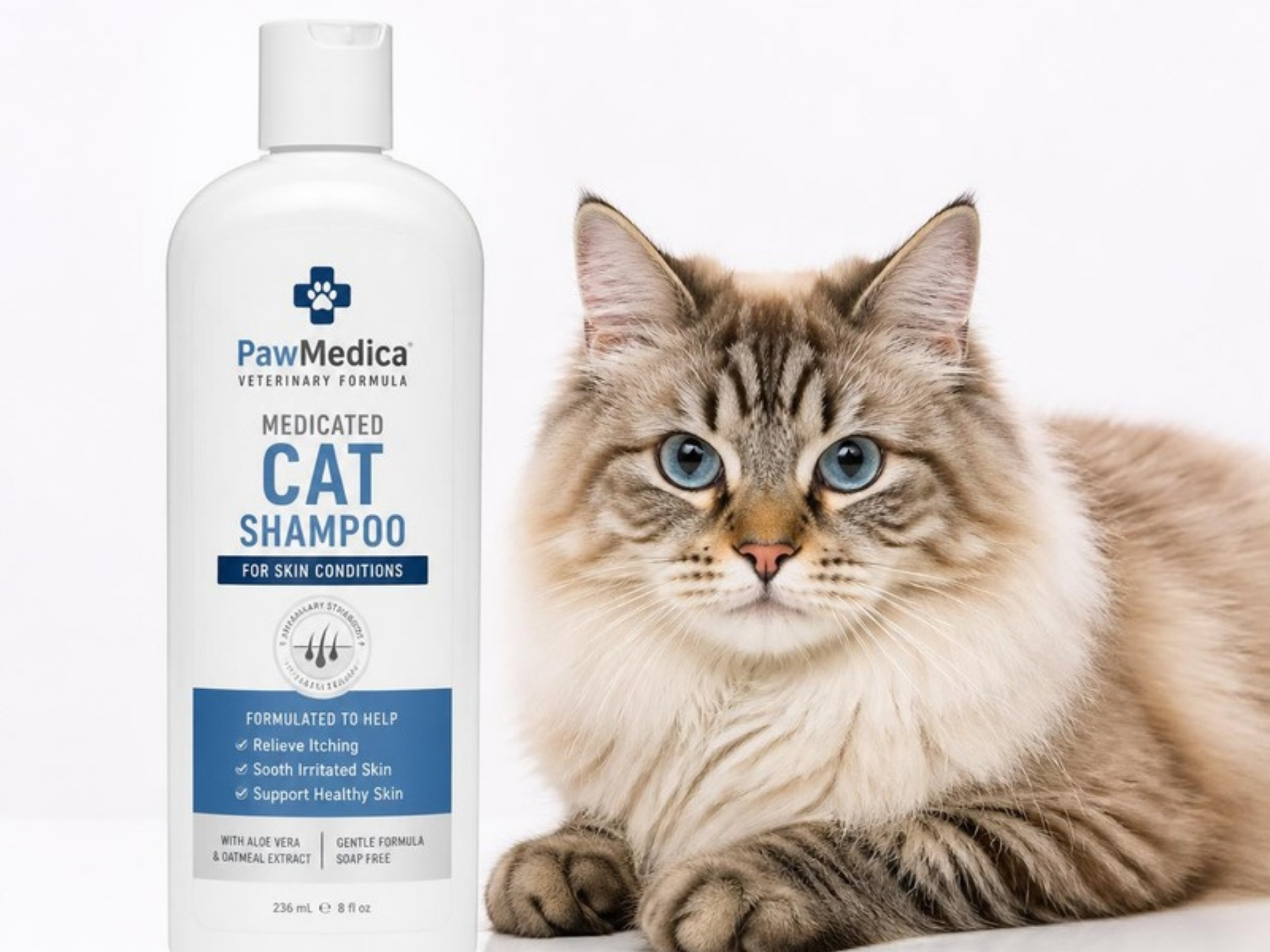
#3 Best Medicated: For Diagnosed Skin Conditions
Why it’s a good fit: Formulated with antifungal or antibacterial ingredients, medicated shampoos are designed to treat specific, vet-diagnosed conditions like ringworm, seborrhea, or bacterial skin infections — not for routine use.
- Antifungal/antibacterial formula
- Vet-recommended category
- For targeted, short-term use
Pros
- Targets specific diagnosed skin conditions directly
- Can speed recovery when used alongside vet treatment
- Stronger formulation than general-purpose shampoos
Cons
- Not meant for routine, healthy-skin bathing
- Should be used under veterinary guidance
Who should NOT buy this: Skip if your cat doesn’t have a diagnosed skin condition — the gentle all-purpose pick above is the right choice for routine baths.
Our Analysis
Confirm any skin condition with your vet before reaching for a medicated shampoo — using the right active ingredient for the actual condition matters more than picking the strongest-sounding product, and your vet can point you to the formulation that matches the diagnosis.
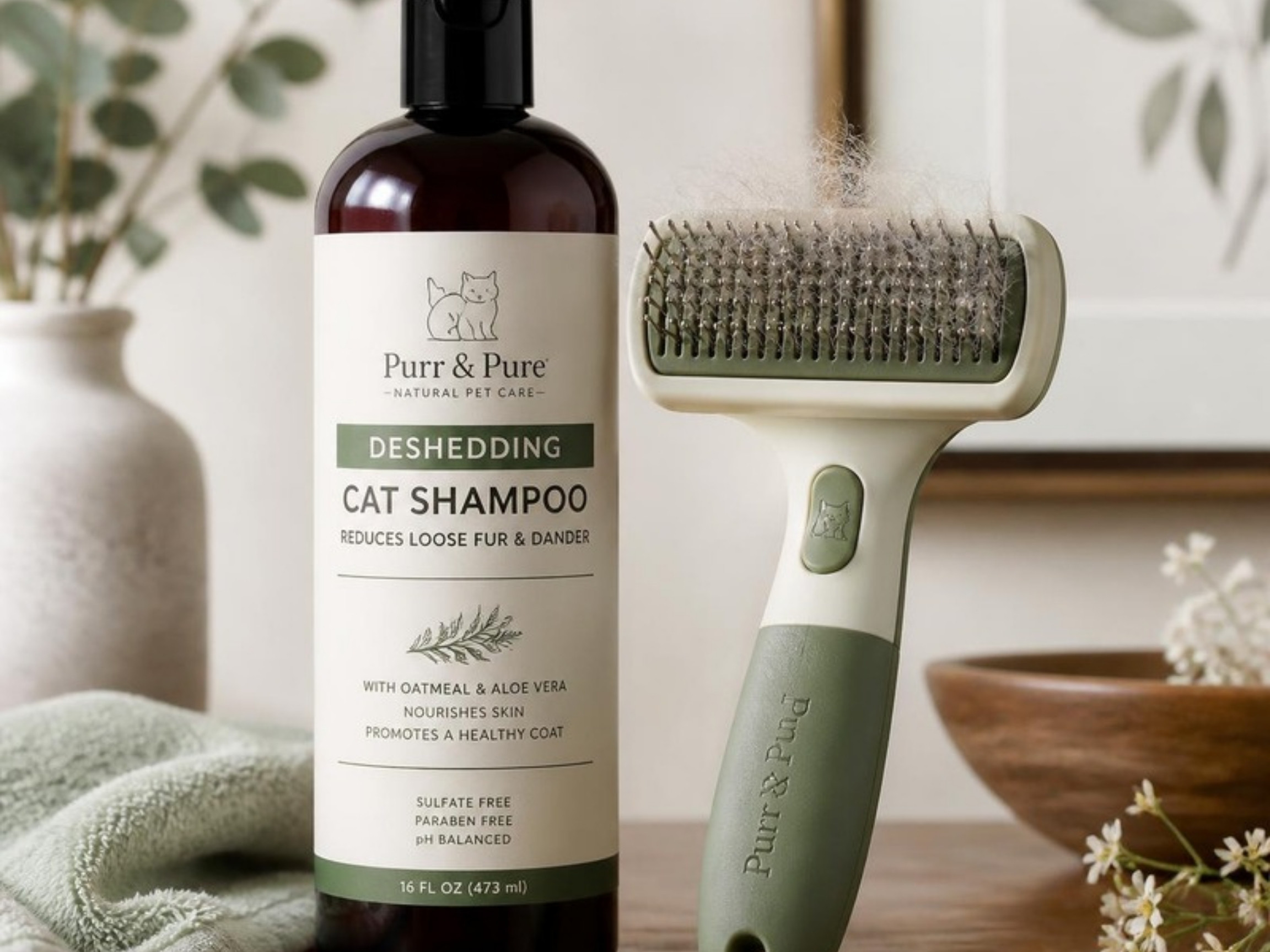
#4 Best for Shedding: Deshedding Shampoo
Why it’s a good fit: Formulated to loosen and help release loose undercoat fur during the wash itself, deshedding shampoo pairs well with a deshedding brush to cut down on shedding season fur around the house.
- Loosens undercoat during wash
- Often paired with a deshedding brush
- Moisturizing base (reduces dry, flaky skin)
Pros
- Noticeably reduces loose fur after a wash-and-brush routine
- Helps during heavy seasonal shedding
- Often comes bundled with a matching deshedding tool
Cons
- Works best combined with regular brushing, not shampoo alone
- Not necessary for cats that shed minimally
Who should NOT buy this: Skip if your cat is a light shedder or short-haired with no shedding concerns — a basic gentle shampoo is enough.
Our Analysis
This pick earns its keep most during spring and fall shedding season for medium- and long-haired cats — pair it with weekly brushing between baths for the best fur-reduction results.
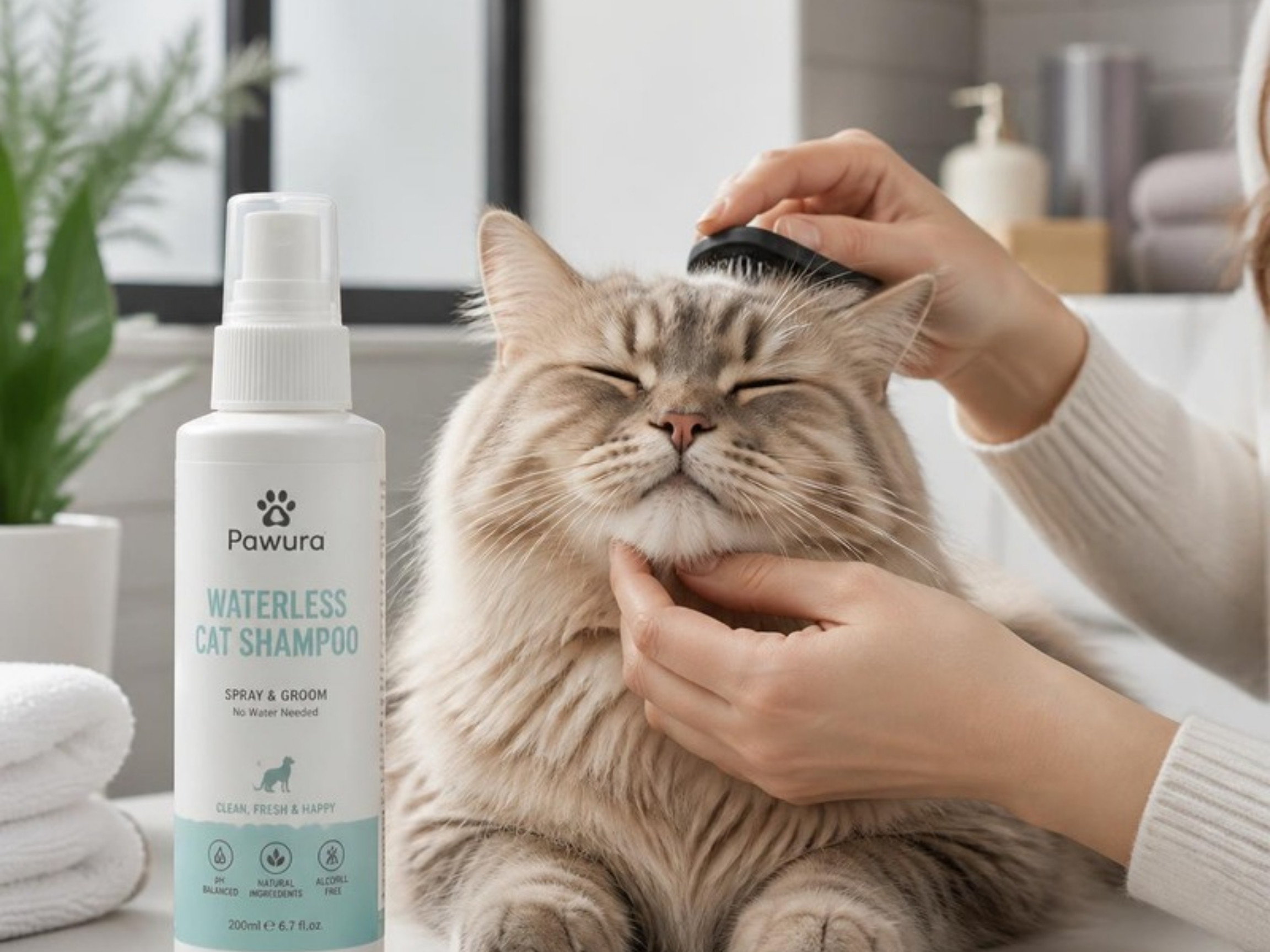
#5 Best Waterless: No-Rinse Spray
Why it’s a good fit: For cats that hate water, or for quick touch-ups between full baths, a waterless spray or foam cleans and freshens the coat without a tub, a towel fight, or a soaked cat.
- No rinsing required
- Spray or foam application
- Good for quick touch-ups
Pros
- Far less stressful than a full bath for water-averse cats
- Fast — good for spot-cleaning a small area
- No tub, towels, or blow-drying needed
Cons
- Not a substitute for a real bath on a genuinely dirty coat
- Some cats dislike the spray sensation too — introduce gradually
Who should NOT buy this: Skip if your cat needs a deep clean after getting into something sticky or genuinely dirty — a full bath with the gentle all-purpose pick above does more.
Our Analysis
This is the lowest-stress option for routine maintenance between baths, especially for cats that panic at the sight of a tub — keep a bottle on hand even if you also do occasional full baths.
Other Grooming Essentials
Shampoo is only one part of a full grooming routine. Here are the other tools most owners end up needing alongside it:
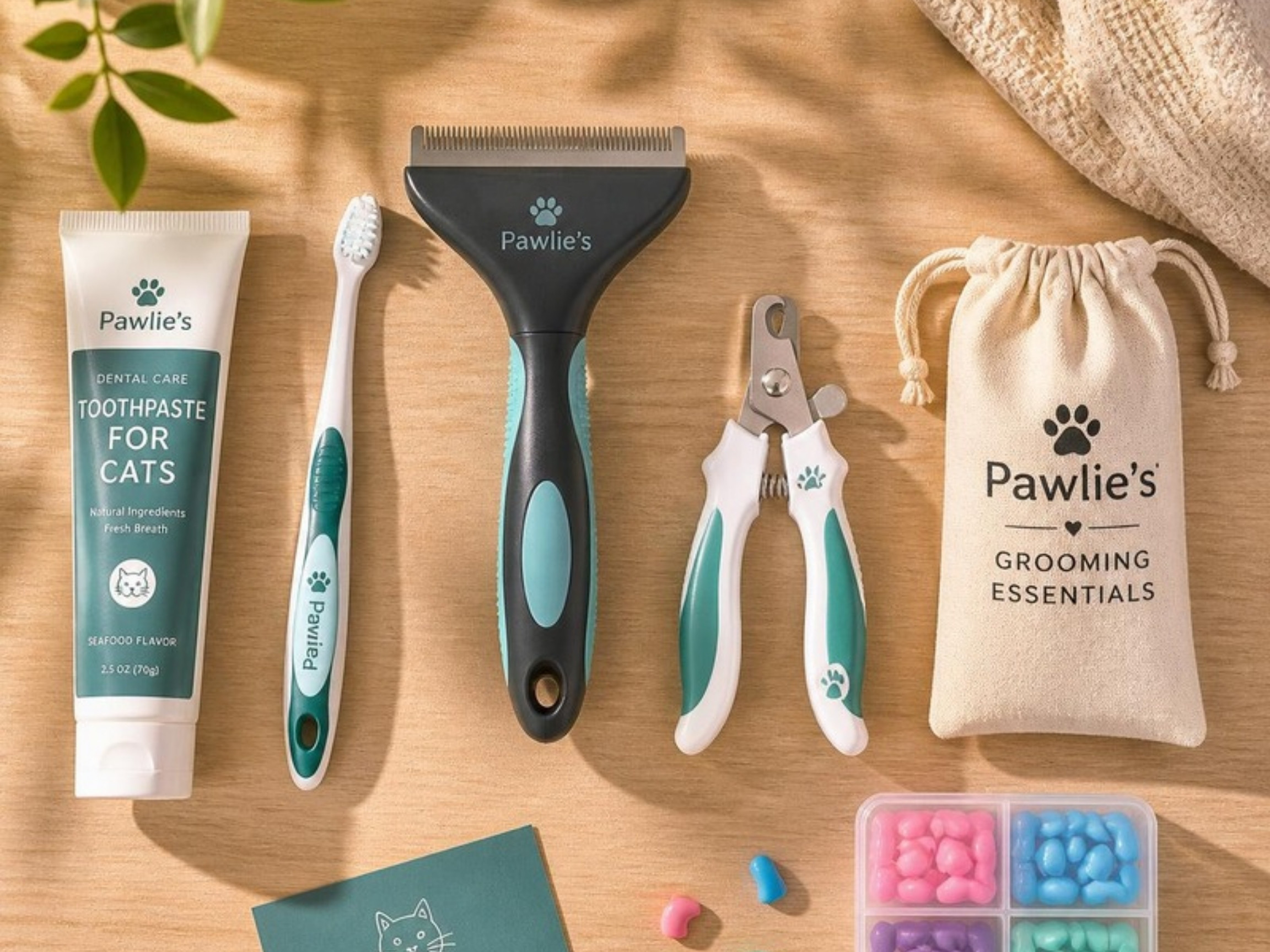
Cat toothbrush & toothpaste: Dental disease is extremely common in cats. A soft cat-specific toothbrush (or finger brush) with enzymatic cat toothpaste — never human toothpaste, which contains ingredients unsafe for cats — helps prevent plaque buildup when used a few times a week.
Deshedding brush/tool: A dedicated deshedding tool reaches the undercoat that a regular brush misses, and pairs well with the deshedding shampoo above during heavy shedding season.
Nail clippers & claw caps: Cat-specific nail clippers make trims safer and more precise than human clippers. Claw caps (soft vinyl covers glued over trimmed nails) are a non-declawing alternative for households worried about scratching on furniture or skin.
Frequently Asked Questions
How often should I bathe my cat?
Most healthy cats don’t need regular baths at all — their self-grooming keeps the coat clean. Bathe only when there’s a genuine reason: a dirty or sticky coat, a vet-diagnosed skin condition, heavy shedding, or an elderly cat that’s stopped grooming itself effectively.
Can I use baby shampoo or dish soap on my cat?
No. Even “gentle” human products have the wrong pH for cat skin and can cause dryness or irritation. Dish soap strips natural oils too aggressively for regular use. Always use a shampoo formulated specifically for cats.
My cat hates baths — what can I do?
Try a waterless spray or foam for routine touch-ups instead of a full bath. If a real bath is necessary, use lukewarm water, a non-slip mat in the tub or sink, go slowly, and keep sessions short. Treats and a calm, confident approach help too.
How do I know if my cat has a skin condition that needs medicated shampoo?
Signs include persistent scratching, redness, flaking, bald patches, odor, or visible sores. Don’t self-diagnose or self-treat with a medicated shampoo — see your vet first to confirm what’s actually going on, since the wrong product for the wrong condition won’t help and may delay proper treatment.
Looking for more essentials? Check out our full Best Cat Toys & Gear hub for feeders, fountains, and other everyday gear.
Research Disclaimer: This content was compiled from manufacturer specs, retailer listings, and owner-review patterns for informational purposes only — products on this page were not purchased or tested in-house and are not a substitute for veterinary advice. If your cat shows signs of a skin condition (persistent scratching, redness, flaking, bald patches, or sores), see your veterinarian before using any medicated product.