We independently research every topic we cover, drawing on established feline nutrition sources, product specs, and real owner experience. If you buy through a link on this page, Catverdict may earn a small commission — this never affects our picks or costs you anything extra. Details in our affiliate disclosure. This article is for general information and isn’t a substitute for advice from your own veterinarian or a board-certified veterinary nutritionist.
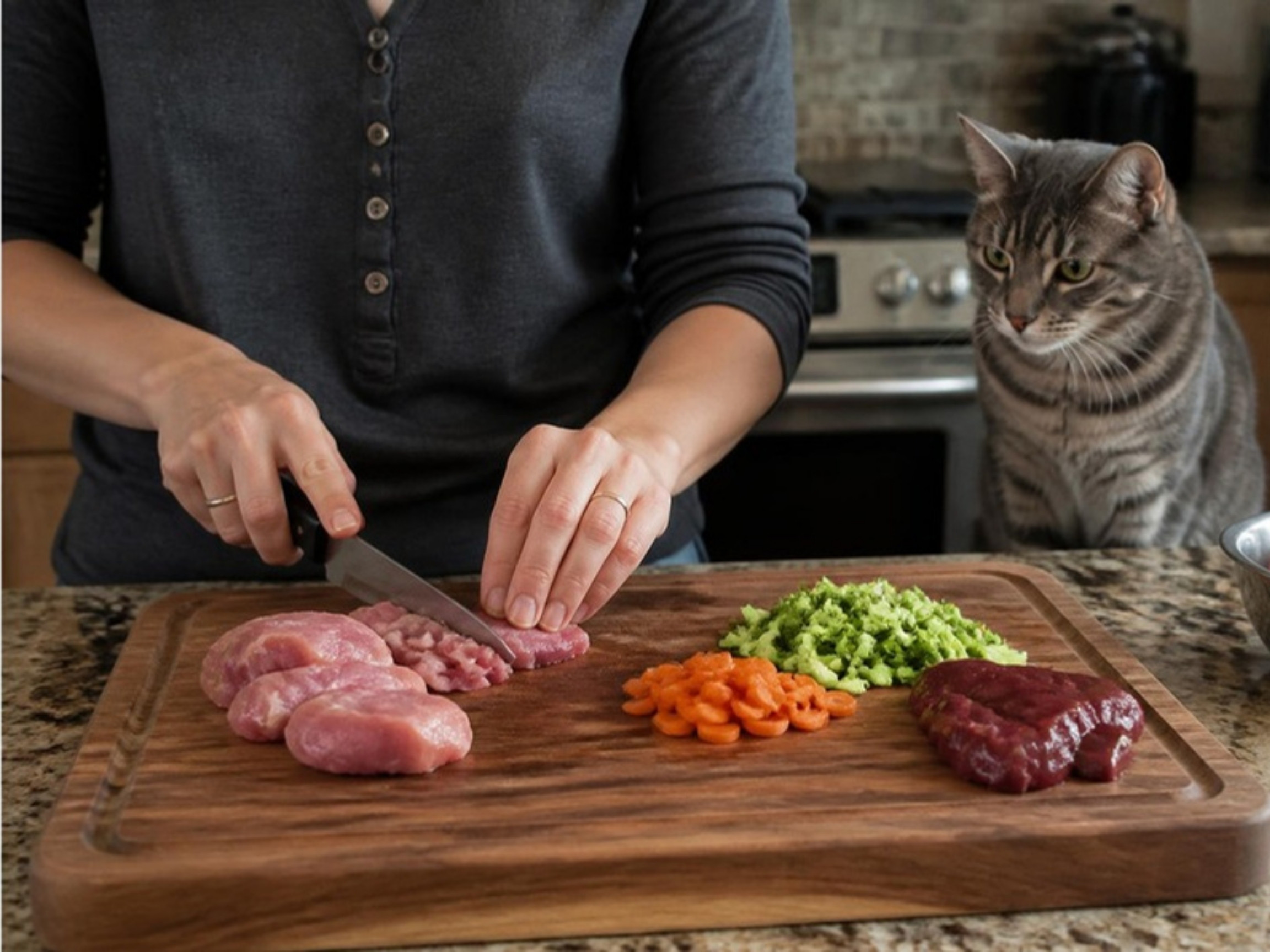
Homemade cat food can be done safely, but it’s riskier than most owners expect: cats are obligate carnivores with exacting nutrient requirements, and a well-meaning homemade recipe can look reasonable while quietly missing something essential, like taurine. Done right, it usually means working from a recipe formulated or reviewed by a veterinary nutritionist — not improvising from general “what cats can eat” lists.
Table of Contents
| Quick answer | Yes, but only with a properly formulated recipe — not a casual mix of “cat-safe” ingredients |
| Normal risk? | Unbalanced homemade diets can cause real deficiencies over months, not just minor nutrition gaps |
| Watch for | Weight loss, dull coat, or lethargy over weeks on a homemade diet — have it reviewed by a vet |
Is Homemade Cat Food Safe?
Why Cat Nutrition Is Harder to Get Right Than It Looks
Cats are obligate carnivores, meaning they need specific nutrients only found in meaningful amounts in animal tissue — this isn’t the same as a dog’s more flexible omnivore diet, and recipes built around “what’s safe for dogs” logic often fall short. A homemade meal can look complete (meat, some vegetables, maybe rice) while still being missing in ways that only show up in bloodwork or after months of deficiency.
Nutrients Homemade Diets Commonly Miss
Taurine is the best-known example — cats can’t synthesize enough on their own, and a taurine deficiency can lead to serious heart disease (dilated cardiomyopathy) over time if unaddressed. Other commonly under-supplied nutrients in improvised recipes include vitamin A (cats can’t convert it from plant beta-carotene the way humans can), arachidonic acid, and the right calcium-to-phosphorus ratio, which matters more than most owners expect when a diet is mostly muscle meat with little bone.
What a Properly Balanced Homemade Diet Requires
A safe homemade diet typically starts with a recipe formulated or reviewed by a board-certified veterinary nutritionist (often through a consultation service), uses a taurine supplement specifically dosed for the recipe, and is followed consistently rather than improvised meal to meal. Scales for precise ingredient measurement and a supplement regimen are non-negotiable parts of doing this correctly — it’s a bigger time and cost commitment than most people assume going in.


Who Homemade Cat Food Makes Sense For
Homemade feeding tends to make the most sense for owners managing a specific medical need (like a severe food allergy that commercial diets can’t address) under a vet’s guidance, or those committed to the ongoing cost and precision it takes to do it correctly. It’s a poor fit for anyone looking for a cheaper or more “natural” alternative to commercial food without the willingness to follow a formulated recipe exactly.
Signs a Homemade Diet Isn’t Working
- Gradual weight loss or muscle loss despite seemingly adequate portions.
- A dull, thinning, or rough coat over several weeks.
- Low energy or reduced activity that doesn’t match age or normal temperament.
- Digestive upset that doesn’t resolve after the first couple of weeks of transition.
Any of these over a period of weeks is worth a vet visit and bloodwork, along with a review of the recipe itself — these are signs of a nutritional gap building up, not something to wait out.
A Lower-Risk Middle Ground
If full homemade feeding feels like more commitment than you want, a human-grade or fresh-food delivery subscription gives a similar “real food” feel with the formulation already handled for you, which removes most of the nutritional risk while keeping some of the appeal of homemade. See our cat food delivery comparison for options in that category.
Frequently Asked Questions
Can I just follow a recipe I found online?
Be cautious — many published “homemade cat food” recipes online aren’t nutritionally balanced and haven’t been reviewed by a veterinary nutritionist. Look specifically for recipes with a stated nutrient analysis or formulated through a legitimate veterinary nutrition consultation service.
Is raw homemade cat food safer or riskier than cooked?
Raw feeding adds a separate layer of risk from bacterial contamination (Salmonella, E. coli) that can affect both the cat and household members handling the food, on top of the same nutritional-balance challenges as cooked homemade diets. Cooking at minimum removes the pathogen risk, though the nutrient-balancing challenge remains either way.
How do I know if my homemade diet is actually balanced?
The most reliable way is having the specific recipe reviewed or formulated by a board-certified veterinary nutritionist, since they can check it against your cat’s actual nutrient needs rather than general guidelines. Periodic bloodwork through your regular vet is also a good way to catch a developing deficiency early.
If homemade feels like too much to manage, our best cat food guide covers vetted commercial options across every life stage.