We independently research every topic we cover, drawing on historical records and established pet-industry sources. This article is for general information.
The kitty litter history behind the product in nearly every cat owner’s closet is shorter than most people assume — commercial litter is a 20th-century invention, not something cat owners have always had. Before 1947, keeping an indoor cat meant dealing with ashes, sand, or dirt, and litter boxes as we know them simply didn’t exist. Here’s how one chance encounter turned into a multi-billion-dollar industry.
Table of Contents
| Invented | 1947, by Edward Lowe in Cassopolis, Michigan |
| Original material | Fuller’s earth (absorbent clay), sold under the brand name “Kitty Litter” |
| Big leap forward | 1984 — clumping clay litter, which made daily scooping possible for the first time |
Before Kitty Litter: What Cat Owners Used
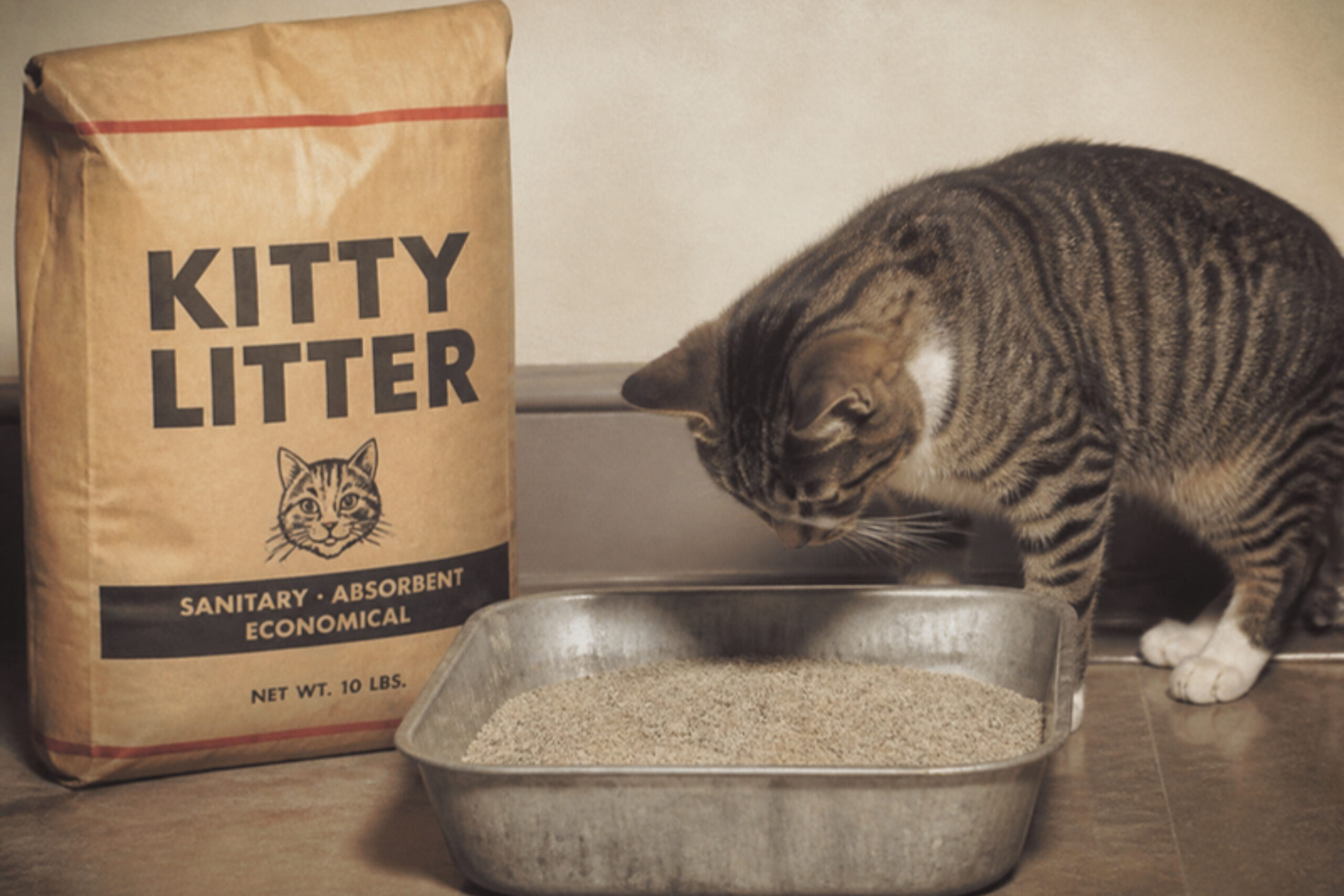
Before the late 1940s, cats were largely outdoor animals left to relieve themselves in gardens and alleys, and the few indoor cats that existed were given boxes filled with sand, dirt, or ashes from the household stove. Ash and sand absorbed some moisture but did little for odor, tracked constantly through the house, and had to be fully dumped and refilled every time, since nothing clumped or separated waste from clean material.
1947: Edward Lowe and the Birth of “Kitty Litter”
In January 1947, a Michigan neighbor named Kaye Draper ran out of ash and asked Edward Lowe, whose family sold industrial absorbents, for some sand instead. Lowe offered her a bag of Fuller’s earth — a highly absorbent clay his company sold to soak up factory oil spills — and Draper came back asking for more, saying it controlled odor far better than ash or sand ever had.
Lowe packaged the clay into five-pound bags, wrote “Kitty Litter” on the front, and began giving them away at local pet shops to build demand before selling it commercially. The name stuck so thoroughly that “kitty litter” became the generic term for cat box filler in the U.S., similar to how “Kleenex” came to mean tissue — even though it started as one specific brand.
From Clay to Clumping: How Litter Technology Evolved
1960s–1970s: Clay Litter Goes Commercial
Through the 1960s and 1970s, clay litter expanded from Lowe’s door-to-door sales into a nationally distributed product, as pet stores and then supermarkets began stocking it. This period coincided with cats shifting from mostly-outdoor, barn-style pets into increasingly indoor household companions — a shift litter itself helped enable, since it finally made indoor elimination manageable without constant mess.
1984: The Clumping Litter Breakthrough
The single biggest leap in litter history came in 1984, when biochemist Thomas Nelson developed a sodium bentonite clay formula that swelled and bound together into solid clumps on contact with moisture. For the first time, owners could scoop out just the soiled portion instead of dumping and replacing the entire box, dramatically cutting both odor and the amount of litter used per month. Clumping clay remains the most widely used litter type today.
[PRODUCT: unscented clumping clay cat litter — the modern descendant of the 1984 breakthrough, still the most widely preferred type among cats | PLATFORM: Amazon]
1990s–Today: Silica, Natural, and Smart Litters
The following decades brought alternatives aimed at specific problems with clay: silica gel crystals for dust-free, low-maintenance boxes; pine, corn, and wood-fiber litters for owners wanting a biodegradable or flushable option; and, more recently, color-changing “health monitoring” litters designed to flag possible urinary or kidney issues through pH changes. Automatic, self-cleaning litter boxes also emerged in this era, built specifically around clumping litter’s scoopable clumps. See our cat litter buyer’s guide for how today’s options compare, including specific brand reviews.
Why This Invention Changed Cat Ownership
Kitty litter didn’t just make cleanup easier — historians and pet-industry researchers generally credit it as one of the key factors that turned cats into the indoor, apartment-friendly pets they are today. Without an odor-controlled, low-mess way to let a cat relieve itself inside, widespread indoor cat ownership in cities would have been far less practical, and cats likely would have remained more of an outdoor or barn animal for longer in the U.S.
Frequently Asked Questions
Who invented kitty litter?
Edward Lowe invented commercial kitty litter in 1947 in Cassopolis, Michigan, after offering a neighbor absorbent clay (Fuller’s earth) as a substitute for ash. He packaged it as “Kitty Litter” and built it into a nationally sold product.
What did people use before kitty litter existed?
Before 1947, indoor cat owners typically used sand, dirt, or household ashes in a box. These materials absorbed some moisture but controlled odor poorly and had to be fully replaced each time, since nothing separated waste from clean material.
When was clumping cat litter invented?
Clumping cat litter was developed in 1984 by biochemist Thomas Nelson, using a sodium bentonite clay that swells and binds into solid clumps when it contacts moisture, allowing spot-scooping instead of full litter changes.