
We independently research every topic and product mentioned on this page, drawing on established feline-behavior resources and owner reports. If you buy through a link here, Catverdict may earn a small commission — this never affects our picks or costs you anything extra. Details in our affiliate disclosure.
Bottom line: When a cat pees outside the litter box, it’s almost always a medical issue, a box-setup problem, or a stress/marking response — not defiance or a “bad cat” moment. A vet visit to rule out a urinary issue is the right first step, especially if the behavior started suddenly.
Curious how we evaluate and rank every pick on this page? See our How We Choose Our Picks.
Jump to a section
Medical Causes to Rule Out First
Urinary Tract Infection or Bladder Issue
A UTI, bladder stones, or feline idiopathic cystitis can make urination painful, and a cat may start associating that pain with the litter box itself, avoiding it even though the box is clean and accessible. Sudden new accidents, especially with straining, frequent small amounts, or blood in the urine, need a vet visit, not a behavior fix.
Kidney Disease, Diabetes, or Arthritis
Conditions that increase thirst and urination (like kidney disease or diabetes) can overwhelm a cat’s normal bathroom habits, while arthritis can make climbing into a tall or covered box physically painful. Older cats with new accidents are especially worth a full vet checkup rather than assuming it’s purely behavioral.
Litter Box Setup Problems
Once a medical cause is ruled out, the most common reasons are a box that’s too dirty, too small, in a location the cat doesn’t like, or simply not enough boxes for the number of cats in the house (one per cat, plus one extra, is the standard guideline). Switching litter brands or textures abruptly is another common trigger, since cats can be particular about texture and scent.
Stress and Territorial Marking
A new pet, a new person, moving furniture, or conflict with another cat in the household can trigger stress-related urination or territorial marking, which looks similar to a box-avoidance problem but has a different root cause. Marking is usually small amounts on vertical surfaces (walls, furniture legs), while avoidance is usually a full bladder’s worth in one spot.
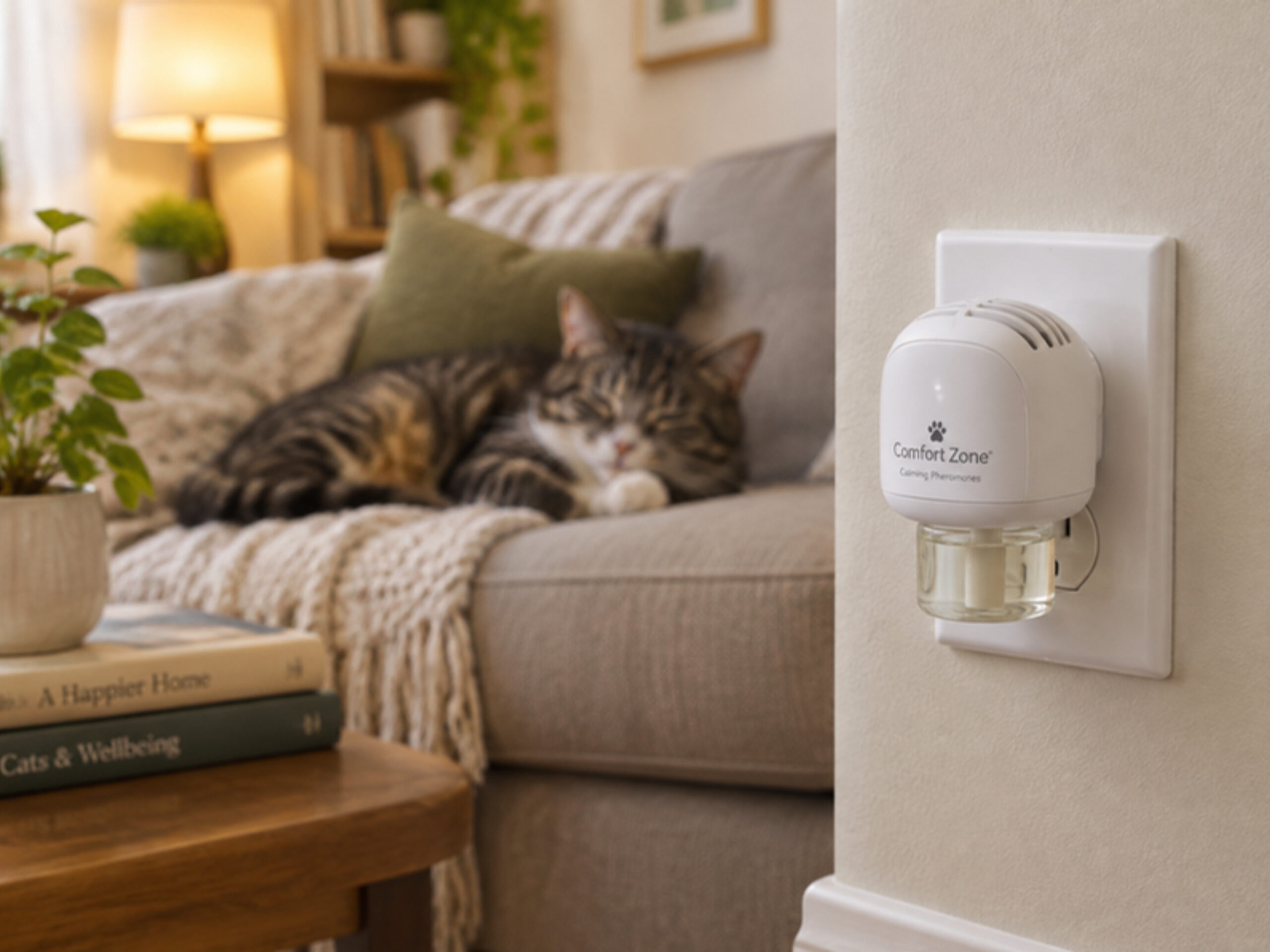
A feline pheromone diffuser can help reduce stress-driven marking in multi-cat households or after a household change, by mimicking a calming facial-pheromone signal cats use to mark territory as safe.
Who should NOT buy this: skip if a vet hasn’t yet ruled out a medical cause — a diffuser won’t resolve a UTI or bladder issue.
What to Do About It
See a vet first, especially for sudden new accidents. If a medical cause is ruled out, add an extra box, try a different litter texture, scoop more often, and clean any accident spots with a true enzymatic cleaner — residual scent is a common reason cats return to the same spot.
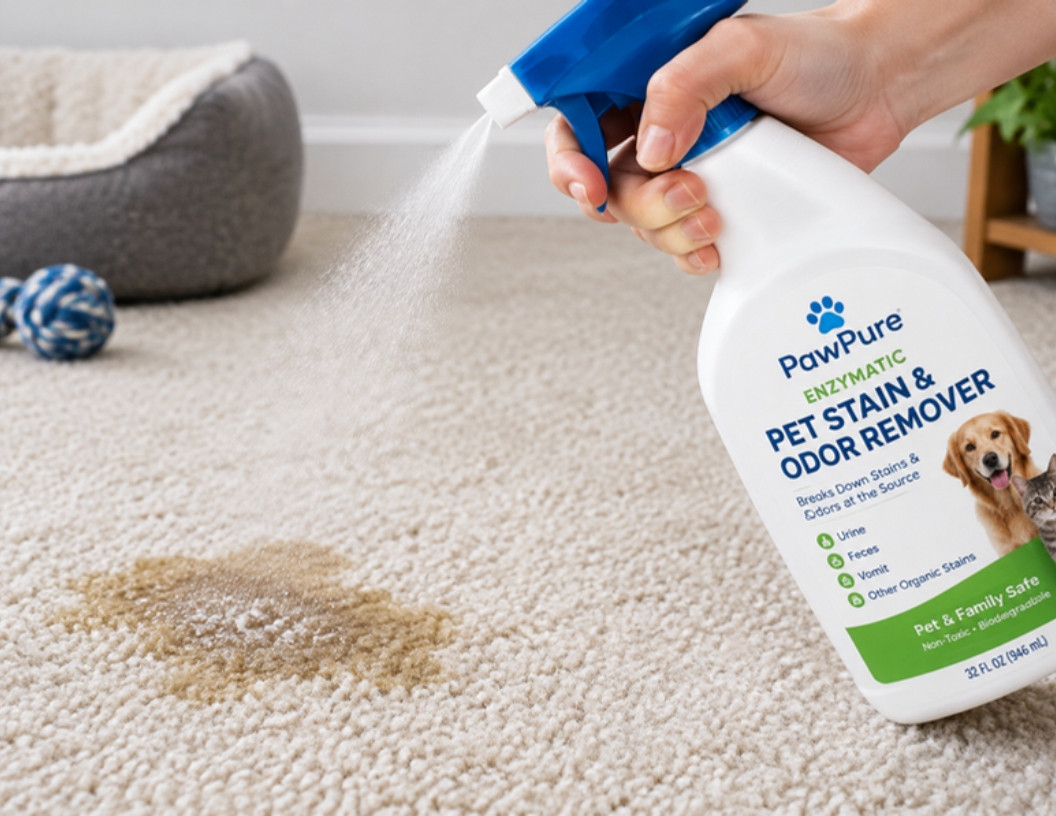
A true enzymatic urine remover breaks down the uric acid crystals left behind, instead of just masking the smell — leftover scent is one of the main reasons a cat keeps returning to the same accident spot.
Frequently Asked Questions
Is my cat peeing outside the box out of spite?
No — cats don’t urinate outside the box for revenge or spite. It’s always a response to something physical (pain, illness), environmental (the box itself), or emotional (stress), even when the timing seems to line up with something that upset the owner.
How urgent is a vet visit for sudden accidents?
Fairly urgent, especially for male cats, since a blocked urinary tract is a medical emergency. Straining with little or no urine output, vocalizing in the box, or visible blood are signs to see a vet right away rather than waiting.
Will punishing my cat stop the behavior?
No — punishment adds stress, which tends to make both medical and stress-related urination worse, not better. It also risks creating a fear association with you or the box itself.
Just getting a cat started on the box? See our litter box training guide, or browse our full litter box picks.
Research Disclaimer: This article is for informational purposes and was researched using publicly available veterinary behavior resources and owner reports — it was not written by a veterinarian. Sudden or persistent urination outside the litter box should always be evaluated by a vet to rule out a medical cause.