
We independently research every topic and product mentioned on this page, drawing on established feline-behavior resources and owner reports. If you buy through a link here, Catverdict may earn a small commission — this never affects our picks or costs you anything extra. Details in our affiliate disclosure.
Bottom line: Most kittens and cats litter box train themselves with minimal help, since digging and burying waste is an instinctive behavior. The real job is setup: the right box, the right litter, and the right location — then letting the cat’s own instinct do the rest.
Curious how we evaluate and rank every pick on this page? See our How We Choose Our Picks.
Jump to a section
How Litter Box Training Actually Works
Digging and burying waste is instinctive in cats, inherited from wild ancestors covering their scent from predators — it isn’t a trick you teach step by step the way you’d train a dog. Training a cat to use a litter box is mostly about removing obstacles (the wrong litter, a box in the wrong spot, a dirty box) so that instinct can take over on its own.
Step-by-Step: Training a Kitten or New Cat
Step 1 — Place the Box Somewhere Quiet and Accessible
Choose a low-traffic spot away from the cat’s food and water, with easy access day or night. For a kitten or a cat new to the home, keep the box within easy reach of wherever they’re confined at first, rather than making them search the whole house for it.
Step 2 — Show Them Where It Is
After meals, naps, or play sessions (common times cats need to go), gently place the cat in the box and let them sniff and dig on their own. Never force a paw into the litter or hold the cat in the box — the goal is familiarity, not restraint.
Step 3 — Keep It Clean From Day One
Scoop at least once a day. Cats are far less likely to use a box that already smells like old waste, and a dirty box is one of the most common reasons a cat that was previously trained starts going elsewhere.
Step 4 — Praise Quietly, Never Punish
A calm, quiet moment after the cat uses the box is enough — no need for treats or big reactions. Never scold or punish a cat for an accident; punishment creates fear and stress around the box itself, which usually makes avoidance worse, not better.
Getting the Setup Right
The biggest factors in successful training are the box size, the litter texture, and the number of boxes available (the general guideline is one box per cat, plus one extra). Getting these right from the start avoids most of the problems that later look like a “training” issue but are really a setup issue.
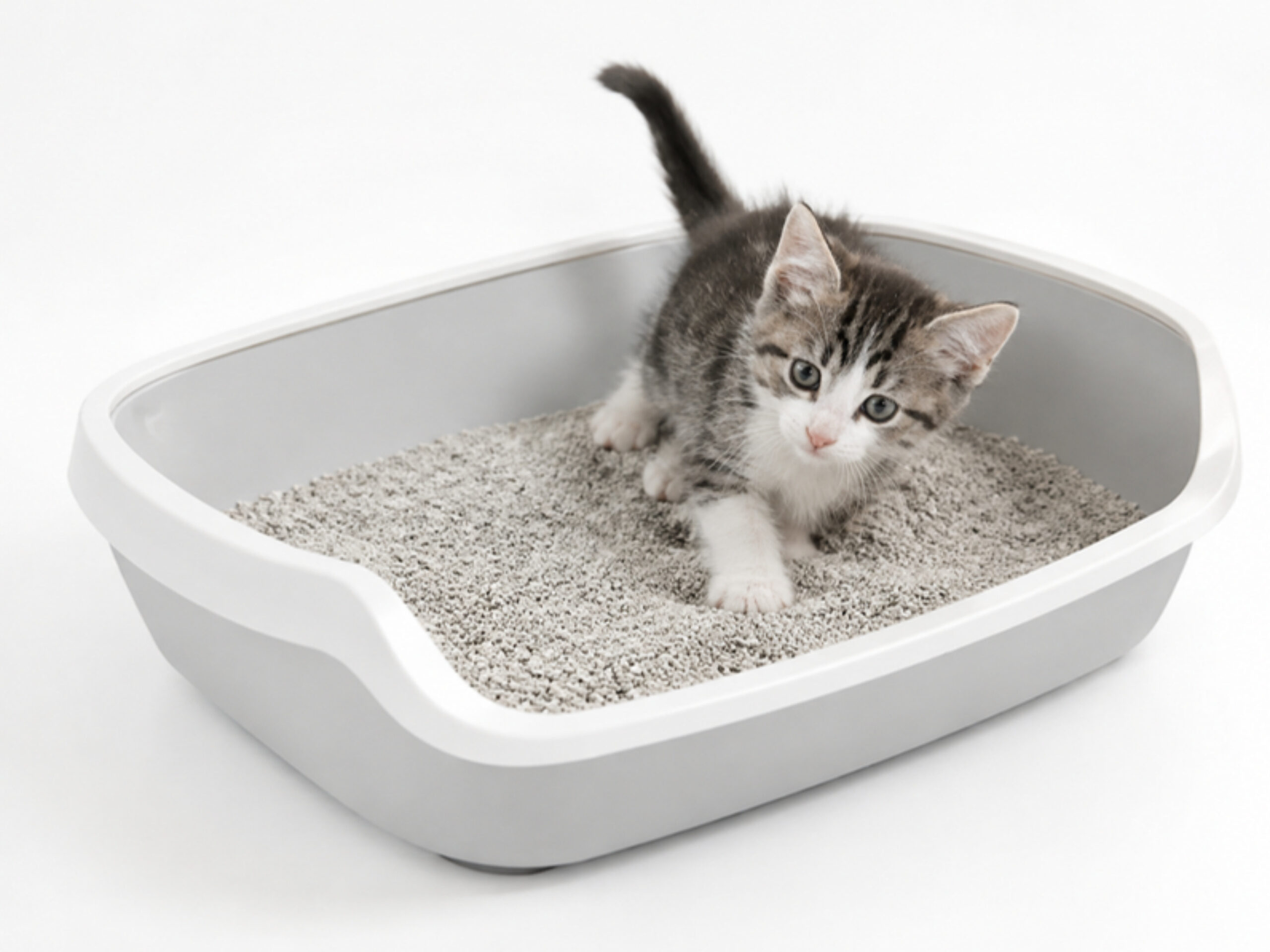
A low-sided box sized for a kitten makes entry and exit easy during the first weeks, when a tall or covered box can be intimidating or physically difficult to climb into.
Who should NOT buy this: skip if you have a fully grown adult cat already trained and comfortable with a larger box — sizing down isn’t necessary once training is established.

A soft, unscented clumping litter is the texture most cats take to fastest — strong perfumes and coarse pellets are common reasons a cat avoids digging in the first place.
If Training Isn’t Working
If a cat consistently avoids the box after a reasonable setup (right size, right litter, clean, accessible, enough boxes for the household), rule out a medical cause first — painful urination or straining can make a cat associate the box itself with discomfort. A vet visit to rule out a urinary issue is a more useful next step than trying another training method.
Frequently Asked Questions
How long does litter box training take?
Many kittens use the box correctly within the first few days once the setup is right, since the behavior itself is instinctive rather than learned. A cat with a specific aversion (wrong litter, dirty box) may take longer until that obstacle is actually fixed.
Do I need to show my cat the litter box more than once?
Usually one or two gentle introductions are enough for a cat to remember the location. If they keep forgetting or avoiding it, the issue is more often the box’s location, cleanliness, or litter type than a need for more “lessons.”
Should I use a litter box liner while training?
Liners are optional and some cats dislike the texture or the way claws catch on them during digging — if training stalls and a liner is in use, removing it is a simple thing to test.
Already trained but dealing with accidents? See our guide on why cats pee outside the litter box, or browse our full best litter box picks.
Research Disclaimer: This article is for informational purposes and was researched using publicly available feline-behavior resources and owner reports — it was not written by a veterinarian. If training setbacks continue despite a correct setup, talk to your vet to rule out a medical cause.