We independently research every topic we cover, drawing on established feline nutrition sources, product specs, and real owner experience. If you buy through a link on this page, Catverdict may earn a small commission — this never affects our picks or costs you anything extra. Details in our affiliate disclosure. This article is for general information and isn’t a substitute for advice from your own veterinarian.
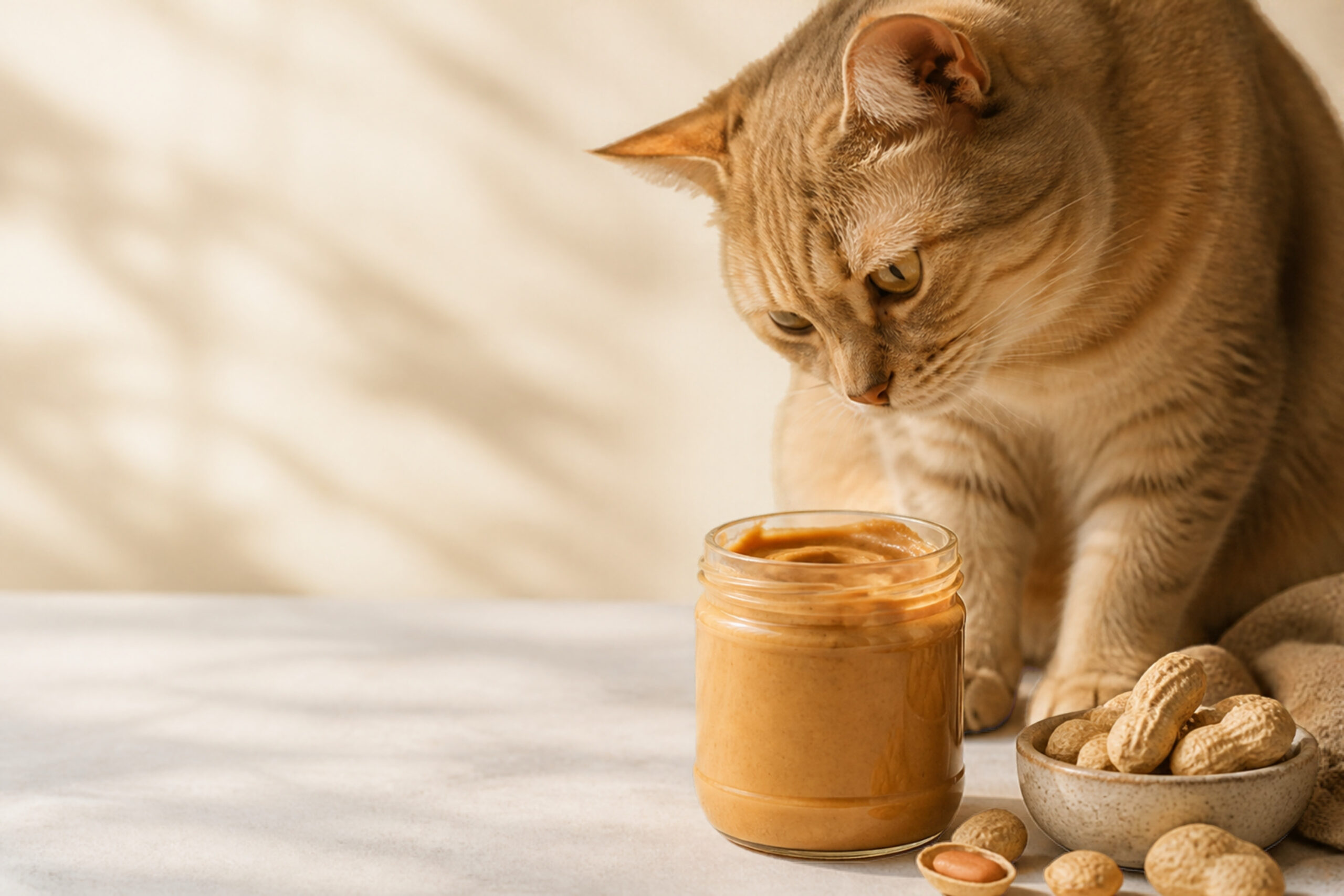
Can cats have peanut butter? In tiny amounts, plain peanut butter with no xylitol isn’t considered toxic to cats — but that’s a long way from calling it safe. It offers cats zero nutritional value, it’s sticky enough to be a choking hazard, and a worrying number of “natural” and sugar-free brands now contain xylitol, an ingredient worth avoiding for any pet.
Table of Contents
Is Peanut Butter Safe for Cats?
| Quick answer | Plain, xylitol-free peanut butter in a tiny amount isn’t considered toxic, but it’s not a treat worth giving regularly |
| Normal risk? | A lick off a finger is usually fine; a sticky mouthful or a xylitol-containing brand is not |
| Watch for | Gagging, pawing at the mouth, vomiting, or lethargy after eating any peanut butter — call a vet |
The Xylitol Problem
Xylitol is a sugar substitute now common in “natural,” low-sugar, and keto-friendly peanut butter brands, and it’s genuinely dangerous — most documented poisoning cases are in dogs, where even a small amount can trigger a rapid, dangerous drop in blood sugar, but veterinary toxicology groups treat it as a risk worth avoiding across species, cats included. Because xylitol isn’t always obvious on a label (it can be listed as “birch sugar”), the safest approach is to check the ingredient list every time, not just the first time you buy a jar.
Why Peanut Butter Isn’t a Good Treat Choice Anyway
Even a jar with nothing but peanuts and salt isn’t a great fit for a cat. Cats are obligate carnivores with no nutritional need for peanuts or any plant-based protein, and peanut butter is high in fat, which can upset a sensitive stomach or contribute to weight gain over time. Its thick, sticky texture is also a real choking hazard — it can cling to the roof of a cat’s mouth in a way that panics them, unlike a bowl of water or a bite of meat.
How Much Peanut Butter Can a Cat Have?
If a cat licks a trace of plain, xylitol-free peanut butter off a finger once in a while, that’s unlikely to cause a problem in an otherwise healthy adult cat. It shouldn’t become a habit, though — there’s no amount of peanut butter that benefits a cat nutritionally, and the fat and stickiness risks scale up with every additional lick. A small dab is a very different thing from a spoonful, and a spoonful is where the choking and digestive-upset risk becomes real.
Signs of a Problem After Peanut Butter
- Gagging or pawing at the mouth — usually means the peanut butter stuck to the roof of the mouth.
- Vomiting or diarrhea — can follow a fatty treat a cat’s stomach isn’t used to.
- Weakness, wobbliness, or collapse — rare, but if the brand contained xylitol this needs an emergency vet immediately, not a wait-and-see approach.
If you know the peanut butter contained xylitol, treat it as an emergency and call a vet or an animal poison control line right away rather than waiting for symptoms to appear.
Better Treat Alternatives
A cat that goes after peanut butter is usually after the texture and the attention, not the peanuts specifically. A lickable cat treat tube made for cats gives that same lick-it-off-a-finger experience without the fat, stickiness, or xylitol risk, and it’s actually formulated around a cat’s nutritional needs instead of against them.


Frequently Asked Questions
Is peanut butter toxic to cats?
Plain peanut butter without xylitol isn’t considered toxic in a small amount, but it offers no nutritional benefit and carries a real choking risk because of its texture. A xylitol-containing brand is a different story and should be treated as a hazard, not a treat.
Can kittens have peanut butter?
It’s best to skip it. Kittens have smaller mouths and airways, which makes the choking risk from peanut butter’s sticky texture even more of a concern, and their nutritional needs are already fully covered by a quality kitten food.
What if my cat licked a little peanut butter off a spoon?
A single small lick of a plain, xylitol-free brand usually isn’t cause for alarm — just watch for gagging, pawing at the mouth, or vomiting over the next few hours. Check the label for xylitol as soon as you can; if it’s listed, call your vet or a pet poison control line right away.
For more foods worth double-checking before you share, see our guides on can cats eat cheese and can cats eat blueberries.