We independently research every product we recommend, drawing on real owner reviews, product specs, and vet-reviewed sources. If you buy through a link on this page, Catverdict may earn a small commission — this never affects our picks or costs you anything extra. Details in our affiliate disclosure.
If your cat keeps turning around and backing its rear end straight into your face, you’re not imagining things — and no, it isn’t an accident. Why do cats stick their butt in your face comes down to a mix of trust, scent communication, and an instinct that goes all the way back to kittenhood. Here’s what’s actually going on, and when (if ever) it’s worth redirecting.
Table of Contents
| Quick answer | A mix of trust, scent-marking, and a leftover kitten instinct — almost always friendly, not rude |
| Should you worry? | No, unless it’s sudden, excessive, or paired with other symptoms (then it’s a vet question) |
| Can you stop it? | You can’t eliminate it, but you can redirect it with timing and gentle distraction |
The Short Answer
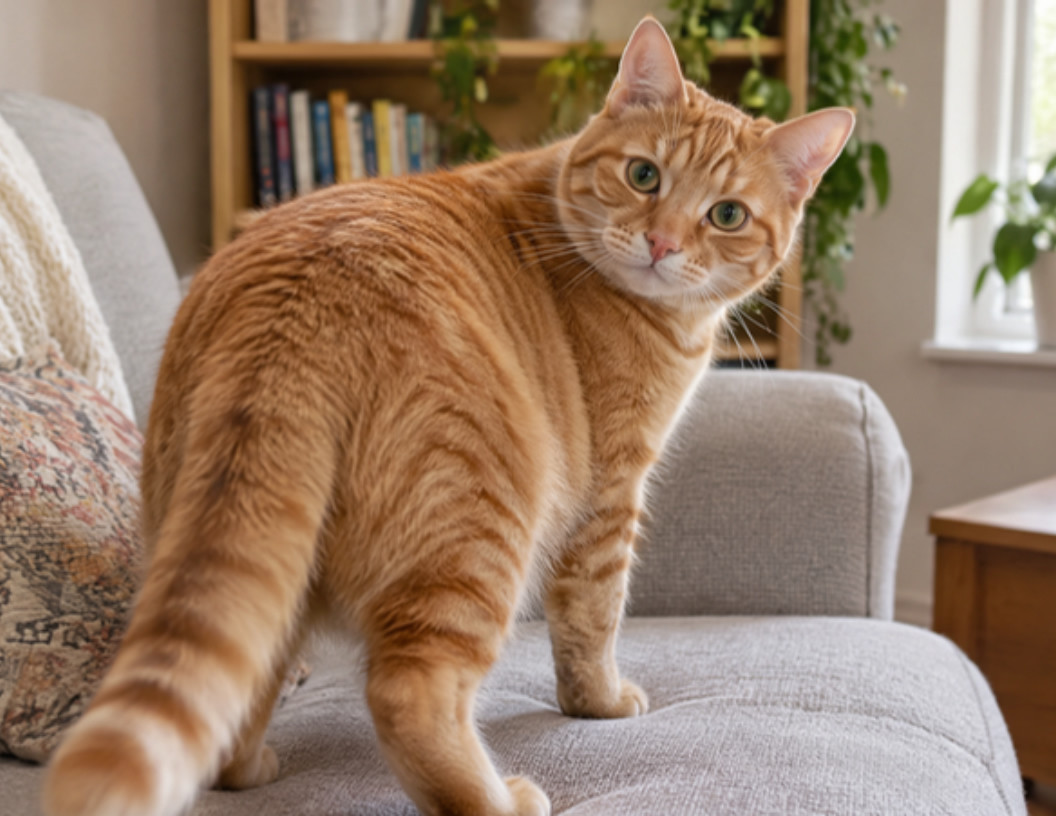
When a cat turns its back and presents its rear end to your face, it’s doing the feline equivalent of a hug. This is called “presenting” in cat behavior terms, and it’s rooted in trust, scent exchange between cats and their favorite people, and a habit that started when your cat was a tiny kitten being groomed by its mother. It can feel undignified on the receiving end, but to your cat, it’s one of the most vulnerable — and friendly — positions it can offer you.
It’s a Sign of Trust
A cat’s rear end is its most exposed, least defensible body part — turning it toward you means your cat isn’t worried about being attacked from behind. In the wild, exposing this area to another animal would be risky, so a cat doing it to you on purpose is a strong trust signal, similar to a cat showing you its belly. Cats that feel anxious or unsure around a person almost never do this; it’s reserved for people (and other cats) they feel safe around.
It’s Scent Communication
Cats have scent glands concentrated around the base of the tail and the perianal area, in addition to the glands on their cheeks and forehead that they use when they headbutt or rub against you. By presenting this area, your cat is essentially offering you a “scent handshake” — the same instinct behind cats sniffing each other’s rear ends when they meet. It’s not something your cat can smell on you the way you’d smell a person; it’s a two-way exchange of scent information that’s a normal, important part of how cats identify and bond with members of their social group.
It Traces Back to Kittenhood
Part of this behavior is a holdover from early life. Mother cats groom their kittens all over, including the rear end, to stimulate elimination and keep the nest clean — kittens learn early on to present that area for attention. Adult cats that were well-socialized as kittens often carry this instinct into adulthood, redirecting it toward trusted humans as an extension of the same caregiving bond. It’s one reason this behavior tends to show up most in cats that were raised by their mother for a full weaning period and handled gently as kittens.
Is It Ever a Problem?
For the vast majority of cats, this is completely normal and not something to worry about. It’s worth a closer look, or a call to your vet, only if it’s a new behavior that started suddenly, happens excessively, or comes along with other symptoms — scooting, excessive licking of the area, a strong odor, visible irritation, or signs of discomfort. Those can point to anal gland issues, parasites, or skin irritation rather than ordinary affectionate presenting, and are outside what a home routine can diagnose.
[PRODUCT: unscented pet-safe grooming wipes — handy for a quick, gentle wipe-down if hygiene is a concern, without disrupting your cat’s coat | PLATFORM: Amazon]
How to Redirect This Behavior Gently
You can’t train this instinct away entirely, and you shouldn’t try to punish it — it’s an affectionate behavior, not misbehavior. A few gentle ways to redirect it when the timing is inconvenient:
- Redirect with your hand: gently turn your cat sideways or offer a hand for a head rub instead — most cats happily accept the substitute.
- Use a toy or treat as a distraction: tossing a toy or treat just before your cat turns around redirects the instinct toward play instead.
- Change your position: sitting up rather than lying flat on the floor or bed removes your face from the easiest target height.
- Reward calm greetings: praising or treating your cat for headbutts and cheek rubs reinforces the alternative greeting you’d rather encourage.
If the behavior ever seems to come with discomfort rather than affection, that’s a conversation for your cat’s vet rather than something to manage at home — see our complete guide to cat health care for general preventive-care basics.
Frequently Asked Questions
Is my cat being disrespectful when it does this?
No — it reads that way to us, but to a cat it’s one of the most trusting, affectionate gestures it can make. It’s the opposite of disrespect in feline body language.
Why does my cat do this more when I’m lying down?
Lying down puts your face at the exact height your cat naturally backs into, and signals you’re relaxed and approachable — both of which make cats more likely to attempt this greeting.
Should I push my cat away when it does this?
A gentle redirect (turning your cat sideways or offering a hand instead) is better than pushing it away abruptly, which can confuse or startle a cat that’s trying to be affectionate.