
We independently research every product mentioned on this page, drawing on real owner reviews, product specs, and vet-reviewed sources. If you buy through a link here, Catverdict may earn a small commission — this never affects our picks or costs you anything extra. Details in our affiliate disclosure.
Bottom line: After evaluating dozens of models on hygiene, odor control, cat acceptance, and ease of cleaning, the Frisco High-Sided Open Litter Box is our top pick for most households — it’s affordable, roomy, and keeps scatter minimal. For multi-cat homes or owners who want hands-off convenience, the Litter-Robot 4 earns its price tag.
Choosing the right litter box directly affects whether your cat will actually use it — and preventing house soiling starts with matching the box to your cat’s size, age, mobility, and temperament. Here’s what the evidence supports.
Curious how we evaluate and rank every pick on this page? See our How We Choose Our Picks.
Shop by Litter Box Category
-
Why Does My Cat Pee Outside the Litter Box? 2026
We independently research every topic and product mentioned on this…
View guide →
-
How to Litter Box Train a Cat: Step-by-Step 2026
We independently research every topic and product mentioned on this…
View guide →
-

Best Automatic & Robot Litter Boxes: Litter-Robot 4, ScoopFree, Breeze & Pet Pivot Compared
Litter-Robot 4, ScoopFree, Breeze & Pet Pivot compared
View guide →
-

Litter Box Furniture: 5 Best Hidden & Enclosed Cabinets
We independently research every product on this page, drawing on…
View guide →
Jump to a section
Quick Comparison: Best Litter Boxes of 2026
| Product | Type | Best For | Our Rating |
|---|---|---|---|
| Frisco High-Sided Open Litter Box | Open top | Most cats, best value | ⭐ 4.9/5 |
| Litter-Robot 4 | Self-cleaning | Multi-cat homes, busy owners | ⭐ 4.8/5 |
| Nature’s Miracle Hooded Litter Box | Covered/hooded | Privacy-seeking cats | ⭐ 4.6/5 |
| PetFusion BetterBox | Open, non-stick | Easy clean-up, odor control | ⭐ 4.7/5 |
| Modkat XL Litter Box | Top-entry | Scatter control, sleek design | ⭐ 4.6/5 |
| Catit Jumbo Hooded Litter Pan | Covered | Large cats, odor containment | ⭐ 4.5/5 |
Litter Box Buyer’s Guide: What Vets Actually Look For
Size: Bigger Is Almost Always Better
The clinical rule of thumb: a litter box should be at least 1.5 times your cat’s body length from nose to tail base. Most commercial boxes are too small. Cats instinctively avoid tight spaces for elimination because it limits their ability to turn, dig, and cover — behaviors hardwired from their desert-dwelling ancestors.
For a typical domestic cat (10–12 lbs), look for a box measuring at least 20 × 15 inches. For Maine Coons, Ragdolls, or cats over 15 lbs, go larger.

Open vs. Covered vs. Top-Entry
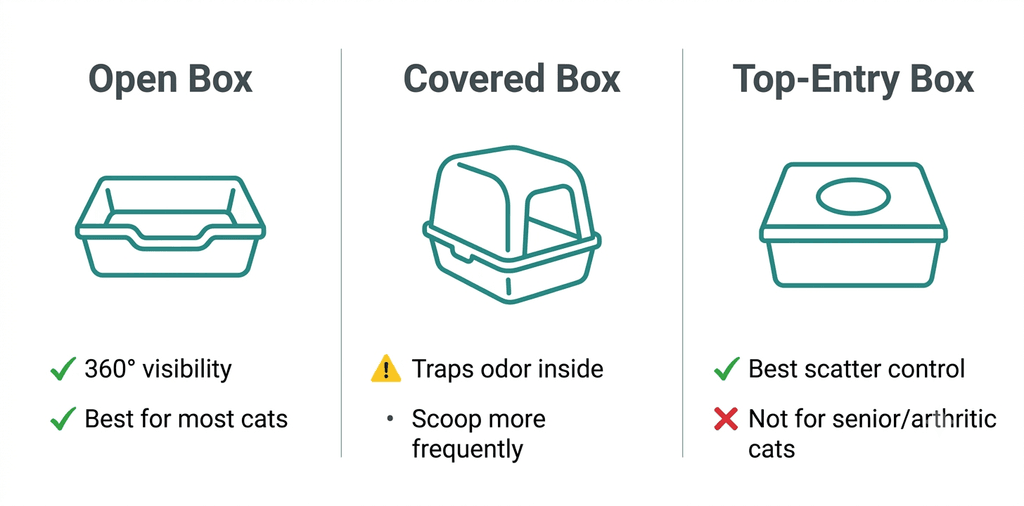
Open boxes are preferred by most cats — they allow 360-degree visibility, reducing the cat’s vulnerability during a behaviorally sensitive moment. Research published in the Journal of Feline Medicine and Surgery found no significant preference for covered boxes when cats were given a true free choice.
Covered/hooded boxes trap odors inside, which benefits the owner but can deter cats with a sensitive nose — especially if cleaning is infrequent. They do help with litter scatter and may suit privacy-seeking cats in high-traffic areas.
Top-entry boxes are excellent for scatter control and keeping dogs out, but are poorly suited for senior cats, kittens under 6 months, or any cat with arthritis or mobility limitations.
Number of Boxes: The N+1 Rule
The AAFP (American Association of Feline Practitioners) recommends one litter box per cat, plus one extra. In a two-cat home, that means three boxes, ideally placed in separate areas to reduce territorial tension and stress-related elimination issues.
Location and Accessibility
Place boxes in low-traffic, quiet areas with at least two escape routes — cats won’t use a box they can be ambushed at. Avoid placing boxes near food and water bowls; cats instinctively separate elimination from feeding areas.
For senior cats or kittens, low-entry cutout sides (under 3 inches) reduce the physical effort required and prevent accidents near, but not in, the box.
How Often to Scoop — and Why It Matters Medically
Scoop at least once daily. Ammonia from decomposing urine is a known upper respiratory irritant in cats, particularly in enclosed or poorly ventilated spaces. Full litter changes (wash-and-refill) should occur every 2–4 weeks depending on litter type and number of cats.
The 6 Best Litter Boxes: Full Reviews

#1 Best Overall: Frisco High-Sided Open Litter Box
Why we picked it: Simple, durable, appropriately sized, and priced so that buying the recommended number of boxes per cat won’t strain your budget. The high sides (9.5 inches) reduce scatter significantly without the odor-trapping drawback of a hooded design.
- Dimensions: 22.8 × 18.3 × 10.5 inches
- Material: BPA-free polypropylene
- Entry height: 5 inches
- Available sizes: Regular and jumbo
Pros
- Roomy enough for most cat breeds
- High sides reduce litter scatter
- Non-stick smooth surface cleans easily
- Budget-friendly — supports the N+1 rule without financial strain
- No odor trapping that deters cats
Cons
- No cover for owners who prefer containment aesthetics
- Requires daily scooping like all non-self-cleaning options
Who should NOT buy this: owners who want a self-cleaning box, or anyone who prefers a covered design for odor containment.
Our Analysis
The open format respects feline behavioral needs — cats can see approaching threats and exit in any direction. The smooth interior surface resists bacterial biofilm buildup better than textured models, making weekly scrubbing more effective at reducing pathogen load.
#2 Best Self-Cleaning: Litter-Robot 4
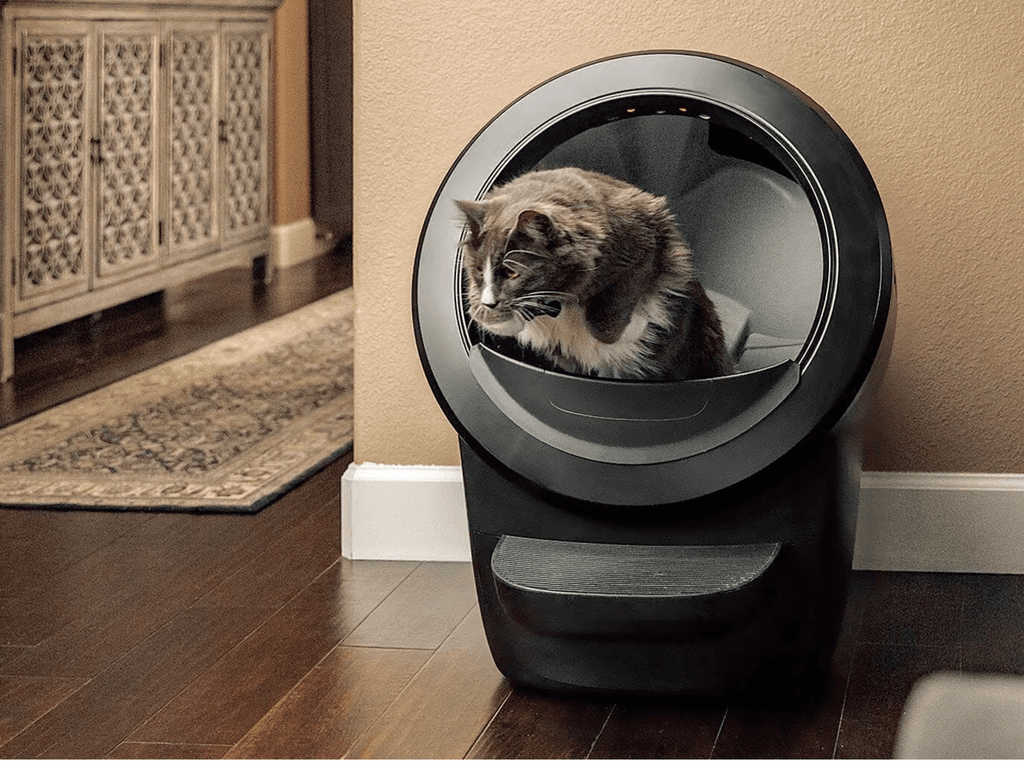
Why we picked it: The Litter-Robot 4 is one of the most widely reviewed automatic litter boxes on the market. Its rotating globe mechanism sifts waste into a sealed drawer within minutes of use, and odor control is one of the most frequently praised points in owner reviews.
- Dimensions: 22 × 27 × 29.5 inches
- Suitable for cats: 3–25 lbs
- App connectivity: Yes (Whisker app, iOS/Android)
- Drawer capacity: ~2 weeks for one cat
Pros
- Hands-off operation — sifts waste automatically after each use
- App tracks usage and alerts to behavioral changes
- Excellent odor containment
- Works with clumping clay or crystal litter
- Suitable for cats up to 25 lbs
Cons
- High upfront cost (~$700)
- Globe design may intimidate timid cats initially
- Requires an electrical outlet nearby
- Not suitable for kittens under 3 lbs
Who should NOT buy this: kittens under 3 lbs, budget-conscious owners unwilling to spend around $700, or households without a nearby electrical outlet.
Our Analysis
Automatic boxes reduce fecal-oral contamination risk in multi-cat households and virtually eliminate ammonia buildup between manual cleans. The Litter-Robot’s weight sensors can also alert owners to changes in elimination frequency — an underappreciated early warning system for conditions like feline lower urinary tract disease (FLUTD) and hyperthyroidism.
#3 Best Hooded/Covered: Nature’s Miracle Hooded Litter Box
Why we picked it: For owners who need odor and scatter containment — particularly in small apartments — this hooded box strikes a reasonable balance. The carbon filter in the lid provides passive odor absorption, and the large interior dimensions don’t feel claustrophobic to most adult cats.
- Dimensions: 23.2 × 18.4 × 17.4 inches
- Hood removable: Yes
- Carbon filter: Included
Pros
- Effective odor and scatter containment
- Carbon filter provides additional odor absorption
- Hood converts to open box if cat resists enclosed design
- Wide front door opening allows easy entry/exit
Cons
- Must scoop more frequently to prevent odor deterrence for cats
- Slightly more difficult to clean around corners and door hinge
- Filter requires periodic replacement
Who should NOT buy this: owners who want a fully open box for maximum feline comfort, or anyone who can’t commit to the more frequent scooping covered boxes need.
Our Analysis
If your cat is comfortable using this box (no hesitation or avoidance behaviors), a covered design is a perfectly acceptable choice. The key clinical caution: scoop more frequently in a covered box — odor concentrates inside, which can cause a cat to avoid the box before any human detects a smell.
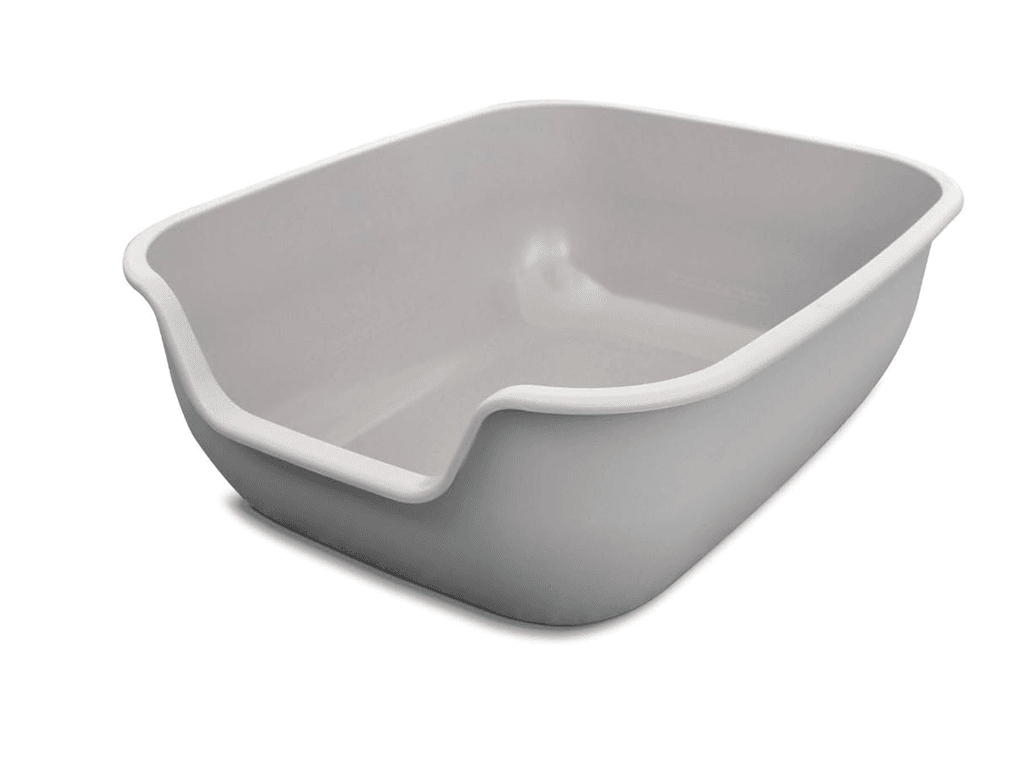
#4 Best Non-Stick Design: PetFusion BetterBox
Why we picked it: PetFusion’s non-stick coating is the standout feature in owner reviews — clumps are reported to release cleanly from the walls and floor, reducing the scrubbing effort needed during deep cleans. The neutral gray design integrates into modern interiors better than most litter boxes.
- Dimensions: 24 × 20 × 10.5 inches (large model)
- Material: Non-stick coated plastic
- Open design: Yes
Pros
- Non-stick coating significantly reduces cleaning effort
- Spacious interior for large cats
- Modern aesthetic blends into home décor
- Durable material holds up to bleach-based cleaning
Cons
- Higher price than basic open boxes
- Non-stick coating may degrade with very abrasive cleaners over time
Who should NOT buy this: owners who scrub with harsh abrasive cleaners regularly, or anyone on a tight budget wanting the cheapest open box available.
Our Analysis
From a sanitation standpoint, the non-stick surface is a real hygiene advantage. Litter waste that doesn’t adhere to surfaces means fewer opportunities for bacterial and fungal pathogens to colonize the box between full cleans — clinically relevant in multi-cat households.

#5 Best Top-Entry: Modkat XL Litter Box
Why we picked it: The Modkat XL virtually eliminates litter scatter and is dog-proof — valuable in multi-pet households. Its clean, furniture-grade aesthetic is one of the best in the category, and the reusable liner simplifies full litter changes considerably.
- Dimensions: 20.5 × 16 × 15 inches
- Includes reusable liner: Yes
- Entry style: Top hatch with walk-off grooves
Pros
- Excellent scatter control — walk-off grooves on lid catch tracking litter
- Dog-proof and privacy-providing by design
- Reusable liner makes full litter changes easier
- Stylish design that doesn’t look like a traditional litter box
Cons
- Not appropriate for senior, arthritic, or mobility-impaired cats
- Initial acclimation period needed for some cats
- Premium price point
Who should NOT buy this: senior, arthritic, or mobility-impaired cats, and owners not ready for an acclimation period or the premium price.
Our Analysis
Top-entry boxes work well for physically healthy adult cats without joint issues. Jumping in and out provides light exercise and challenges the proprioceptive system. However, top-entry designs are generally not recommended for cats over age 10, cats with diagnosed arthritis, or any cat showing signs of reduced mobility or stiffness on jumping.
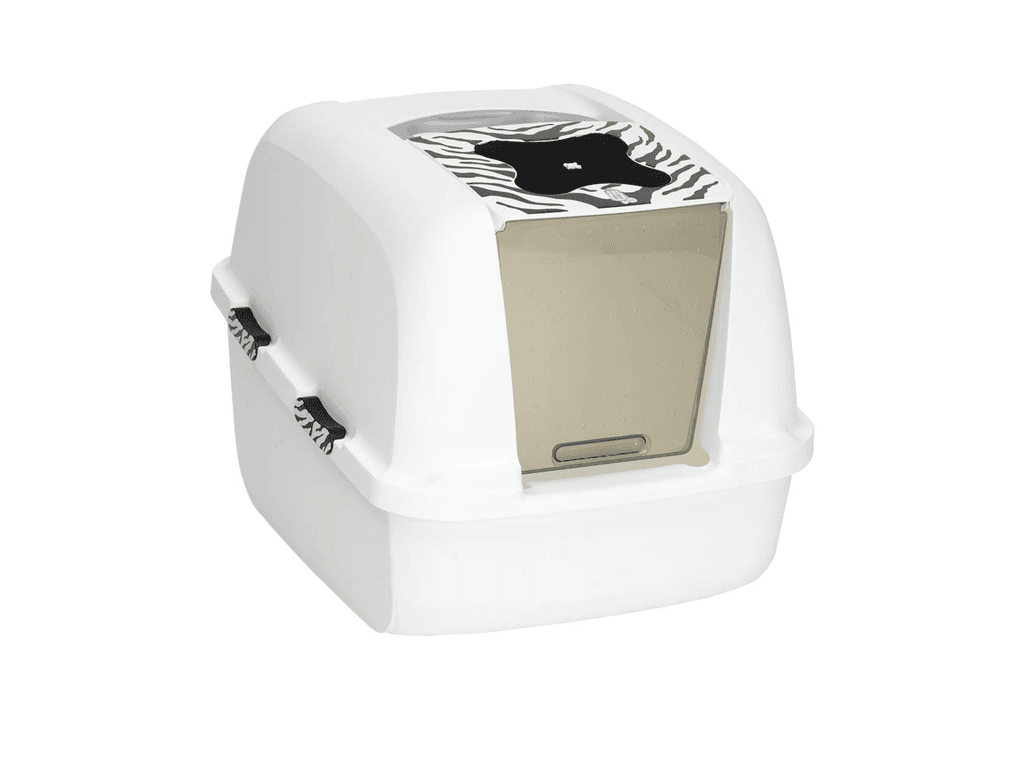
#6 Best for Large Cats: Catit Jumbo Hooded Litter Pan
Why we picked it: Genuinely jumbo-sized, the Catit accommodates large breeds like Maine Coons and Ragdolls without feeling cramped. The built-in carbon filter and hinged hood make maintenance accessible without removing the entire top.
- Dimensions: 22.4 × 17.1 × 17.4 inches
- Swing-open hood: Yes
- Carbon filter included: Yes
Pros
- True jumbo size suits large breeds
- Hinged hood opens for easy scooping without full disassembly
- Carbon filter reduces household odor
- Affordable for the size offered
Cons
- Covered design requires frequent scooping to prevent odor buildup inside
- Bulkier footprint may be challenging in small bathrooms
Our Analysis
Large cats are disproportionately affected by undersized litter boxes — a cramped box can lead to elimination outside the box, a common and frustrating behavioral complaint. The Catit Jumbo removes this variable effectively while keeping the design practical and cleanable.
Frequently Asked Questions
What size litter box does my cat need?
The box should measure at least 1.5 times your cat’s body length (nose to base of tail). For most adult cats, this means a minimum of 20 × 15 inches. Larger breeds — Maine Coons, Ragdolls, Siberians — need boxes in the 24 × 18 inch range or larger.
Should I get a covered or uncovered litter box?
Most cats prefer open boxes that give them a clear sightline. Covered boxes benefit owners more than cats by containing odor and scatter, but they trap ammonia inside, which can deter a sensitive-nosed cat from using the box if scooping is delayed. If your cat accepts a covered box without hesitation, it’s a fine choice — just scoop more frequently.
How often should I clean the litter box?
Scoop solid waste and clumps daily. Completely empty, scrub, and refill with fresh litter every 2–4 weeks depending on the number of cats and litter type. Bacterial and ammonia buildup between full cleans can cause respiratory irritation and litter box avoidance.
How many litter boxes do I need for two cats?
Three — one per cat, plus one extra. This is the AAFP’s recommended minimum and significantly reduces territorial stress and resource guarding in multi-cat households. Place the boxes in separate locations rather than grouping them side by side.
Are self-cleaning litter boxes worth it?
For households with two or more cats, or owners with limited time for daily scooping, yes. Self-cleaning units like the Litter-Robot 4 maintain a consistently clean box between manually scheduled drawer changes, reducing odor and bacterial load — and many models track usage frequency, which can help detect early signs of illness.
Why is my cat not using the litter box?
Common veterinary causes include: urinary tract infection or blockage, constipation, arthritis making entry/exit painful, a box that is too small or too dirty, inappropriate location (near food, in high-traffic areas), or stress from household changes. A sudden change in litter box habits warrants a veterinary evaluation to rule out underlying medical causes before addressing behavioral factors.
What type of litter should I use?
Unscented, clumping clay litter is the most widely accepted by cats and the most studied for safety. Avoid scented litters — the fragrance is designed for human noses, not feline ones, and often deters use. Silica crystal, pine pellet, and paper litters are good alternatives for cats with respiratory sensitivities or post-surgical wound care needs.
Medical Disclaimer: This article is written for informational purposes using veterinary and product-safety sources and does not replace individualized veterinary advice. It was not written by a veterinarian. If your cat is avoiding the litter box, has changes in urination or defecation habits, or shows signs of discomfort during elimination, consult your veterinarian promptly. These symptoms can indicate serious medical conditions including urinary blockage, which is a veterinary emergency in male cats.