We independently research every product we recommend, drawing on real owner reviews, product specs, and vet-reviewed sources. If you buy through a link on this page, Catverdict may earn a small commission — this never affects our picks or costs you anything extra. Details in our affiliate disclosure
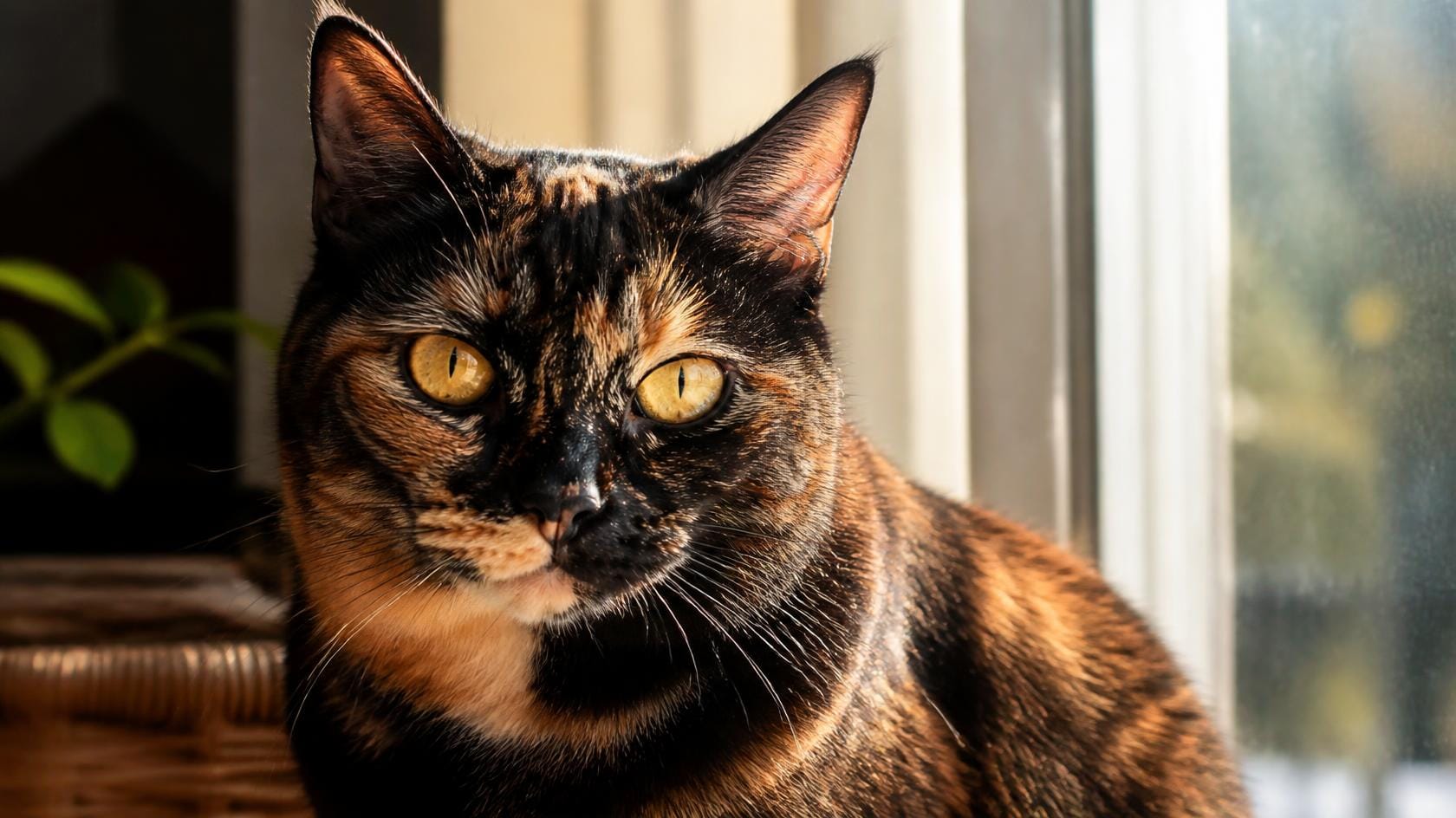
The tortoiseshell cat is one of the most searched-for “breeds” online — except it isn’t a breed at all. Tortoiseshell, or “tortie,” is a coat color pattern that can show up in mixed-breed cats and in many pedigreed breeds alike. Here’s what actually determines that mottled black-and-orange coat, why tortoiseshell cats are almost always female, and whether the famous “tortitude” personality is backed by any science.
Table of Contents
Tortoiseshell Cat Overview
| Coat | Mottled black and orange/red, no white; short or long depending on the underlying breed |
| Found In | Mixed-breed cats and many pedigreed breeds (British Shorthair, Persian, Maine Coon, Cornish Rex, and more) |
| Sex Ratio | Roughly 99.97% female |
| Lifespan | 12–18 years (typical range; depends on the underlying breed) |
| Temperament | No proven color-specific trait; varies by individual and breed, not coat color |
| Cost | Often free–$150 via shelter/rescue; $800–$2,000+ if from a breeder of a tortie-patterned pedigreed breed |
What Makes a Cat Tortoiseshell? (The Genetics)
A tortoiseshell cat gets its mottled coat from the orange color gene, which sits on the X chromosome. A cat needs two different versions of that gene — one for orange, one for non-orange (black/brown) — to show both colors at once, and only cats with two X chromosomes (XX, i.e. genetically female) can carry both versions simultaneously. Males (XY) have only one X chromosome, so they can only express one color, which is why true tortoiseshell coloring is almost exclusively female.
Male tortoiseshells do exist, but they’re rare — roughly 1 in 3,000 tortoiseshell cats is male. Most of these cats have an extra X chromosome (XXY, a condition called Klinefelter syndrome), which lets them carry both color genes the way females do. Because of that chromosomal imbalance, male tortoiseshells are typically sterile.
Appearance & Color Variations
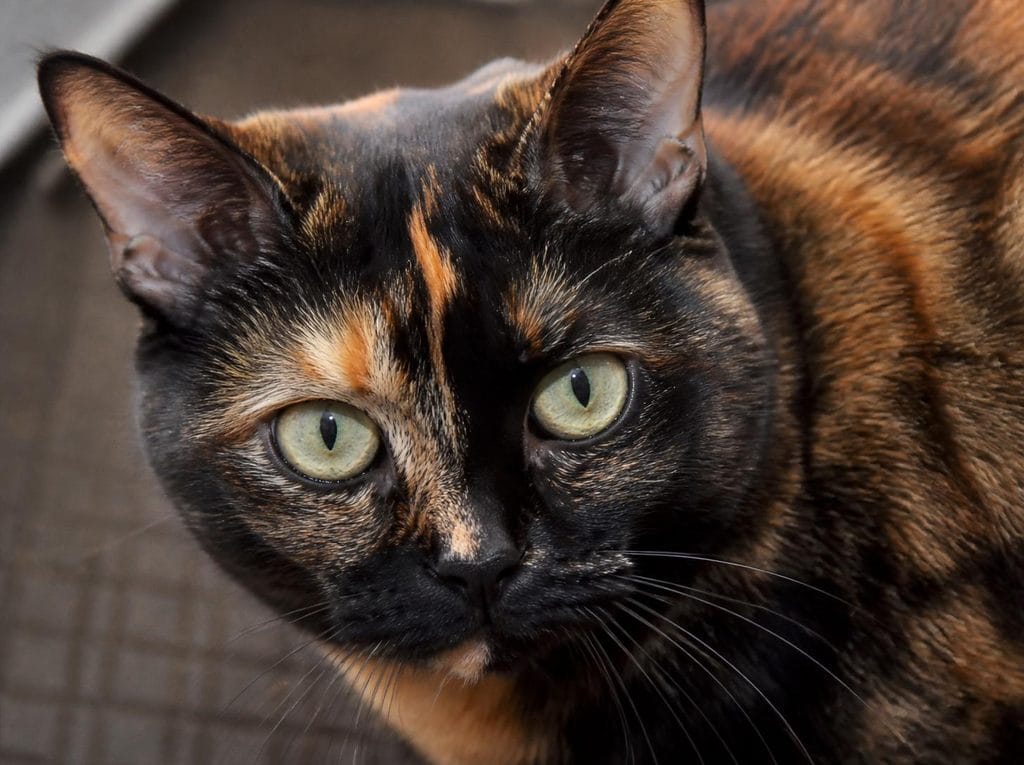
Classic tortoiseshell coloring mixes black and red/orange in a mottled, brindle-like pattern with no white patches. A “dilute tortoiseshell” swaps those for softer blue-grey and cream. When the same color mix shows up with distinct tabby striping within the patches, it’s called a “torbie” (tortoiseshell tabby) rather than a true tortoiseshell.
Because tortoiseshell is a color pattern rather than a breed, you’ll see it on domestic shorthairs and longhairs as well as recognized breeds — British Shorthair, Persian, Maine Coon, Cornish Rex, Scottish Fold, and others all accept tortoiseshell patterning in their breed standards. That means coat length, body type, and size vary enormously from one tortoiseshell cat to the next, depending entirely on the underlying breed.
Personality: Is “Tortitude” Real?
“Tortitude” is the popular nickname for the feisty, strong-willed personality tortoiseshell owners often describe. It makes for a fun story, but there’s little scientific evidence that coat color predicts temperament. Research looking at coat color and behavior has found no consistent link between color and tameness, even though owner surveys sometimes report a perceived association between tortoiseshell/calico coloring and more aloof or assertive behavior. The more reliable predictor of personality is the individual cat and its breed — not its color.
Grooming & Care
Grooming needs come down to coat length, not color. A short-haired tortoiseshell (common in domestic shorthairs, British Shorthairs, or Cornish Rex) needs only weekly brushing, while a long-haired tortie (Persian, Maine Coon) needs brushing several times a week to prevent mats, especially around the shedding seasons.
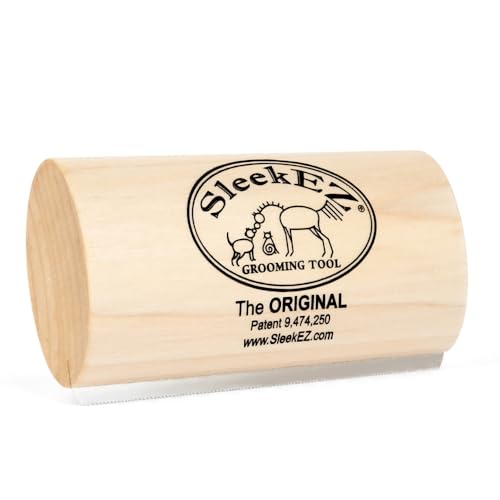
- SAVE MONEY: Reduce expensive trips to the groomer. Our dog shedding brush works great as a dog brush for short haired do…
- ALL HAIR & FUR TYPES: Our dog brushes for grooming safely removes loose hair without irritation. SleekEZ dog hair brush …
- EASY AND FAST CLEANUP: SleekEZ also works great as a carpet rake, pet hair rake, & dog fur remover tool. It removes hair…
Health & Lifespan
Tortoiseshell coloring itself carries no known health implications — health and lifespan depend on the cat’s underlying breed (or lack of one, for mixed-breed cats) rather than its coat pattern. The one real medical note tied to the color is the male tortoiseshell’s chromosomal condition (Klinefelter syndrome), which is usually linked to infertility rather than any day-to-day health problem. For general preventive care guidance that applies to any cat, see our complete guide to cat health care.
Diet & Nutrition Needs
Like grooming, diet needs depend on your tortoiseshell cat’s breed, age, and activity level rather than its coloring. A quality, age-appropriate food is the baseline for any cat — our best cat food guide breaks down vet-reviewed options by life stage and breed size.

- HIGH-PROTEIN CAT FOOD: Protein-rich Blue Buffalo Wilderness dry cat food with real chicken as the first ingredient suppo…
- EXPERT FORMULATION: Designed to help your pet thrive from the inside out, BLUE Wilderness cat food recipes are developed…
- SUPPORTS IMMUNE SYSTEM HEALTH: BLUE Wilderness natural cat food features exclusive LifeSource Bits, a precise blend of a…
How Much Does a Tortoiseshell Cat Cost?
Because tortoiseshell is a color, not a breed, most tortoiseshell cats are available for free or a modest adoption fee (often under $150) through shelters and rescues, since they’re commonly born to mixed-breed litters. If you specifically want a tortoiseshell-patterned cat from a recognized pedigreed breed — a tortie-point Persian or British Shorthair, for example — expect to pay that breed’s normal breeder price, typically $800–$2,000+, since tortoiseshell doesn’t command a premium over other accepted colors in most breed standards.
Tortoiseshell vs. Calico vs. Torbie
These three patterns get confused constantly because they share the same underlying orange/non-orange genetics. Here’s how to tell them apart:
| Pattern | Colors | White Patches? | Markings |
|---|---|---|---|
| Tortoiseshell | Black + red/orange (or dilute: blue + cream) | No | Mottled, brindle-like mix |
| Calico | Black + red/orange + white | Yes | Distinct color patches on a white base |
| Torbie | Black + red/orange | No (or minimal) | Tortoiseshell mix with visible tabby striping |
In short: calico is tortoiseshell plus a white-spotting gene; torbie is tortoiseshell plus the tabby gene layered on top. All three follow the same female-skewed genetics described above.
Is a Tortoiseshell Cat Right for You?
If you’re drawn to the look of a tortoiseshell cat, the honest answer is that you’re choosing a color, not a personality or care routine — those come from the breed underneath. A tortoiseshell domestic shorthair from a shelter is a great low-maintenance option for most households; a tortoiseshell-patterned pedigreed breed like a Persian comes with that breed’s specific grooming and health considerations. Either way, meet the individual cat rather than choosing based on coat color alone.
Frequently Asked Questions
Is tortoiseshell a specific cat breed?
No — tortoiseshell is a coat color pattern that can appear in mixed-breed cats and in many recognized pedigreed breeds, not a breed of its own.
Why are most tortoiseshell cats female?
The orange color gene sits on the X chromosome, and showing both black and orange at once requires two different X chromosomes — something only genetically female (XX) cats have.
How rare are male tortoiseshell cats?
Roughly 1 in 3,000 tortoiseshell cats is male, and most have an extra X chromosome (Klinefelter syndrome), which typically makes them sterile.