We independently research every topic we cover, drawing on established feline behavior sources and real owner experience. This article is for general information and isn’t a substitute for advice from your own veterinarian.
A hissing, swatting, or growling angry cat can be startling, especially when the trigger isn’t obvious. Aggression is rarely about a cat being “mean” — it’s almost always a reaction to pain, fear, stress, or overstimulation. Here’s what’s usually behind it, and how to calm an angry cat down safely.
Table of Contents
| Quick answer | Aggression usually signals pain, fear, territorial stress, or overstimulation — not a “bad” cat |
| Normal? | Occasional hissing or swatting can be normal; frequent or sudden aggression is worth investigating |
| Watch for | Sudden aggression with no clear trigger, especially in a normally friendly cat — mention it to a vet |
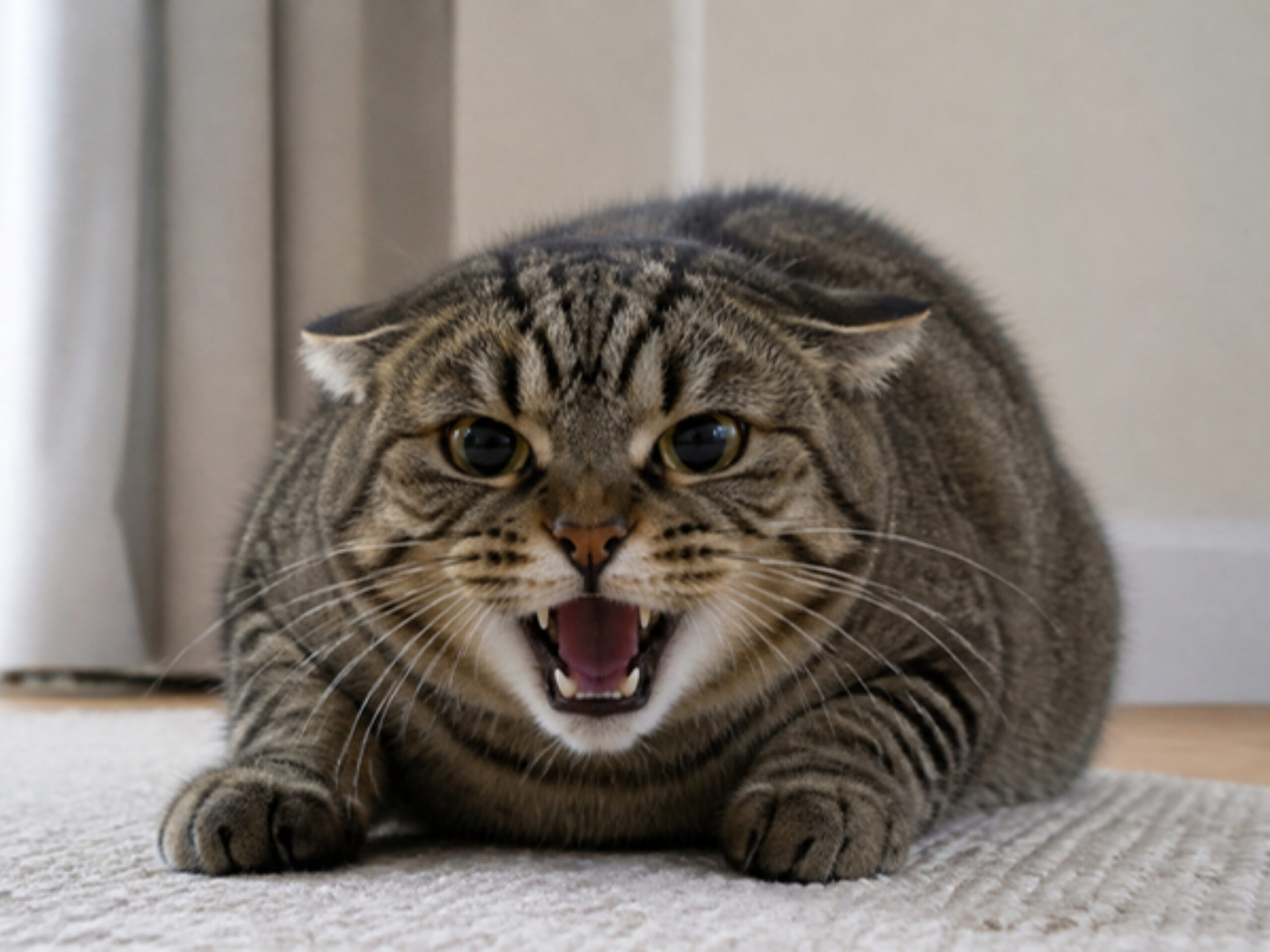
What Does an Angry Cat Actually Look Like?
Before getting into causes, it helps to recognize the signs. An angry or agitated cat typically shows some combination of: flattened or pinned-back ears, dilated pupils, a swishing or thumping tail, raised fur along the back (piloerection), hissing or growling, and a crouched or sideways “Halloween cat” posture. These signals are a cat’s way of asking for space — they usually escalate gradually before any actual swatting or biting happens, which gives owners a window to back off and avoid getting hurt.
Why Is My Cat Angry? 6 Common Causes
1. Pain or Illness
A sudden personality change — especially in a cat that’s normally easygoing — is one of the most common reasons vets see for “out of nowhere” aggression. Dental pain, arthritis, injury, or an underlying illness can all make a cat snap or growl when touched in a sore spot, or become generally more irritable. If the aggression appeared suddenly and doesn’t track back to an obvious trigger, a vet visit should come before any behavior fix. See our cat health hub for more on recognizing when something’s off.
2. Fear or Feeling Threatened
A cornered, startled, or overwhelmed cat will often go on the offensive as a defense mechanism — this is sometimes called fear aggression. Loud noises, unfamiliar people or animals, a trip to the vet, or even rearranged furniture can all trigger it. The fix isn’t more interaction; it’s giving the cat a quiet space to retreat to and letting it come back out on its own terms.
3. Territorial Stress
In multi-cat households, tension over shared resources — food bowls, litter boxes, favorite perches — is a frequent source of hissing and swatting between cats. The usual fix is adding more of each resource (one litter box per cat plus one extra, separate feeding stations) and more vertical space so cats can claim their own territory without crowding each other.


4. Redirected Aggression
This happens when a cat gets worked up by something it can’t actually reach — an outdoor cat seen through a window, a bird, a loud noise outside — and then lashes out at the nearest person or pet instead. It can feel completely random to the owner, but from the cat’s side, the arousal has to go somewhere. Giving the cat time alone to settle, rather than approaching it right away, usually resolves it within minutes to hours.
5. Overstimulation (Petting-Induced Aggression)
Some cats enjoy petting right up until they suddenly don’t — a phenomenon commonly called petting-induced or overstimulation aggression. Watch for early warning signs like skin twitching, tail flicking, or ears turning back mid-pet, and stop before the cat has to escalate to a nip or swat. Shorter, more frequent petting sessions usually work better than one long one.
6. Play Aggression Mistaken for Anger
Kittens and young cats that pounce on ankles or bite during play aren’t actually angry — they’re practicing hunting behavior, often because they didn’t get enough structured play as kittens or are under-stimulated. The fix is redirecting that energy onto appropriate targets rather than punishing it: regular wand-toy sessions let a cat “catch” something that isn’t a hand or foot.
Products not fetched from DB and/or API. Please check debug logs.How to Calm an Angry Cat Safely
Whatever the trigger, the same basic approach helps in the moment:
- Stop touching and back away: don’t try to soothe an aggressive cat with more contact — that usually escalates things.
- Lower your voice and movements: loud reactions or sudden movement read as more threat, not reassurance.
- Give the cat an exit: don’t corner or chase an agitated cat — let it retreat to a quiet space on its own.
- Never punish the behavior: yelling, spraying with water, or physical correction tends to add fear and stress rather than reduce aggression.
- Look for patterns: note what was happening right before each outburst — it’s often the fastest way to spot the actual trigger.


If aggression is frequent, intense, or escalating despite these steps, it’s worth ruling out a medical cause with a vet before assuming it’s purely behavioral. For more on keeping a multi-cat household calmer day to day, see our guide to cat toys and gear.
Frequently Asked Questions
Why is my cat suddenly aggressive for no reason?
Sudden aggression in a previously easygoing cat is most often linked to pain or illness, so it’s worth a vet visit to rule out a medical cause first. If health is ruled out, look for a recent change — a new pet, a move, a loud event — that could explain a stress or fear response.
How can I tell if my cat is angry or just playing rough?
Play aggression usually comes with a relaxed body, forward-facing ears, and a silent or chirpy approach, while true aggression comes with flattened ears, hissing or growling, and a tense or crouched body. Bite pressure also tends to be much lighter in play.
Should I punish my cat for aggressive behavior?
No — punishment tends to increase fear and stress, which usually makes aggression worse rather than better. Removing yourself from the situation and addressing the underlying trigger works far more reliably than scolding or physical correction.