We independently research every product we recommend, drawing on real owner reviews, product specs, and vet-reviewed sources. If you buy through a link on this page, we may earn an affiliate commission at no extra cost to you.
The Ocicat looks every bit like a small wild cat with its bold spotted coat, but there’s no wild blood in it at all — it’s a fully domestic breed built from Siamese, Abyssinian, and American Shorthair ancestry. Beyond the exotic appearance, Ocicats are known for an outgoing, almost dog-like personality that sets them apart from most “wild-looking” breeds. Here’s the full picture: origin, temperament, cost, and how it compares to genuinely wild-hybrid breeds people often confuse it with.
Table of Contents
Ocicat Overview
| Weight | 6–15 lbs (males notably larger) |
| Coat | Short, satiny, thermally-spotted coat |
| Lifespan | 12–18 years |
| Temperament | Outgoing, social, energetic, often described as “dog-like” |
| Shedding | Low to moderate |
| Price | $800–$1,500+ from a reputable breeder |
Origin & History
The Ocicat was created entirely by accident in 1964, when breeder Virginia Daly was trying to produce an Abyssinian-pointed Siamese and instead got a spotted, ivory-colored kitten she nicknamed “Tonga.” A family friend suggested the name “Ocicat” for its resemblance to a wild ocelot, and Daly developed the look deliberately from there using Siamese, Abyssinian, and later American Shorthair lines. Despite the wildcat name and appearance, no wild species were ever used — it is a 100% domestic breed, recognized by TICA in 1986 and later by the CFA.
Appearance & Size
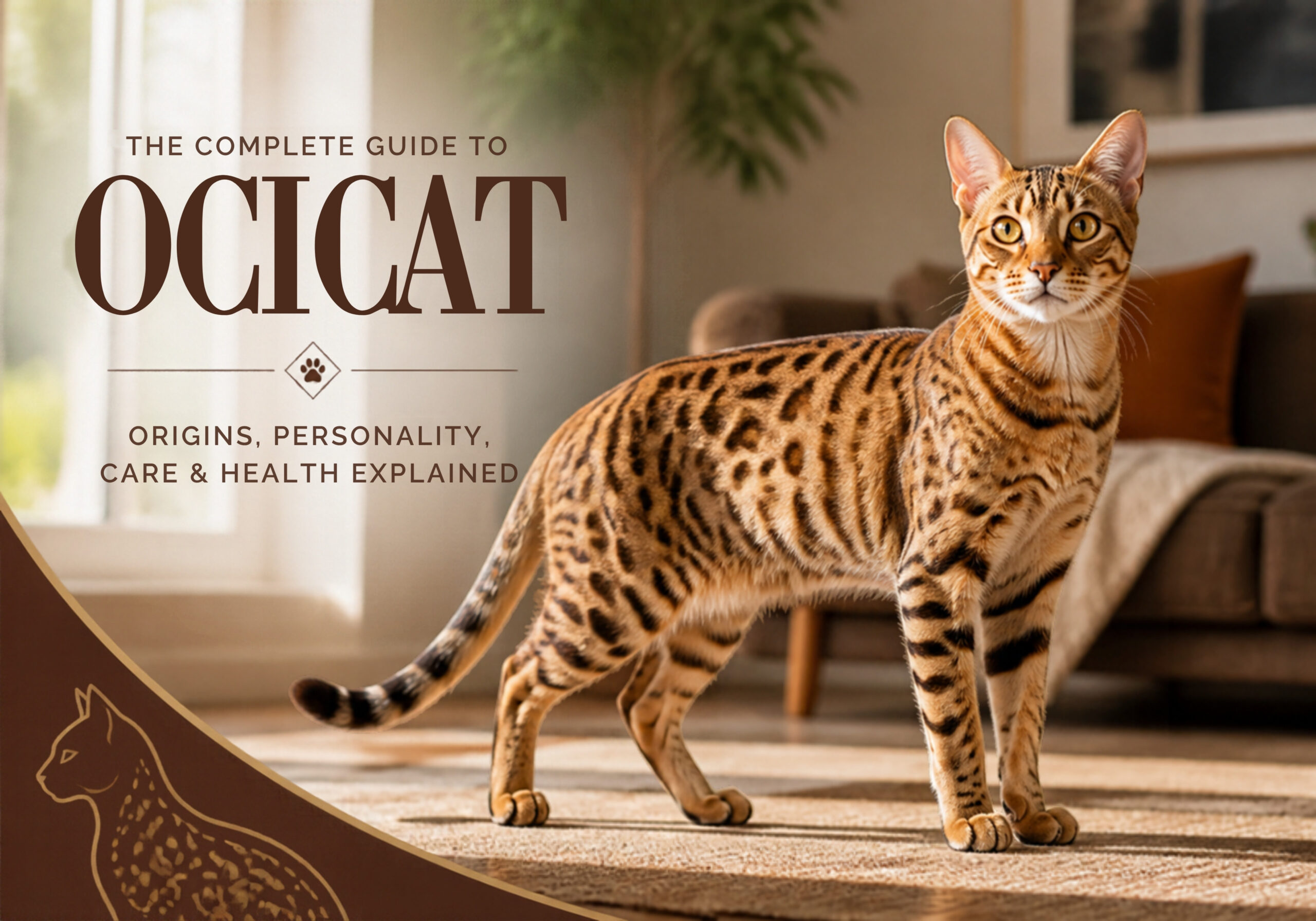
Ocicats are large, athletic cats with a solid, muscular build and a distinctly wild look: a short, satiny coat covered in bold thumbprint-shaped spots, agouti “ticked” fur, and large almond-shaped eyes in shades like gold, green, or blue-green. Accepted colors include tawny, chocolate, cinnamon, blue, lilac, and fawn, always with the breed’s signature spotted pattern.
Personality & Temperament
Ocicats are famous for a personality that reads more like a dog than a cat: they’re highly social, trainable (many learn fetch and leash-walking easily), vocal, and eager to be involved in whatever their household is doing. They don’t do well left alone for long stretches and tend to bond intensely with their people, following them from room to room and greeting visitors rather than hiding. This is not a breed suited to a quiet, hands-off household.
Grooming & Shedding
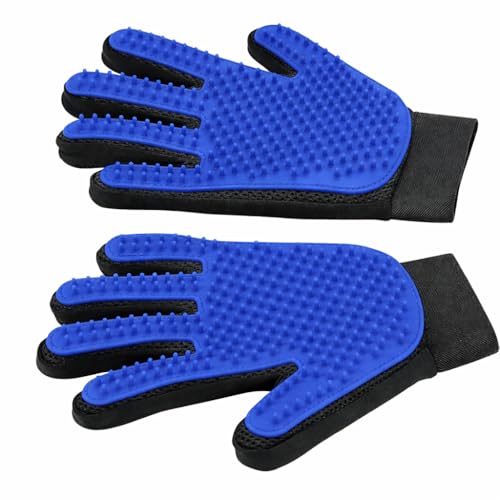
The Ocicat’s short, satiny coat is low-maintenance — an occasional brushing to remove loose hair and distribute skin oils is usually all it needs. Shedding is light to moderate year-round, making this one of the easier breeds to groom despite its eye-catching coat pattern.


Health & Lifespan
Ocicats are a generally healthy, athletic breed with a typical lifespan of 12–18 years. The main condition to be aware of is hypertrophic cardiomyopathy (HCM), a heart condition that can appear in the breed, so reputable breeders screen their breeding cats for it. Regular wellness visits matter more than any breed-specific test for most owners. See our cat health hub for general guidance by life stage.
Diet & Nutrition Needs
Ocicats are large, muscular, and highly active, so they tend to do well on a protein-rich diet that supports lean muscle rather than a low-calorie formula built for a sedentary cat. Because they’re bigger and more energetic than many breeds, keep an eye on portion sizes relative to their actual activity level rather than a one-size-fits-all guideline. See our cat food reviews for options across life stages.


How Much Does an Ocicat Cost?
Expect to pay $800–$1,500 or more for an Ocicat kitten from a reputable breeder, with pricier show-quality kittens going higher. The breed isn’t as common as something like a Bengal, so waitlists are typical, and adoption through a breed-specific rescue is possible but uncommon given how few Ocicats end up in shelters.
Ocicat vs. Bengal vs. Savannah vs. Egyptian Mau
All four of these breeds have a spotted or wild-looking coat, which is where the confusion usually starts — but their ancestry and temperament differ a lot:
| Breed | Wild Ancestry | Build | Distinct Feature |
|---|---|---|---|
| Ocicat | None — 100% domestic (Siamese/Abyssinian/American Shorthair) | Large, muscular | Dog-like, highly social temperament |
| Bengal | Asian leopard cat (several generations back) | Muscular, athletic | Glittered coat, very high energy |
| Savannah | African serval (can be close generations) | Tall, long-legged | Largest of the four, strongest wild-cat traits |
| Egyptian Mau | None — natural domestic breed | Medium, athletic | Naturally spotted coat, fastest domestic cat breed |
In short: if you want the spotted look without any wild-hybrid ownership considerations (special permits, more intense exercise needs), the Ocicat and Egyptian Mau are both fully domestic options — the Ocicat tends to run larger and more dog-like, while the Mau is sleeker and faster.
Is an Ocicat Right for You?
An Ocicat suits an active household that wants an engaged, people-oriented cat and has time to interact with it daily — these cats thrive on attention and can get bored or anxious when left alone too often. It’s a poor fit for anyone wanting a low-key, independent cat, since the Ocicat’s whole appeal is how involved and dog-like it is.
Frequently Asked Questions
Is an Ocicat part wild cat?
No. Despite the name and spotted appearance, the Ocicat is 100% domestic, developed entirely from Siamese, Abyssinian, and American Shorthair breeding lines with no wild species involved at any point.
Are Ocicats hypoallergenic?
No cat breed is truly hypoallergenic, and the Ocicat is not considered a low-allergen breed. Its short coat may shed less visibly than a long-haired breed, but it still produces the same allergen proteins as any other cat.
Do Ocicats get along with dogs?
Generally yes — their social, dog-like temperament tends to make Ocicats more adaptable to living with dogs than many other cat breeds, especially with a gradual, supervised introduction.