We independently research every product we recommend, drawing on real owner reviews, product specs, and vet-reviewed sources. If you buy through a link on this page, Catverdict may earn a small commission — this never affects our picks or costs you anything extra. Details in our affiliate disclosure.
If you adopted two kittens from the same litter and now worry they’re a little too attached to each other, you may be dealing with littermate syndrome in cats — a pattern where sibling kittens raised together can become so bonded to one another that they struggle with separation, new people, or other pets. The term is debated and far less studied in cats than in dogs, but the signs are real and manageable once you know what to look for.
Table of Contents
| Quick answer | A cluster of over-bonding and anxiety signs sometimes seen in sibling kittens raised together, not a formal medical diagnosis |
| How common? | Much better documented in puppies than kittens — in cats it’s more of an informal behaviorist term than a proven syndrome |
| Fixable? | Usually yes, with separate resources, individual attention, and gradual independent socialization |
What Is Littermate Syndrome in Cats?
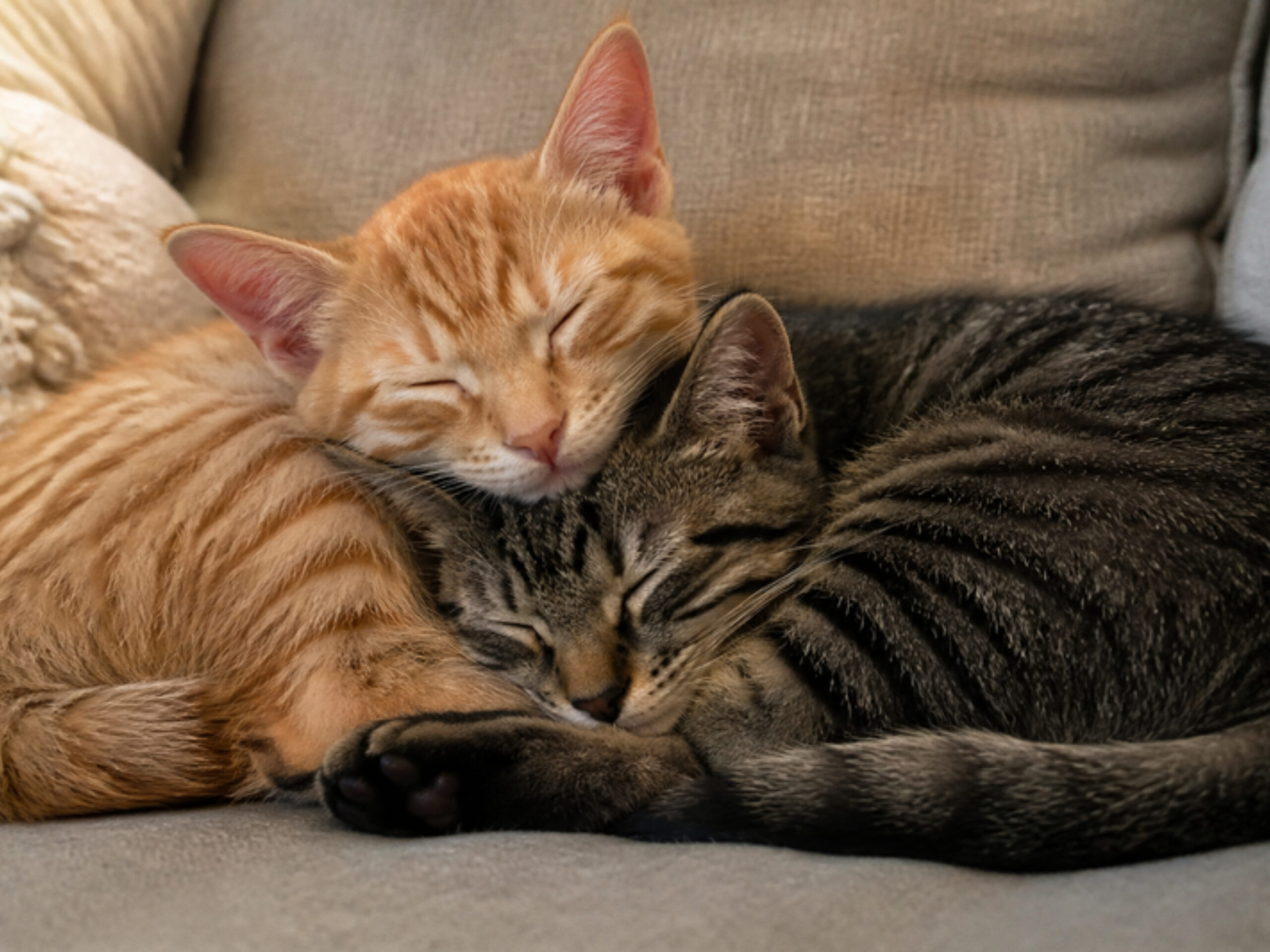
Littermate syndrome is an informal term some breeders, shelters, and behaviorists use to describe a cluster of behaviors sometimes seen in two kittens from the same litter who are raised together from a very young age. Rather than becoming well-adjusted, independent cats, the pair can become so bonded to each other that they struggle to cope on their own — panicking when separated, ignoring their human family in favor of each other, or never fully developing confidence as individuals.
It’s worth noting upfront: this is a far more established concept in puppies than in kittens. The pattern is anecdotally reported by cat owners and some behaviorists, but it hasn’t been formally studied or defined the way it has in dogs.
Signs of Littermate Syndrome in Cats
Owners who report this pattern usually describe some combination of the following:
- Panic when separated: excessive crying, pacing, or hiding if the two cats are apart even briefly.
- Little interest in people: the cats seek each other out constantly but rarely approach or bond with human family members.
- Fearfulness alone: one or both cats become unusually anxious, withdrawn, or reluctant to explore when the other isn’t present.
- One-sided dynamic: a more dominant littermate monopolizing food, attention, or favorite spots while the other defers constantly.
Occasional closeness between littermates is completely normal and not a problem on its own — it only becomes a concern when it crowds out a cat’s ability to function as an individual.
Is Littermate Syndrome Actually Proven in Cats?
No peer-reviewed research specifically confirms “littermate syndrome” as a distinct condition in cats, and organizations like the ASPCA discuss sibling over-attachment mainly in the context of dogs. That said, the underlying behavior principle — that under-socialized animals raised in a bonded pair can struggle with independence — is well established more broadly in animal behavior. If your littermates are showing the signs above, it’s reasonable to address them even without a formal diagnosis attached.
How to Prevent Littermate Syndrome
If you’re raising two littermates from kittenhood, a few habits early on go a long way:
- Separate resources: each kitten gets its own food bowl, litter box, and bed so they aren’t forced into constant close contact.
- One-on-one time: spend a few minutes a day with each kitten alone — play, handling, and affection without the sibling present.
- Short, supervised separations: get both kittens comfortable being in different rooms for brief periods, building up gradually.
- Individual socialization: introduce each kitten to new people, sounds, and experiences on its own, not only as a pair.
[PRODUCT: second separate litter box and feeding station set — gives each littermate its own resources instead of sharing everything | PLATFORM: Amazon]
What to Do If Your Littermates Already Show These Signs
If your littermates are already showing over-bonding or separation anxiety, you don’t need to separate them permanently or rehome either cat — gradual changes usually help. Start adding the separate resources and one-on-one time above, and build up alone-time in short, low-stress sessions rather than all at once. Two individual cat trees or window perches can also help reduce constant physical crowding without removing the cats’ bond altogether.
[PRODUCT: two single-cat window perches or a tall cat tree with separate platforms — gives each littermate its own space to retreat to | PLATFORM: Amazon]
If anxiety, aggression toward the sibling, or extreme panic during separation continues despite these steps, a feline behaviorist or your vet can help rule out other causes and build a more structured plan. For more enrichment ideas to reduce competition and crowding between cats, see our cat toys hub.
Frequently Asked Questions
Should I separate littermate kittens permanently?
Usually not. Permanent separation or rehoming is rarely necessary — gradual, structured independence-building (separate resources, one-on-one time, short alone periods) resolves most over-bonding patterns without breaking up the pair.
Is littermate syndrome the same in cats as in dogs?
Not exactly. The concept is far better documented and more clinically discussed in puppies. In cats it’s a looser, less-studied term describing similar over-bonding behaviors, not a formally recognized condition.
Can two unrelated kittens develop the same over-bonding?
Yes — the behavior pattern is about being raised together in constant close contact from a young age, not genetics. Two unrelated kittens adopted together at the same age can show the same signs.