
We independently research every topic we cover, drawing on established veterinary and medical sources. This article is for general information and isn’t a substitute for advice from your doctor or your cat’s vet.
A fresh cat scratch that itches is usually just your skin doing normal repair work, but itching that shows up with redness, swelling, or a bump a few days later can point to something more — most notably cat scratch disease. Here’s what typically causes the itch, how to tell a normal healing scratch from an infected one, and when it’s time to see a doctor.
Table of Contents
| Quick answer | Mild itching is usually just normal healing; worsening redness, swelling, or a bump points to possible infection |
| Needs a doctor, not a home fix | Increasing pain/swelling, pus, fever, or swollen lymph nodes near the scratch |
| Main cause to know about | Cat scratch disease, a bacterial infection (Bartonella henselae) spread mainly by flea dirt on a cat’s claws |
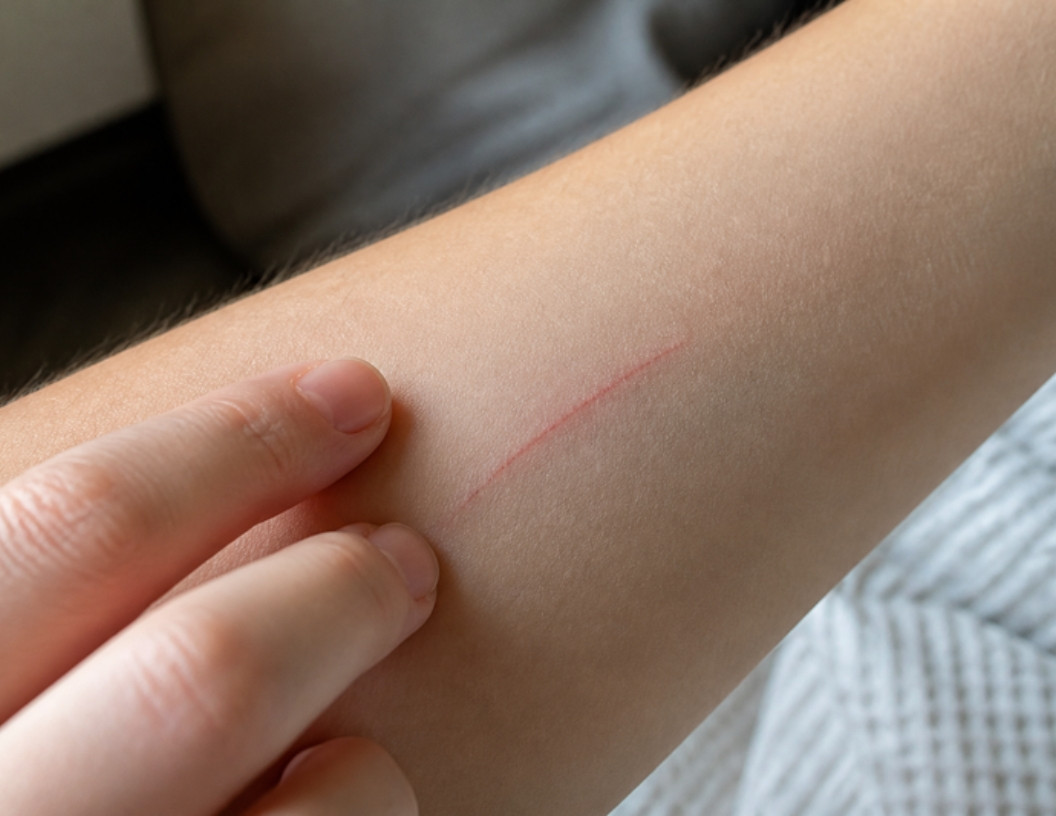
Common Reasons a Cat Scratch Itches
Most of the time, an itchy cat scratch is simply your skin’s normal healing response. As a scratch heals, the body releases histamine, which triggers mild itching around the wound edges — the same process behind any minor cut or scrape. A few other common, generally harmless causes include:
- Mild skin irritation: cat claws can carry trace bacteria or debris that cause light local irritation as the skin reacts.
- Sensitivity to cat allergens: proteins from a cat’s saliva or dander (often transferred to claws during grooming) can trigger a mild allergic itch in sensitive people, separate from any infection.
- Scabbing and healing: as a scratch scabs over, the tightening skin commonly itches — this is normal and not a sign of a problem on its own.
Could It Be Cat Scratch Disease?
Cat scratch disease is a bacterial infection caused by Bartonella henselae, according to the CDC and AVMA. Cats most often pick up the bacteria from flea dirt, which can end up under their claws or on their mouth during grooming, and then pass it along through a scratch or bite. General facts about what to expect, per the CDC: symptoms typically appear within 3–14 days and can include redness and swelling at the scratch site, a small bump or blister, and swollen, tender lymph nodes near the wound (commonly in the armpit or neck area), sometimes with a mild fever or fatigue. Most healthy adults recover without lasting problems, though a doctor’s evaluation is the appropriate next step if these signs appear — this isn’t something to self-diagnose or self-treat.
When to See a Doctor (or a Vet)
A simple itchy scratch that stays small, pink, and improves over a few days is normal and doesn’t need medical care beyond basic cleaning. See a doctor if, instead, the area gets more red, swollen, or painful after the first day or two; you notice pus or warmth around the wound; a lymph node near the scratch becomes swollen or tender; or you develop a fever, chills, or fatigue following a scratch. People who are immunocompromised, pregnant, or scratched by a kitten (more likely to carry fleas) should have any scratch evaluated sooner rather than waiting to see if symptoms worsen.
It’s also worth having your cat checked by a vet for fleas if scratches keep happening — treating the underlying flea problem lowers the chance of cat scratch disease for everyone in the household. See our cat health hub for more on preventive care.
[PRODUCT: vet-recommended flea prevention treatment for cats — reduces the flea dirt that spreads cat scratch disease through claws | PLATFORM: Amazon]
How to Care for a Cat Scratch and Ease Itching
For a typical, minor scratch: wash the area with soap and water as soon as possible, keep it clean and dry, and avoid scratching at the healing skin, which can introduce new bacteria and prolong the itch. Keeping your cat’s nails trimmed and claws clean reduces both the frequency and severity of scratches in the first place.
[PRODUCT: cat nail clippers or a nail grooming kit — helps keep claws shorter and reduces scratch severity | PLATFORM: Amazon]
Frequently Asked Questions
Is it normal for a cat scratch to itch for several days?
Yes — mild itching as a scratch scabs over and heals can last several days to about a week. It becomes a concern when the itching is paired with increasing redness, swelling, or pain rather than gradually improving.
How do I know if my cat scratch is infected?
Signs that point toward infection rather than normal healing include spreading redness, warmth, swelling, pus, a feverish feeling, or a nearby lymph node becoming swollen or tender. Any of these warrant a doctor’s evaluation rather than waiting it out.
Can an indoor-only cat still give cat scratch disease?
Yes. Fleas can get into a home even with an indoor-only cat, and the bacteria behind cat scratch disease is carried in flea dirt on the cat’s fur and claws rather than requiring outdoor exposure.


