
We independently research every topic we cover, drawing on established veterinary sources, product specs, and real owner experience. If you buy through a link on this page, Catverdict may earn a small commission — this never affects our picks or costs you anything extra. Details in our affiliate disclosure. This article is for general information only, isn’t diagnostic, and isn’t a substitute for an exam from your own veterinarian.
A cat hairball forms when swallowed loose fur accumulates in the stomach instead of passing through the digestive tract, eventually getting vomited back up as a damp, tube-shaped clump. An occasional hairball — maybe once every week or two — is a normal side effect of grooming, especially in long-haired cats, but frequent hairballs or signs of straining without producing one are worth paying attention to.
Table of Contents
| Needs a vet? | Only if frequent, or if your cat strains without producing one |
| Normal? | Occasional (roughly weekly or less) is typical, especially in long-haired cats |
| Watch for | Repeated vomiting without a hairball, lethargy, or not eating — could signal a blockage |
Why Cats Get Hairballs
How Often Is Normal
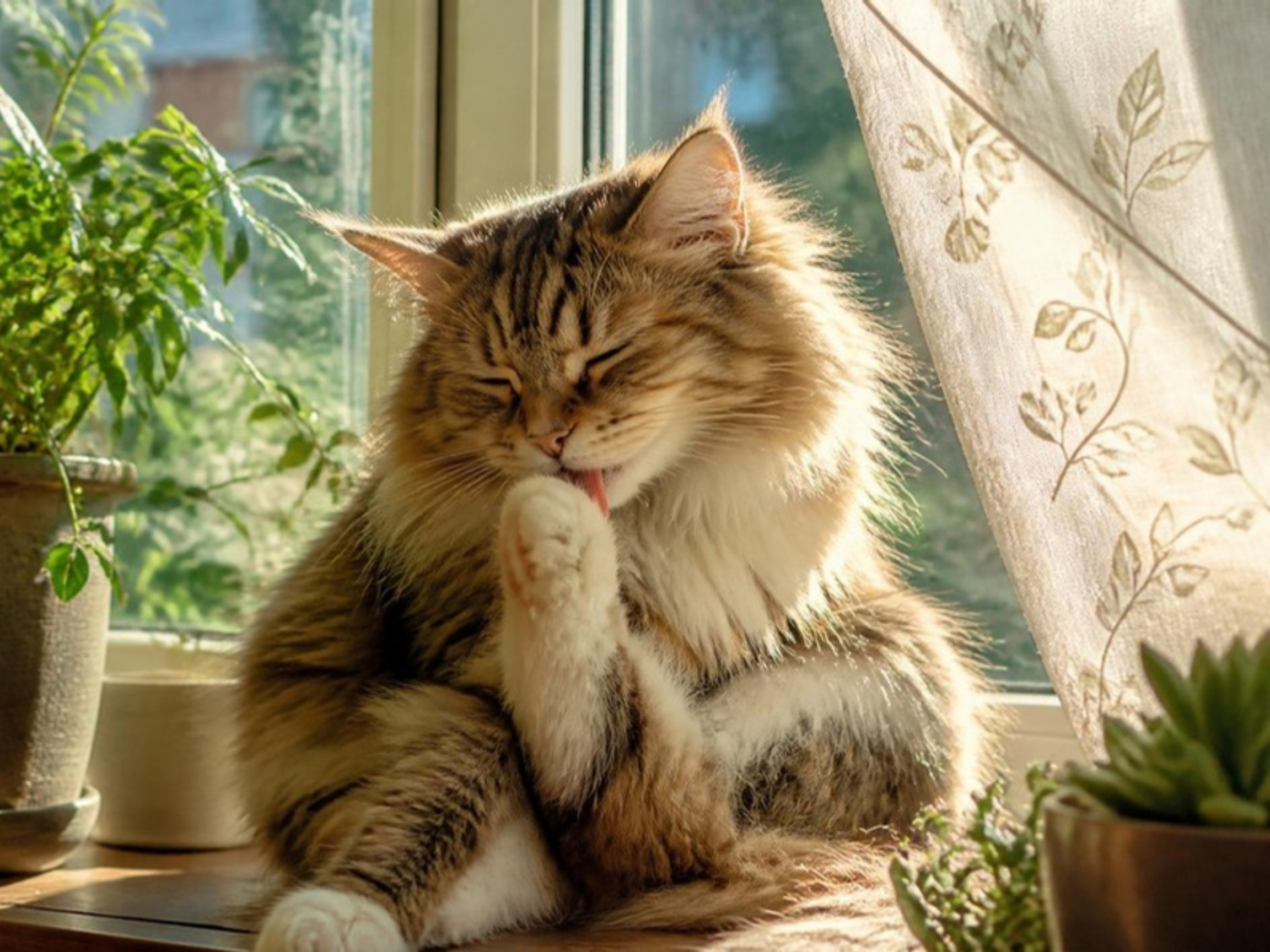
Cats groom themselves constantly, and their tongue’s backward-facing barbs are excellent at catching loose fur, which gets swallowed in the process. Most of that fur passes through the digestive tract normally, but some accumulates in the stomach and eventually comes back up as a hairball. An occasional hairball, roughly every week or two, isn’t a cause for concern in most cats — it’s just a side effect of normal grooming.
Cats More Prone to Hairballs
Long-haired breeds (Persians, Maine Coons, Ragdolls) swallow more fur simply due to coat length and are more prone to frequent hairballs. Heavy shedders during seasonal coat changes, cats that over-groom due to stress or skin irritation, and senior cats with less efficient digestion can also produce them more often than average.
When Hairballs Need a Vet Visit
See a vet if your cat is vomiting frequently (more than once every week or two), straining or retching repeatedly without producing anything, or showing lethargy, reduced appetite, or constipation alongside the vomiting — these can signal a hairball has formed a blockage, which is a medical emergency, or that something other than hairballs is actually causing the vomiting.
Reducing How Often Hairballs Happen
- Brush regularly: removing loose fur before your cat swallows it is the most direct way to cut down on hairballs, especially for long-haired breeds.
- Consider a hairball-control food: formulas with added fiber can help move swallowed fur through the digestive tract rather than letting it accumulate.
- Keep water intake up: adequate hydration supports normal digestion and fur passage.
- Address excessive grooming: if over-grooming from stress or skin irritation is the underlying driver, treating that cause reduces hairballs too.

- SAVE MONEY: Reduce expensive trips to the groomer. Our dog shedding brush works great as a dog brush for short haired do…
- ALL HAIR & FUR TYPES: Our dog brushes for grooming safely removes loose hair without irritation. SleekEZ dog hair brush …
- EASY AND FAST CLEANUP: SleekEZ also works great as a carpet rake, pet hair rake, & dog fur remover tool. It removes hair…


Frequently Asked Questions
Does a hairball diet actually work?
Many owners see fewer hairballs after switching to a hairball-control formula, which typically relies on added fiber to help fur move through rather than sit in the stomach. It works alongside regular brushing rather than replacing it — brushing addresses the fur at the source.
Can hairballs cause a blockage?
Yes, though it’s uncommon — a large or dense hairball can occasionally cause a partial or complete intestinal blockage, which is a medical emergency. Repeated unproductive straining, lethargy, or a cat that stops eating are signs to get to a vet promptly rather than wait it out.
Do short-haired cats get hairballs too?
Yes, though less often than long-haired cats, since there’s simply less fur volume being swallowed during grooming. A short-haired cat that’s suddenly producing frequent hairballs is still worth mentioning to a vet.
For general preventive care that applies beyond grooming issues, see our complete cat health care guide.


