We independently research every product we recommend, drawing on real owner reviews, product specs, and vet-reviewed sources. If you buy through a link on this page, Catverdict may earn a small commission — this never affects our picks or costs you anything extra. Details in our affiliate disclosure.
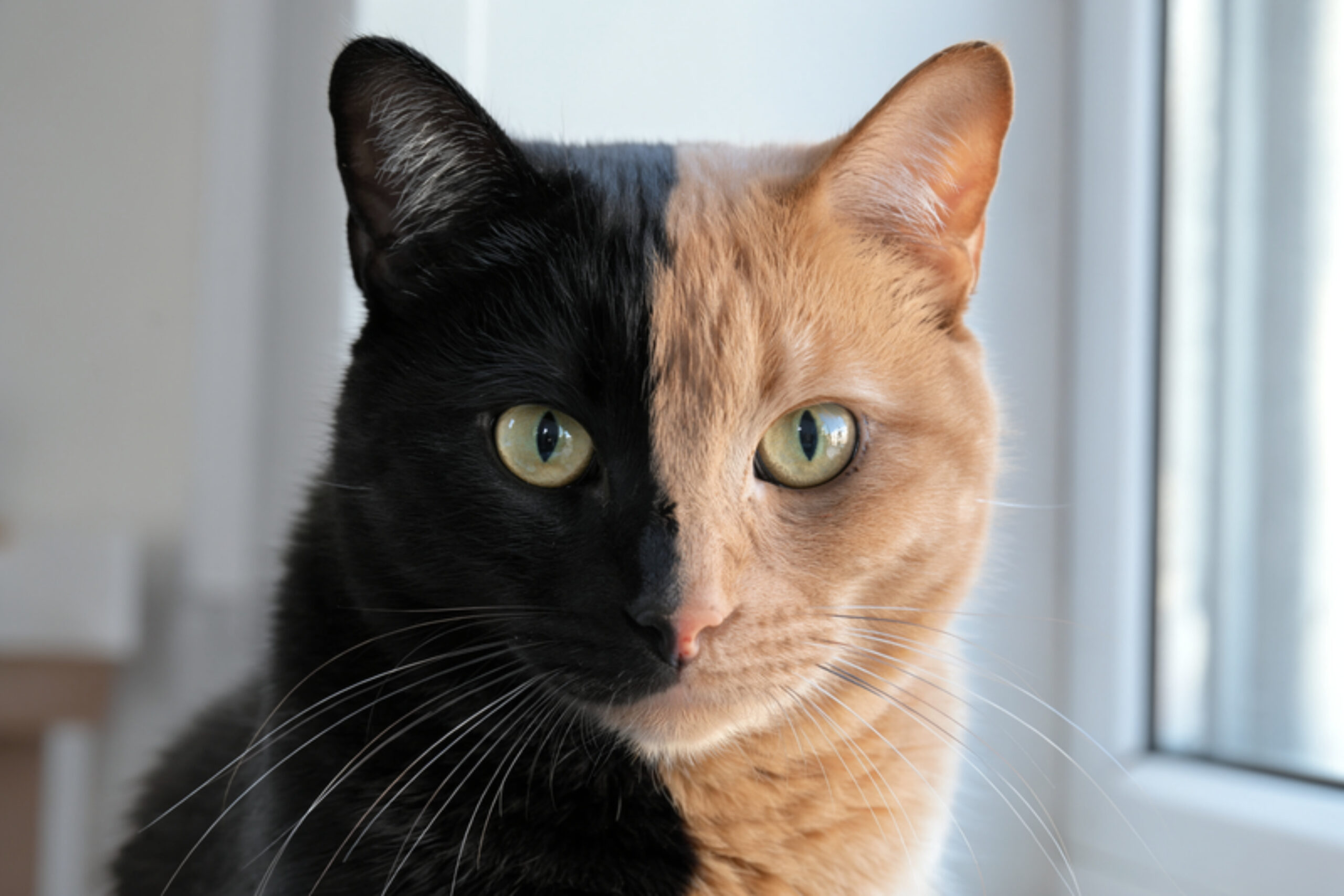
A chimera cat is famous online for its split, two-toned face and sometimes two different-colored eyes — but despite the viral photos, it isn’t a breed at all. It’s a rare genetic event that can happen to any cat, of any breed, when two embryos fuse into one. Here’s what actually causes feline chimerism, how it’s different from a tortoiseshell or calico coat, and whether you can ever buy or breed one on purpose.
Table of Contents
Chimera Cat Overview
| Type | Genetic phenomenon, not a breed |
| Cause | Tetragametic chimerism — two embryos fuse into one |
| Key signs | Split or patchwork coat color, sometimes two different eye colors |
| Can occur in | Any breed or mixed-breed cat |
| Officially recognized | No — not recognized as a breed by any registry |
| Confirmed by | DNA testing only; appearance alone isn’t proof |
What Is a Chimera Cat, Exactly?
A true chimera cat starts out as two separate fertilized embryos — essentially fraternal twins — that fuse together into a single embryo very early in development. The resulting cat grows up with two distinct sets of DNA in different parts of its body: some patches of skin, fur, or even internal organs carry one twin’s genetics, while other patches carry the other’s. Because the two original embryos can differ in coat color, a chimera cat can end up with a strikingly split or patchwork appearance, often described as having “two cats in one.”
What Causes Feline Chimerism?
The technical term is tetragametic chimerism — “tetragametic” because four gametes (two eggs and two sperm) are involved in creating the two embryos that go on to fuse. This fusion happens entirely by chance at the earliest stage of embryonic development, inside the womb, and isn’t something breeders can plan for or cause intentionally. It’s considered extremely rare and is almost never confirmed outside of genetic testing, since most cats people call “chimeras” online are actually something far more common: ordinary tortoiseshell or calico cats.
Chimera Cat vs. Tortoiseshell and Calico Cats
This is where most of the confusion comes from. Tortoiseshell cats and calicos get their mottled black-and-orange patchwork from ordinary X-chromosome inactivation — a completely different and far more common process than chimerism, yet it can produce a very similar-looking patchy coat. The table below breaks down the difference:
| True Chimera | Tortoiseshell / Calico | |
|---|---|---|
| Cause | Two embryos fusing into one (tetragametic) | Random X-chromosome inactivation in a single embryo |
| Rarity | Extremely rare, hard to confirm | Very common — thousands of torties/calicos exist |
| Confirmation | Requires DNA testing of different body patches | Visual pattern is diagnostic on its own |
| Typical owners | Usually discovered by accident, not by breeding | Can be deliberately bred for the pattern |
In short: nearly every “chimera cat” shared on social media is almost certainly a tortoiseshell or calico with an unusually clean, symmetrical split pattern — not an actual case of two fused embryos. Genuine, DNA-confirmed chimera cats are vanishingly rare.
Is Heterochromia Always a Sign of Chimerism?
No. Heterochromia — having two different-colored eyes — is a separate trait that’s actually fairly common on its own, especially in white cats and breeds with a lot of white in their coat. It happens because of how pigment develops in each eye individually, and it can occur with or without chimerism. A split-faced cat with heterochromia looks dramatic and gets attributed to chimerism online, but eye color alone proves nothing without genetic testing of the surrounding tissue.
Can You Buy or Breed a Chimera Cat?
Not really. Because chimerism happens by chance during early embryonic development, no breeder can reliably produce it on purpose, and no registry recognizes “chimera” as a breed or color category you could shop for. If you already have a cat with an unusual split coat or mismatched eyes and want to know whether it’s a genuine chimera, the only real way to find out is a cat DNA test that compares genetic markers across different parts of the body — ordinary breed-identification kits won’t settle the question on their own, but they’re a reasonable starting point.

- CONSUMER DNA TEST: From your origins in over 4,800 places around the world to connections with living relatives, this DN…
- SIMPLE ACTIVATION PROCESS: Activate your DNA kit online and return your saliva sample in the prepaid package to the stat…
- ORIGINS AND INHERITANCE: This DNA test shows your origins results, DNA matches, and available traits by each side of the…
Health Considerations
Chimerism itself isn’t a disease and doesn’t directly cause health problems — it’s simply a mix of two genetic lines in one body, and most chimera cats live completely normal, healthy lives. Any health needs come down to the individual cat’s underlying breed and health history, not the chimerism itself. Routine preventive care applies the same way it would for any cat — see our cat health hub for general guidance by life stage.
Famous Chimera Cats
The best-known example is Venus, a cat with a perfectly split two-toned face and one green and one blue eye who gained a large following online. Even Venus’s status as a true genetic chimera has been debated by geneticists, since a cleanly split tortoiseshell pattern combined with ordinary heterochromia can look identical to chimerism without a DNA test to confirm it. That uncertainty is itself a useful reminder: most viral “chimera cats” are probably just dramatic-looking torties.
Frequently Asked Questions
Is a chimera cat rare?
Yes, genuinely rare — true tetragametic chimerism confirmed by DNA testing is uncommon, and most cats assumed to be chimeras online are actually ordinary tortoiseshell or calico cats.
Are chimera cats always female?
No. Chimerism itself can occur in cats of either sex, though it’s often confused with tortoiseshell/calico coloring, which is strongly linked to female cats due to how that coat pattern’s genetics work.
How do you know if your cat is a real chimera?
Appearance alone can’t confirm it. Genetic testing that compares DNA samples from different patches of the body is the only reliable way to verify true chimerism rather than a coincidentally symmetrical tortoiseshell pattern.