We independently research every product we recommend, drawing on real owner reviews, product specs, and vet-reviewed sources. If you buy through a link on this page, Catverdict may earn a small commission — this never affects our picks or costs you anything extra. Details in our affiliate disclosure
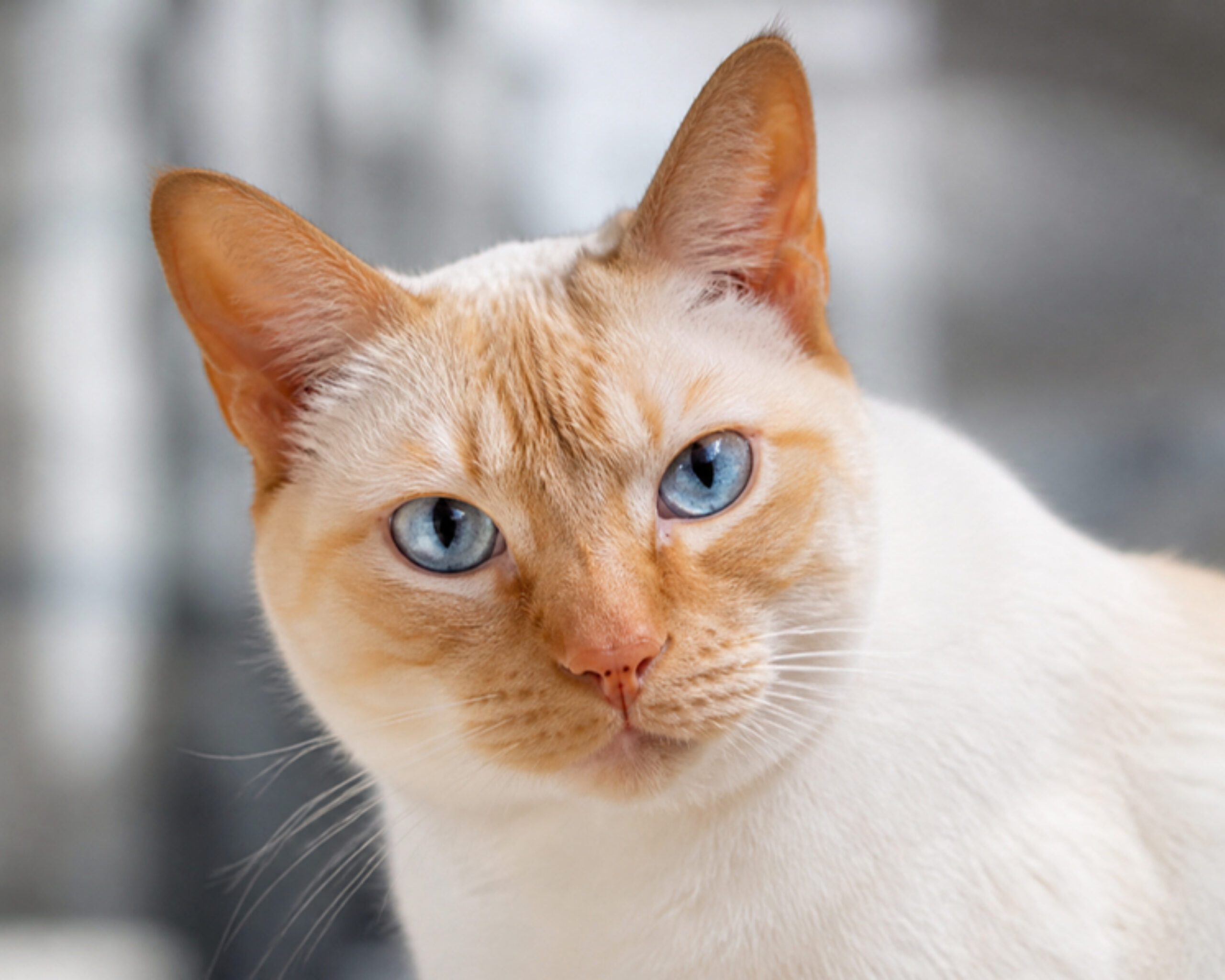
The flame point Siamese — also called a red point Siamese — swaps the breed’s classic seal-brown points for a warm orange-red, giving it a striking, fiery look while keeping every other Siamese trait intact. It’s a color variety rather than a separate breed, which means the same chatty, people-focused personality and short, low-maintenance coat come standard. Here’s what makes the flame point color happen, how it compares to lynx point and seal point, and what to expect from this variety’s temperament, health, and cost.
Table of Contents
Flame Point Siamese Overview
| Weight | 6–14 lbs (standard Siamese size) |
| Coat | Short, cream-to-white body with warm orange-red points |
| Lifespan | 12–15 years, sometimes longer |
| Temperament | Vocal, social, highly people-focused |
| Shedding | Low — short single coat, minimal grooming |
| Price | $600–$1,500+ from a breeder; less common at shelters than seal point |
Origin & History
The Siamese breed traces back to Siam (modern-day Thailand), where pointed cats were documented for centuries before being exported to the West in the late 1800s. The original, and for a long time the only recognized, color was seal point (dark brown points). Red and flame point Siamese emerged later through selective breeding that introduced the orange color gene into Siamese lines — some registries classify flame point Siamese separately as part of the “Colorpoint Shorthair” category rather than under the traditional Siamese standard, depending on the association.
What Makes a Siamese “Flame Point”? (The Genetics)
Two separate genes combine to create a flame point Siamese. The first is the Siamese “pointing” gene itself — a form of partial albinism that’s temperature-sensitive, so pigment only develops in the cooler extremities (face, ears, paws, and tail) while the warmer body stays pale. The second is the orange color gene, the same X-linked gene responsible for orange tabby and tortoiseshell coloring in other cats. When a cat carries both the pointing gene and the orange gene, the points come out as a warm red-orange instead of the breed’s original seal brown.
Because the orange gene follows the same X-chromosome rules described in our orange tabby cat guide, flame point males need only one copy of the orange gene, while females need two — which is part of why flame point Siamese are seen somewhat less often than seal or chocolate point.
Appearance & Size
A flame point Siamese keeps the breed’s signature svelte, tubular body and wedge-shaped head, typically weighing 6–14 lbs. The body is a pale cream to white, with points in a warm orange-red rather than the deep brown of a seal point. Kittens are usually born almost white, with the point color developing gradually over the first year as their body temperature regulates. Many flame point Siamese also show faint tabby striping within the point color, since the orange gene tends to resist the solid-point suppression that works on other point colors — similar to the striping seen on most orange tabby cats.
Personality & Temperament
Point color has no effect on temperament — a flame point Siamese has the same famously vocal, intelligent, and people-oriented personality as any other Siamese. Expect a cat that follows you from room to room, “talks back” with a distinctive raspy meow, and bonds intensely with its household. They do poorly left alone for long stretches and tend to form a strong attachment to one or two people in particular.
Grooming & Shedding



Health & Lifespan
Flame point coloring carries no extra health risk on its own; health outcomes track the Siamese breed overall, which is generally long-lived at 12–15 years. Siamese-type cats can be predisposed to certain conditions including progressive retinal atrophy, amyloidosis, and respiratory sensitivity, so routine veterinary checkups matter more than coat color. See our complete guide to cat health care for preventive care basics.
Diet & Nutrition Needs
Siamese cats are lean and active, and tend to do better on a protein-forward diet rather than a filler-heavy formula, since their slim build means it’s easy to notice (and correct) weight gain early. If you’re comparing specific brands, our best cat food guide breaks down vet-reviewed picks for every life stage.
How Much Does a Flame Point Siamese Cost?
Expect to pay roughly $600–$1,500 for a pet-quality flame point Siamese kitten from a reputable breeder, with show-quality lines running higher. Because flame point is less commonly bred than seal or chocolate point, prices can run slightly above standard Siamese pricing depending on the breeder and region. Adoption through a breed-specific rescue is far less predictable for this particular color but typically costs $100–$300 when available.
Flame Point vs. Lynx Point vs. Seal Point Siamese
These three point colors get searched together constantly because they’re the Siamese varieties people most often compare side by side:
| Point Color | Point Shade | What Causes It | Rarity |
|---|---|---|---|
| Flame Point | Warm orange-red | Pointing gene + orange gene | Less common than seal |
| Lynx Point | Any point color, but with visible tabby striping | Pointing gene + tabby gene (agouti) | Fairly common; can combine with flame, seal, or other base colors |
| Seal Point | Deep brown, almost black | The original, most common Siamese pointing color | Most common |
In short: seal point is the classic, original Siamese color; flame point swaps in the orange gene for red points; and lynx point isn’t a color at all but a striping pattern that can layer on top of any of the point colors, including flame point — so a “flame lynx point” Siamese (orange points with visible stripes) is a real, recognized combination.
Is a Flame Point Siamese Right for You?
A flame point Siamese is a great fit if you want the classic Siamese personality — vocal, intelligent, deeply bonded to its people — with a slightly rarer, warmer-colored look and virtually no grooming demands. It’s less ideal for anyone who wants a quiet, independent cat, since the breed’s chattiness and need for attention are constants regardless of point color.
Frequently Asked Questions
Is a flame point Siamese rarer than other point colors?
Yes, relative to seal point, which remains the most common and traditional Siamese color. Flame point requires the additional orange gene, which is less frequently bred into Siamese lines.
Do flame point Siamese cats’ points get darker with age?
Yes — like all pointed Siamese, kittens are born nearly white and develop their full point color gradually over the first year as the temperature-sensitive pigment responds to the cooler body temperature of the extremities.
Is flame point the same as red point?
Yes — “flame point” and “red point” are two names for the same color, used somewhat interchangeably depending on the cat registry or breeder.