We independently research every product we recommend, drawing on real owner reviews, product specs, and vet-reviewed sources. If you buy through a link on this page, Catverdict may earn a small commission — this never affects our picks or costs you anything extra. Details in our affiliate disclosure.
The Donskoy cat — also called the Don Sphynx or Russian Hairless — is one of the world’s few hairless cat breeds, known for its soft, wrinkled skin and an unusually warm, people-focused personality. Despite looking similar to a Sphynx at a glance, the Donskoy is a genetically distinct breed with its own Russian origin story. Here’s everything to know about its coat types, temperament, skin care needs, health, and typical cost.
Table of Contents
Donskoy Cat Overview
| Weight | 8–15 lbs |
| Coat | Hairless or near-hairless; wrinkled skin (4 recognized coat types) |
| Lifespan | 12–15 years |
| Temperament | Affectionate, social, intelligent, people-focused |
| Shedding | None to minimal |
| Price | $500–$2,500 from a reputable breeder |
Origin & History
The Donskoy traces back to a spontaneous hairless mutation discovered in a stray kitten in Rostov-on-Don, Russia, in 1987 — which is where the breed gets its name. Unlike the Sphynx, whose hairlessness comes from a recessive gene, the Donskoy’s bald trait is caused by a dominant gene mutation, making it a genetically distinct breed rather than a Russian version of the same trait. The breed was officially recognized by the World Cat Federation (WCF) in 1997 and by TICA in 2005, registered under the name “Donskoy.” It was also the foundation breed used to create the Peterbald, developed by crossing Donskoys with Oriental and Siamese cats.
Appearance & Size: The Four Coat Types
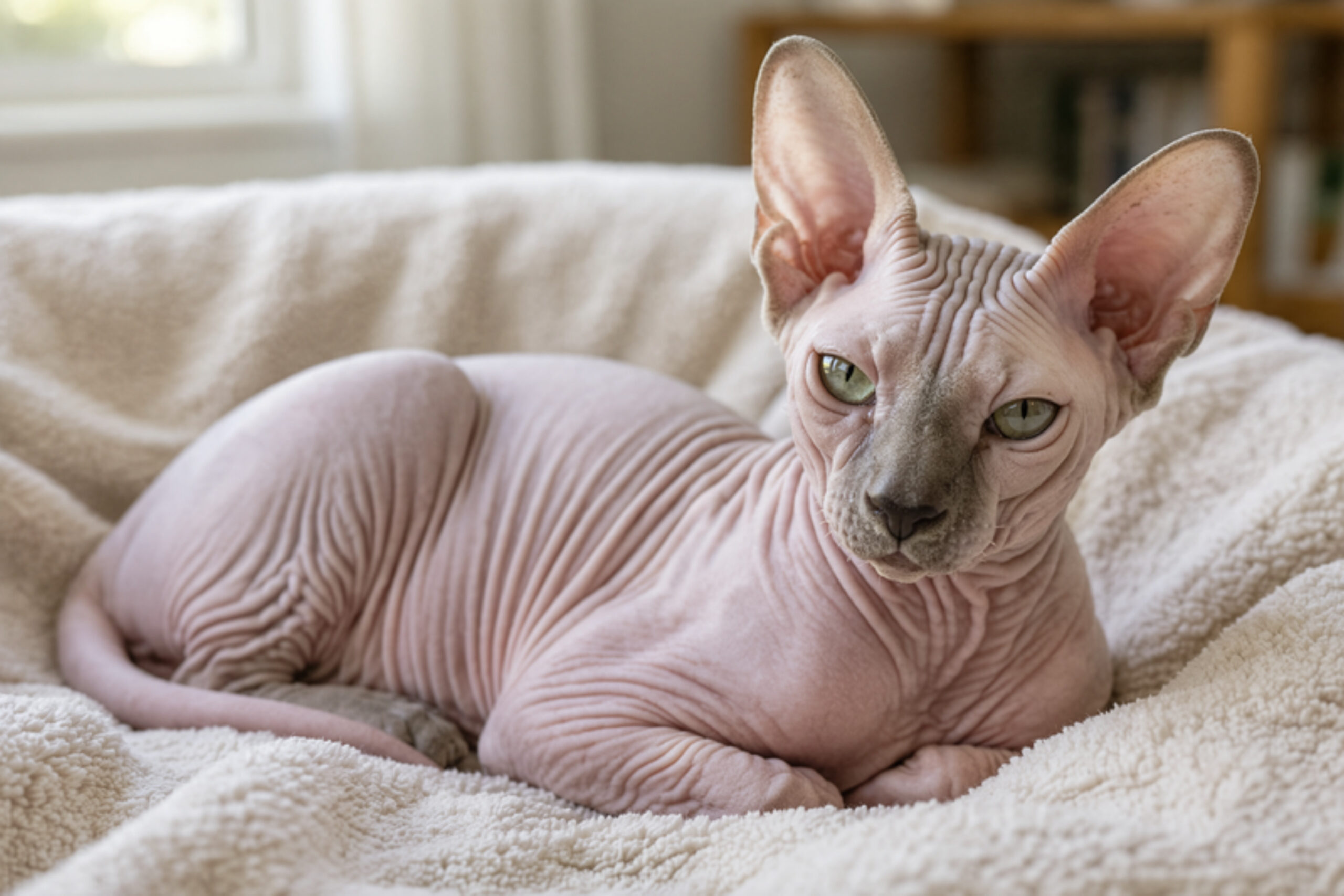
Donskoys are medium-sized, muscular, and surprisingly sturdy despite their delicate-looking bald skin — large ears, a wedge-shaped head, and distinctive wrinkles (especially around the face, neck, and legs) are breed hallmarks. What sets the Donskoy apart genetically is that “hairless” actually covers a spectrum of four recognized coat types:
- Rubber bald: Completely hairless from birth, with soft, warm, wrinkled skin.
- Flock: A very fine, barely-there peach-fuzz texture that’s still essentially bald to the touch.
- Velour: A short, downy coat present at birth that often thins out and can become bald as the cat matures.
- Brush: A wavy, rough, wire-like coat that stays throughout life — this coat type is disqualified from the TICA show ring but is still a genetically valid Donskoy.
Personality & Temperament
Donskoys are known for being exceptionally affectionate, social, and people-oriented — they tend to seek out warmth and physical closeness, often burrowing under blankets or draping themselves across their owner’s shoulders, especially in cooler weather. They’re intelligent, easy to train, generally friendly with other pets and children, and tend to actively participate in whatever their household is doing rather than observing from a distance. This isn’t a cat suited to long stretches alone; Donskoys thrive on companionship.
Grooming & Skin Care
Without fur to absorb natural skin oils, Donskoys need regular bathing — typically weekly — to prevent oily buildup in their skin folds, which can otherwise lead to irritation or odor. Ears also need more frequent cleaning than a haired cat’s, since there’s no fur to catch debris. Because they have no coat for insulation or UV protection, Donskoys are prone to getting cold in cool rooms and can sunburn in direct sunlight, so a cat sweater and limited sun exposure are practical, not optional, for this breed.
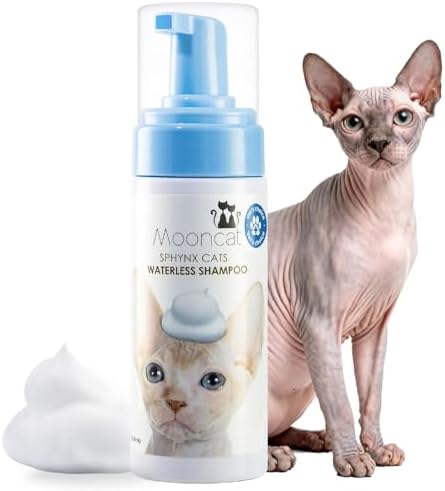
- WATERLESS SHAMPOO FOR HAIRLESS CATS : Made for the grooming needs of Sphynx, Devon Rex, Cornish Rex, Peterbald and other…
- CONVENIENT NO-RINSE CLEANSING : The easy-to-spread foam makes targeted touch-ups simple. Gently massage onto soiled area…
- ALCOHOL-FREE GROOMING FORMULA : Formulated without alcohol, parabens, or sulfates for routine cleansing. A practical add…

- 【SOFT&ANTI-ALLERGY FABRIC】Our clothes spespecially made for the Hairless Cats,which are made of Soft and fleece material…
- 【HIGH ELASTIC&PERFECT FIT CATS BODY】This basic cat sweater are simple but well designed according to the cats’ body Line…
- 【Medium Thick, Fit all Seasons】This long sleeveless T-shirts are medium thick, It fits to dress on four seasons. In summ…
Health & Lifespan
Donskoys are generally a healthy breed with a typical lifespan of 12–15 years, though as with any breed shaped by a relatively small founding population, working with a reputable breeder who screens their cats matters. Good dental hygiene is particularly important for the breed, and routine wellness checkups help catch anything early. See our cat health hub for general preventive care guidance by life stage.
Diet & Nutrition Needs
Donskoys don’t have special dietary restrictions, but like other hairless breeds, they tend to run a slightly higher metabolism since they lack fur for insulation, and owners often report a heartier appetite as a result. A quality, balanced diet with added omega-3s can also support healthy skin, which matters more for a hairless cat than a haired one. See our cat food reviews for options across life stages.

- Itchy Dog Skin Relief: Dull coats, scratching, shedding & flaky skin? Salmon oil for dogs is a made of omega 3 fish oil …
- Simple Ingredients: Dog fish oil contains wild Alaskan salmon oil, pollock oil (omega 3 for dogs) and vitamin E, providi…
- Easy Daily Dosing: Pump this salmon oil for cats and dogs onto food every day: 1/4 tsp for 5-15 lbs (see label for more)…
How Much Does a Donskoy Cat Cost?
Expect to pay $500–$2,500 for a Donskoy kitten from a reputable breeder, with the price varying by lineage, coat type, and location. The breed remains uncommon outside Russia and Europe, so North American buyers should expect a wait and possibly higher shipping or import costs. Always ask breeders about health testing and avoid buying sight-unseen from unverified sellers.
Donskoy vs. Sphynx vs. Peterbald
All three are hairless breeds that get confused with each other, but their genetics and builds differ:
| Breed | Hairless Gene | Build | Distinct Feature |
|---|---|---|---|
| Donskoy | Dominant gene mutation | Medium, muscular, wrinkled skin | Four coat-type variants, including a coated “brush” form |
| Sphynx | Recessive gene mutation | Medium, barrel-chested, potbellied | Large ears, prominent cheekbones, always bald |
| Peterbald | Dominant gene (from Donskoy lineage) | Slender, Oriental-type body | Whippy tail, longer face; bred from Donskoy x Oriental/Siamese |
In short: the Sphynx is the most widely known and always bald, the Donskoy is the Russian original with a dominant hairless gene and more coat-type variation, and the Peterbald is the slimmer, Oriental-bodied breed descended from the Donskoy.
Is a Donskoy Cat Right for You?
A Donskoy suits an owner who wants an extremely affectionate, cuddly companion and doesn’t mind a weekly bathing routine plus a bit of extra warmth management (sweaters, warm rooms). It’s a poor fit for anyone wanting a low-maintenance cat or who can’t commit to regular skin care, since a hairless coat shifts grooming needs rather than eliminating them.
Frequently Asked Questions
Are Donskoy cats hypoallergenic?
No cat breed is truly hypoallergenic. Cat allergies are triggered by the Fel d 1 protein in saliva and skin, not fur itself, so a hairless Donskoy still produces allergens — though some allergy sufferers find less fur means less allergen spread around the home.
Do Donskoy cats get cold easily?
Yes. Without a coat for insulation, Donskoys get cold more easily than haired cats and often seek out warm spots, blankets, or their owner’s body heat, especially in cooler climates.
Are Donskoy cats rare?
Yes, relatively — the breed remains uncommon outside Russia and parts of Europe, and reputable breeders are harder to find in North America, which contributes to higher prices and longer waitlists.